

Accountability industry failing to improve public trust
Advertisement
Read this article for free:
or
Already have an account? Log in here »
To continue reading, please subscribe:
Monthly Digital Subscription
$1 per week for 24 weeks*
- Enjoy unlimited reading on winnipegfreepress.com
- Read the E-Edition, our digital replica newspaper
- Access News Break, our award-winning app
- Play interactive puzzles
*Billed as $4.00 plus GST every four weeks. After 24 weeks, price increases to the regular rate of $19.95 plus GST every four weeks. Offer available to new and qualified returning subscribers only. Cancel any time.
Monthly Digital Subscription
$4.99/week*
- Enjoy unlimited reading on winnipegfreepress.com
- Read the E-Edition, our digital replica newspaper
- Access News Break, our award-winning app
- Play interactive puzzles
*Billed as $19.95 plus GST every four weeks. Cancel any time.
To continue reading, please subscribe:
Add Free Press access to your Brandon Sun subscription for only an additional
$1 for the first 4 weeks*
*Your next subscription payment will increase by $1.00 and you will be charged $16.99 plus GST for four weeks. After four weeks, your payment will increase to $23.99 plus GST every four weeks.
Read unlimited articles for free today:
or
Already have an account? Log in here »
Hey there, time traveller!
This article was published 20/10/2016 (3437 days ago), so information in it may no longer be current.
In a previous article, I presented a diagnosis of why public trust and confidence in politicians and governments is probably at an all-time low. Asked to rank occupations in terms of trustworthiness, respondents typically place politicians at or near the bottom of the list. Asked how often they expect governments to do the right thing, more than 60 per cent of respondents say “never” or “only some of the time.” It should also be noted significant portions of the public are ill-informed about politics and government, which means the knowledge foundation for their disillusionment is not strong.
As trust and confidence in politics and government has slowly declined, the public has insisted on more regulation, transparency, monitoring and accountability for both politicians and public servants. This approach is based on the premise that the best way to ensure greater integrity in politics and more effective performance by governments is to eliminate, or at least reduce, the need for trust. In other words, we will produce more trust in public officials by institutionalizing the principle of mistrust.
This approach to restoring trust has led to a relatively small (compared with the rest of government) but influential “accountability industry” in the public sector. At the same time deregulation of the private sector was taking place, the regulation of the public sector was increasing. Each new instance of blunder or abuse led to the addition of new rules, usually layered on top of existing ones. The result was the emergence of a new branch of government concerned with promoting and policing integrity in politics and effectiveness in government.
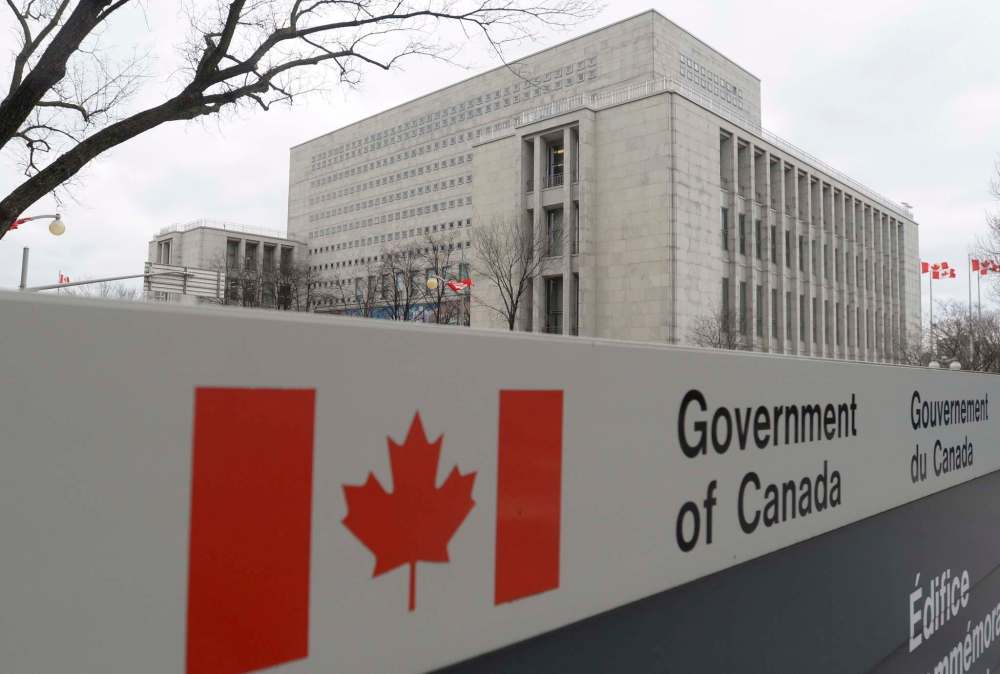
Here are some examples of what I mean by the accountability industry: a strengthened role for auditors general practising value-for-money auditing; extensive policies regulating procurement of goods and services; restrictions on government advertising; lobbyist registration; a ban on corporate and trade-union donations to political parties; conflict-of-interest rules; values and ethics codes; freedom-of-information and whistleblower-protection laws; requirements for performance measurement and reporting; and the adoption of open government practices of proactive disclosure of the actions of politicians and public servants.
To enforce these new rules, there is an array of integrity and performance monitors: internal and external auditors; integrity commissioners; information and privacy commissioners; both general and specialized ombudsmen, language commissioners; elections agencies and commissioners; children’s advocates — and the list goes on. If rules and policing could guarantee integrity and sound performance, it should follow that public trust and confidence would have increased.
Instead, during the period of expansion of the accountability industry, mistakes and abuses continued to occur and public trust and confidence continued to decline. In response, the leaders of the accountability industry, both inside and outside government, argue it will take time for the rules and monitoring mechanisms to deter irresponsible behaviour and/or that those devices are deficient and/or inadequately enforced.
There is some truth in these arguments. However, we also need to recognize the accountability industry has ended up strengthening the prevailing negative stereotype of politicians — and to lesser extent, public servants — that exists in the public mind. This happens because the reports of the accountability industry flow into parliamentary and media forums where the findings, mainly the negative news, are amplified, distorted and sensationalized.

Most accountability enforcers have only the power to recommend, not to order corrective action. Based on the belief that only bad publicity will lead to reform, some leaders in the accountability industry “play to the grandstand” in terms of the content and the wording of their reports. This tendency leads to distrust and defensiveness on the part of politicians and public servants who are the targets of the new internal regulatory regime.
When the accountability process becomes all about naming, blaming and shaming, little prevention, learning or improvement will occur. Good people may not enter public life as politicians and public servants when those occupations are held in low esteem and the rules imply they cannot be trusted to serve the public interest. There is another drawback to the prevailing negative approach to accountability with its web of rules: it discourages prudent risk-taking, innovation, disclosure and honest dialogues about what needs to be done and what works, does not work and why.
My conclusion is leaders in public offices who embody strong values of public service and integrity in their belief systems and behaviours are more important to restoring public trust and confidence than multiple, ever-expanding accountability mechanisms. In short, character and the capacity for ethical reflection matter. Parties need to pay more attention to the character of the people they nominate to stand for public office.
Manitoba is the only Canadian jurisdiction that has a code of conduct for political parties that declares their members will not do anything to bring the democratic process into disrepute. Sadly, none of the parties appears to have done anything to bring the code to life. There needs to be more education and training for politicians about the legal and ethical standards of public life, perhaps as part of the curriculum of a national school of government for entrants into public life. There also need to be safe forums where public officials can hold honest dialogues about the real, often submerged ethical dilemmas that confront public officials at a time of rising ethical expectations, suspicion and a narrow focus on wrongdoing rather than encouraging right-doing.
Paul G. Thomas is professor emeritus of political studies at the University of Manitoba. This is part two of a two-part series.