

Ambulance changes much needed
Advertisement
Read this article for free:
or
Already have an account? Log in here »
To continue reading, please subscribe:
Digital Subscription
One year of digital access for only $1.44 a week*
- Enjoy unlimited reading on winnipegfreepress.com
- Read the E-Edition, our digital replica newspaper
- Access News Break, our award-winning app
- Play interactive puzzles
*Billed as $5.77 plus GST every four weeks. After 52 weeks, price increases to the regular rate of $19.95 plus GST every four weeks. Offer available to new and qualified returning subscribers only. Cancel any time.
To continue reading, please subscribe:
Add Free Press access to your Brandon Sun subscription for only an additional
$1 for the first 4 weeks*
- Enjoy unlimited reading on winnipegfreepress.com
- Read the E-Edition, our digital replica newspaper
- Access News Break, our award-winning app
- Play interactive puzzles
*Your next Brandon Sun subscription payment will increase by $1.00 and you will be charged $17.95 plus GST for four weeks. After four weeks, your payment will increase to $24.95 plus GST every four weeks.
Read unlimited articles for free today:
or
Already have an account? Log in here »
Hey there, time traveller!
This article was published 16/08/2017 (3355 days ago), so information in it may no longer be current.
On June 29, Health, Seniors and Active Living Minister Kelvin Goertzen announced plans to transform Manitoba’s emergency medical services system, based on recommendations from a comprehensive review completed more than four years earlier.
The 2013 Manitoba EMS System Review was authored by Reg Toews, a respected leader in Manitoba health-care planning and delivery, following extensive consultation with front-line paramedics, land and air ambulance service operators, regional health authorities, municipal and community leaders and many others.
The report concluded that Manitoba’s EMS system was fragmented, with minimal co-ordination across the province, and should be reconfigured to ensure resources meet future service demands in a responsive and sustainable manner. That report was released publicly in 2013, recommending the realignment of EMS resources, and was widely accepted and supported by industry representatives and system stakeholders across the province.
In the weeks following Goertzen’s announcement, concerns have been expressed regarding the closure and consolidation of ambulance stations in some communities as part of the restructuring plan. The uncertainty that accompanies this proposed change is understandable. But uncertainty about continuing to provide predictable and professional paramedic service to rural Manitobans without this reform should be cause for even greater concern.
Ambulance service in Manitoba has undergone significant growth over the past 20 years.
The responsibility has shifted from primarily transporting patients quickly to the nearest hospital for treatment, to the delivery of acute and advanced health care by paramedics. Ensuring all ambulances in Manitoba are staffed 24 hours a day, seven days a week, by well-educated and highly-skilled paramedics is necessary to ensure patients have access to the right care at the right time.
Call volumes across the province have increased dramatically, placing a strain on ambulance services that rely mainly on local volunteers and on-call staff. Many stations operate with staff that are on-call for periods that can exceed 96 hours, not only posing significant safety risks for paramedics, their patients and the public, but also resulting in temporary station closures and service outages due to fatigue. To continue providing service in this manner is unsafe, unpredictable and unsustainable.
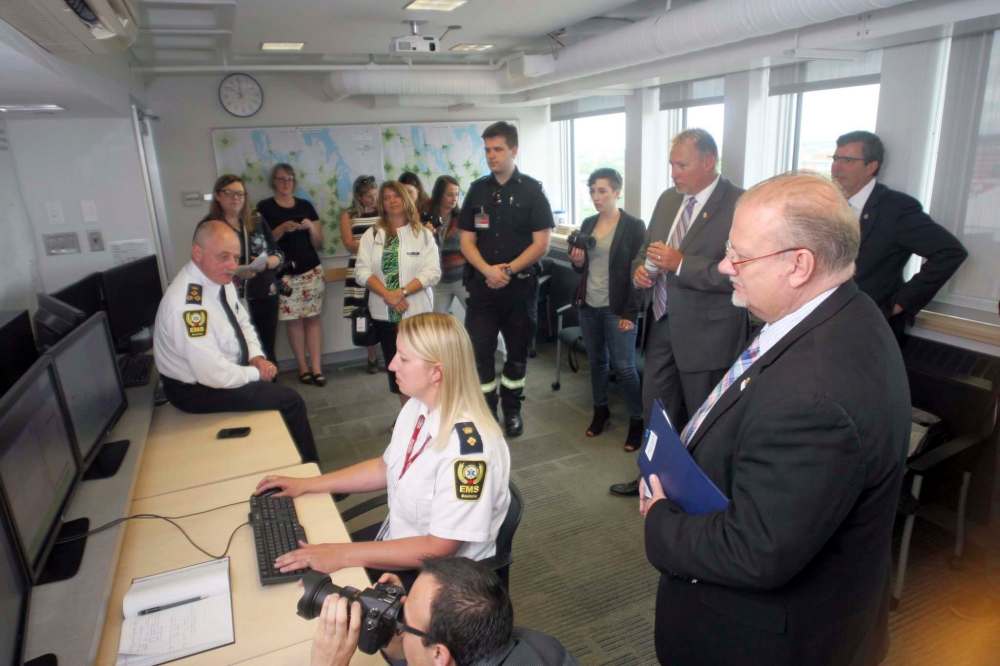
The creation of the Medical Transportation Coordination Centre, Manitoba’s provincial land and air ambulance dispatch facility in Brandon, has improved timely access to paramedic resources across the province. Not only can dispatchers ensure that the closest available ambulance is sent to emergency calls, regardless of where it is stationed, but they can also relocate ambulances from one area to another to ensure adequate regional coverage based on current availability and anticipated need. Response times cannot and should not be measured by proximity to an EMS “garage.”

The proposed new station configurations have been developed using mapping data, population figures and historical call volume information not available to us just 10 years ago. We are now able to more closely align available resources with service demand. Although the time it takes paramedics to arrive at a call is not as important as the care they able are to deliver once on scene, the planned realignment of paramedic stations does aim to improve projected overall response time coverage in rural areas.
The proposed restructuring of paramedic services will take time. No station will be closed or consolidated before the system has achieved the staffing and infrastructure necessary to manage that change safely and effectively.
EMS throughout rural Manitoba is steeped in history. Many community members and political leaders take great pride in having built and maintained a local ambulance station for decades.
But as the demand placed on our paramedic services continues to increase, so too does the need for these system changes to ensure that we are able to deliver those services to all patients in a predictable, responsive, sustainable and safe manner.
Eric Glass is the administrative director of the Paramedic Association of Manitoba.
History
Updated on Wednesday, August 16, 2017 11:30 AM CDT: Corrects typo