

Anti-vax sentiments have anti-science roots
Advertisement
Read this article for free:
or
Already have an account? Log in here »
To continue reading, please subscribe:

Digital Subscription
One year of digital access for only $205*
- Enjoy unlimited reading on winnipegfreepress.com
- Read the E-Edition, our digital replica newspaper
- Access News Break, our award-winning app
- Play interactive puzzles
*First annual payment billed as $205.00 + GST for one year. This annual subscription will automatically renew at $233.00 + GST every 52 weeks (10% off the regular annual price of $259.35). Offer available to new and qualified returning subscribers only. Cancel any time.
To continue reading, please subscribe:
Add Free Press access to your Brandon Sun subscription for only an additional
$1 for the first 4 weeks*
- Enjoy unlimited reading on winnipegfreepress.com
- Read the E-Edition, our digital replica newspaper
- Access News Break, our award-winning app
- Play interactive puzzles
*Your next Brandon Sun subscription payment will increase by $1.00 and you will be charged $17.95 plus GST for four weeks. After four weeks, your payment will increase to $24.95 plus GST every four weeks.
Read unlimited articles for free today:
or
Already have an account? Log in here »
Hey there, time traveller!
This article was published 13/08/2021 (1865 days ago), so information in it may no longer be current.
IN a recent CBS-TV news interview, an unvaccinated man recovering in a Louisiana hospital after suffering a severe case of pneumonia, a result of contracting COVID-19, declared that he still will not get the vaccine. Asked the reason for his decision, he said, “Because there (are) too many issues with these vaccines.”
You can only shake your head in dismay at such distorted thinking. From Winkler to Arkansas, the unvaccinated, who are now petri dishes for the Delta variant and putting themselves and everyone else at risk, explain their untenable decision (apart from the tiny minority with medical reasons) in a variety of ways. This includes everything from fearing needles and concern about insufficient medical data to believing crazy conspiracy theories about the vaccine being a nefarious plot to implant tracking microchips in arms.
Mostly, though, their position is about not trusting government, often combined with fundamentalist religion (as a Winkler resident put it, “I trust in God. I trust he’ll get us through this”), and anti-intellectualism and anti-science.
In the U.S., it is no surprise that these sentiments are most prevalent in Republican-dominated states such as Louisiana, Arkansas, Texas, Wyoming, Florida and Tennessee, where rejecting the effectiveness of the vaccine is official policy — as are the absurd denunciations and threats directed at Dr. Anthony Fauci for his work managing the pandemic and promoting the vaccine (in Florida, the Republican slogan is “Choose Freedom over Faucism” and there are T-shirts emblazoned with “Don’t Fauci my Florida”).
These are the same reasons a majority of residents in these states and their political leaders deny the reality of climate change and vilify the experts who attempt to educate them about it. In the Trumpian and right-wing media world, experts are allegedly dangerous.
In modern history, this reactionary response can be traced back to the mid-19th century and the controversy surrounding the publication of Charles Darwin’s 1859 book On the Origin of Species by Means of Natural Selection. The small London publisher did not think the book would sell, but it did. In time, Darwin’s study would be read and debated in Europe, North America and beyond, would transform its shy author into an icon, both revered and reviled, and help alter human perception about science, religion and the beginning of civilization.
Yet from the start, the natural and seemingly haphazard universal laws that governed “Darwinism,” as the theory was quickly labelled, challenged basic Judaeo-Christian premises that nature “was the expression of a divine purpose.” God did not determine life, as the Bible had it; instead it was the result of a fierce competition in nature. While many scientists and laymen accepted some aspects of Darwin’s theory, his work and that of others of his era touched off a contentious debate about the meaning of God and human existence — a debate that in many ways continues to this day.
One of the more famous confrontations between Darwin’s theories of evolution and the conservative fundamentalists — or creationists, as they are now called — who maintained that “the universe, Earth, life, and humans, originated with supernatural acts of divine creation,” took place during the summer of 1925 in a small courtroom in Dayton, Tenn., (southeast of Nashville). By then, the very same states whose governments and citizens currently question or reject the vaccine — Tennessee, Oklahoma, Florida, Mississippi, and Arkansas — had passed legislation banning the teaching of evolution.
The trial, somewhat contrived to promote Dayton, began when an official complaint was launched against John Scopes, a 24-year-old local high school teacher who had assigned his students readings from an approved biology textbook that contained sections about Darwin’s theories and evolution — a violation of the state’s anti-evolution act and a misdemeanour crime.
What propelled the case to be immortalized as the “Monkey Trial” and “the greatest since that held before Pilate” — in the words of the celebrated journalist H.L. Mencken, who covered every fascinating moment of it — was the participation of William Jennings Bryan, a former congressman who had run and lost three times as a presidential candidate, for the prosecution, and Clarence Darrow, the most renowned criminal lawyer in the country, for the defence.

In the end, Darrow successfully championed science, but Scopes was nonetheless found guilty of violating the state law and fined US$100. Bryan’s spirited defence of the Scriptures had won the crowd and he received the attention he craved from the hordes of newspapermen who covered the proceedings. The Tennessee anti-evolution law was not repealed until 1967.
Today, Tennessee remains mired in a similar conflict about rights and science. In mid-July, state officials fired Dr. Michelle Fiscus, who was the Tennessee department of health’s medical director for vaccines, because she had written a memo that correctly indicated it was legal for teens to obtain a COVID-19 vaccine without their parents’ consent. The department has now foolishly indicated it will not promote the vaccine among 12- to 15-year-olds.
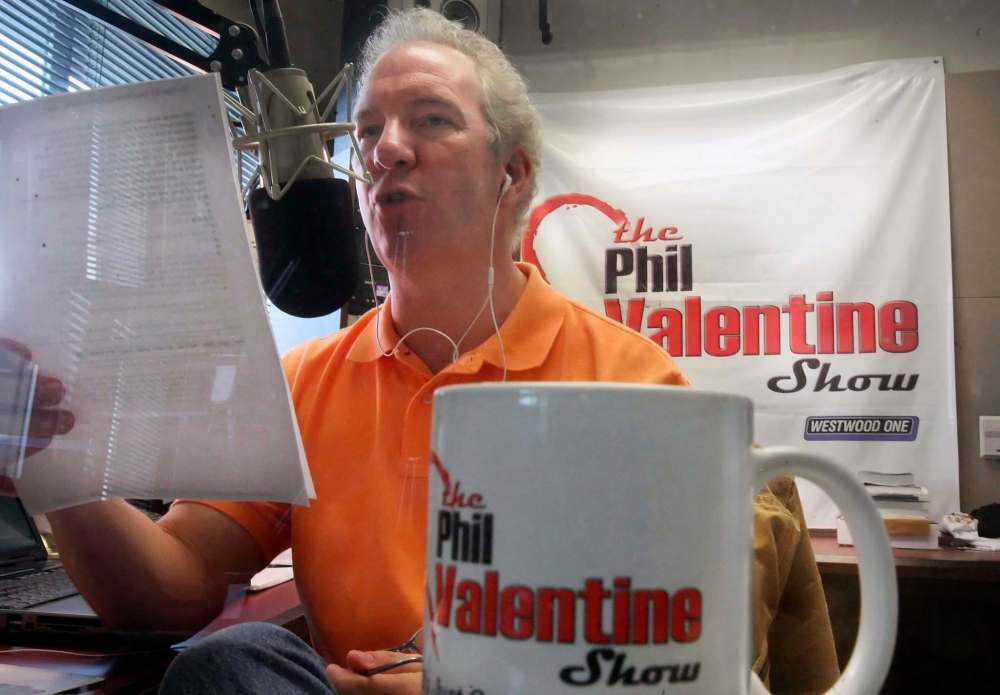
At the same time, there are also signs of positive change. Phil Valentine, a popular conservative Tennessee radio host, who had spoken against getting vaccinated has changed his mind. The reason: he became ill and had to be hospitalized. He is now urging his many listeners to get their shots.
They and others have done so. From July 12 to Aug. 2, total vaccinations in the state increased by 47 per cent — and that includes many teenagers aged 12 to 15.
Now & Then is a column in which historian Allan Levine puts the events of today in a historical context. His most recent book is Details are Unprintable: Wayne Lonergan and the Sensational Café Society Murder.