

Climate change hits southern Africa
Advertisement
Read this article for free:
or
Already have an account? Log in here »
To continue reading, please subscribe:
Digital Subscription
One year of digital access for only $1.44 a week*
- Enjoy unlimited reading on winnipegfreepress.com
- Read the E-Edition, our digital replica newspaper
- Access News Break, our award-winning app
- Play interactive puzzles
*Billed as $5.77 plus GST every four weeks. After 52 weeks, price increases to the regular rate of $19.95 plus GST every four weeks. Offer available to new and qualified returning subscribers only. Cancel any time.
To continue reading, please subscribe:
Add Free Press access to your Brandon Sun subscription for only an additional
$1 for the first 4 weeks*
- Enjoy unlimited reading on winnipegfreepress.com
- Read the E-Edition, our digital replica newspaper
- Access News Break, our award-winning app
- Play interactive puzzles
*Your next Brandon Sun subscription payment will increase by $1.00 and you will be charged $17.95 plus GST for four weeks. After four weeks, your payment will increase to $24.95 plus GST every four weeks.
Read unlimited articles for free today:
or
Already have an account? Log in here »
Hey there, time traveller!
This article was published 28/04/2022 (1635 days ago), so information in it may no longer be current.
Tropical Storm Ana in January, Tropical Cyclone Batsirai in February, then Dumako, Emnati and Gombe in quick succession: three cyclones and two “tropical storms” in six weeks hitting the coasts of southeast Africa.
Then Cyclone Idai in late March, which practically destroys the city of Beira in Mozambique, killing more than 750 people. Three weeks later Subtropical Depression Issa hits South Africa’s east coast, killing 450 people in the greater Durban area. Literally millions made homeless in Tanzania, Mozambique and South Africa in three months.
And the point is that just five years ago, there were only one or two of these storms a year in the region. Fifteen years ago, the average was not even one per year. “It is telling us that climate change is serious, it is here,” said South Africa’s President Cyril Ramaphosa. Well spotted, sir. Bit late, though.
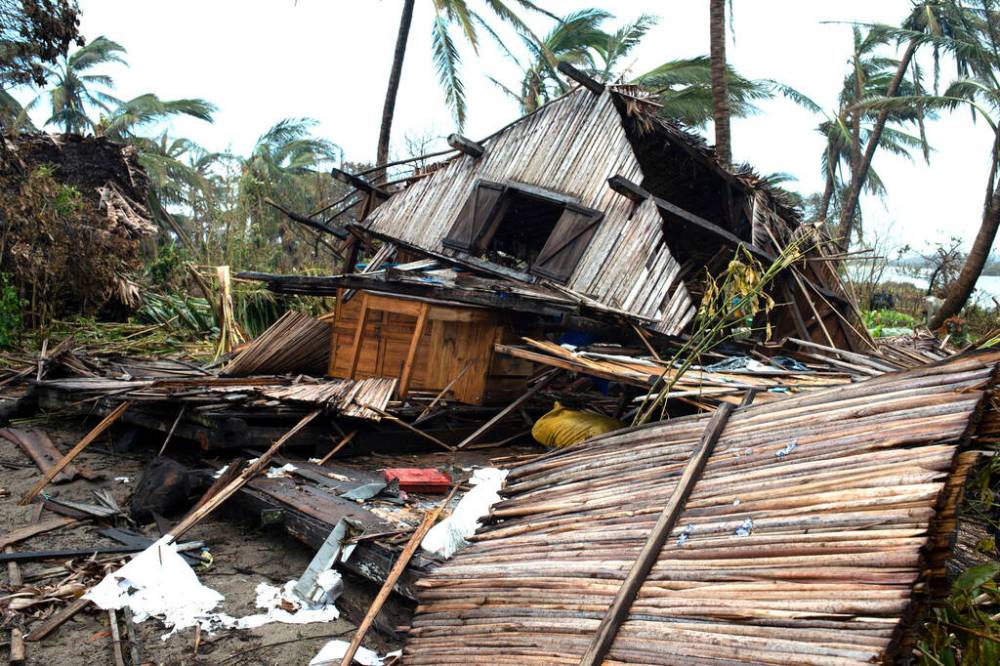
Cyclones in the Indian Ocean, typhoons in the western Pacific, hurricanes in the Caribbean – it’s all the same beast, just different names. Likewise “tropical storms” and “subtropical depressions”; same beast again, but with a lower wind speed. Still enough to tear the roof off your shack, though, and maybe drown you if you live up on the side of a ravine.
What’s astonishing is how surprised they all are when the future the scientists and the campaigners have been predicting for years finally arrives. Didn’t they get the memo?
It’s not rocket science. When the global temperature rises, it warms the surface of the ocean. When the sea surface is above 26.5 degrees Celsius, it has enough energy to fuel hurricanes/cyclones/typhoons. The western Indian Ocean is now above that temperature in the late summer and early autumn (January-April), so of course it’s spawning cyclones.
Southern African politicians are not particularly derelict in this regard. The entire political profession is congenitally unable to focus on the long term for more than 20 minutes at a time, because the pressures to fix the short-term problems are overwhelming. It is not a glitch in the political process; it’s a feature.
There’s no point in talking to Japanese or Jamaican politicians about this, because they are inured to the fact they will get hit by these devastating tropical storms from time to time. They know – or think they know – there’s nothing you can do about it except build better sea defences and stronger shelters. But they may be wrong.
People say you can’t do anything about the weather, but it may actually be possible to weaken or even stop these storms. And maybe southern Africa is the place to try it, because they haven’t got used to a constant procession of violent tropical storms yet. They could even be open to the idea they don’t have to get used to it.
Last year I interviewed a retired professor of engineering, Stephen Salter, who began working on a project for cooling the climate several decades ago in collaboration with Prof. John Latham, a renowned climate scientist. Latham died last year, but the project is ready to start building prototypes, and it really might work.
The idea is to build a fleet of unmanned, wind-powered, satellite-guided vessels that position themselves under the low, thin clouds that are very common in tropical oceans – “marine stratocumulus clouds” – and spray a fine mist of water that thickens them up so they reflect more sunlight.
Reflect more sunlight, and you cool the whole planet – but you particularly cool the surface of the ocean under those clouds. There’s already a small team from Southern Cross University in Queensland experimenting with this technology as means of cooling the waters off northeastern Australia and saving the corals of the Great Barrier Reef.

The big “named” tropical storms typically form in well-defined areas of the Atlantic, Indian and Pacific oceans that are not unmanageably large for mobile fleets of spray-vessels. Just drop the sea-surface temperature by one degree or less, and most of the storms that are forming will never get big enough to earn a name.
It’s well worth a try, and maybe southern Africa is new enough to this kind of weather to believe it could be stopped. South Africa would have to take the lead, because that’s where most of the money and the scientific and engineering skills are, but it’s an issue that matters to the whole east coast of the continent.
In fact, it’s a technology that matters to the whole world. We will almost certainly need technologies to hold the global temperature down while we work to eliminate our greenhouse gas emissions, and this would be a relatively gentle, controllable and affordable form of geoengineering.
It would also be a project of global scientific and political importance led by Africans, which is something that is long overdue.
Gwynne Dyer’s new book is The Shortest History of War.