

Close loophole that gives the rich back-door income
Advertisement
Read this article for free:
or
Already have an account? Log in here »
To continue reading, please subscribe:

Digital Subscription
One year of digital access for only $205*
- Enjoy unlimited reading on winnipegfreepress.com
- Read the E-Edition, our digital replica newspaper
- Access News Break, our award-winning app
- Play interactive puzzles
*First annual payment billed as $205.00 + GST for one year. This annual subscription will automatically renew at $233.00 + GST every 52 weeks (10% off the regular annual price of $259.35). Offer available to new and qualified returning subscribers only. Cancel any time.
To continue reading, please subscribe:
Add Free Press access to your Brandon Sun subscription for only an additional
$1 for the first 4 weeks*
- Enjoy unlimited reading on winnipegfreepress.com
- Read the E-Edition, our digital replica newspaper
- Access News Break, our award-winning app
- Play interactive puzzles
*Your next Brandon Sun subscription payment will increase by $1.00 and you will be charged $17.95 plus GST for four weeks. After four weeks, your payment will increase to $24.95 plus GST every four weeks.
Read unlimited articles for free today:
or
Already have an account? Log in here »
Hey there, time traveller!
This article was published 24/08/2017 (3332 days ago), so information in it may no longer be current.
Federal Finance Minister Bill Morneau recently released a long and nervously awaited discussion paper, which was met with near-apoplexy in some corners.
The paper aimed at closing a number of loopholes that allow mainly rich taxpayers to use private companies (Canadian-controlled private corporations, or CCPCs) to reduce their taxes compared with most Canadians whose incomes come through paycheques or self-employment.
The proposals would fulfil a Liberal campaign promise to address unfair uses of some arcane provisions of Canada’s Income Tax Act. In response, one tax practitioner said in a popular newsletter, “Finance Minister Bill Morneau just announced the Trudeau government’s plan to destroy tax planning as we know it.”
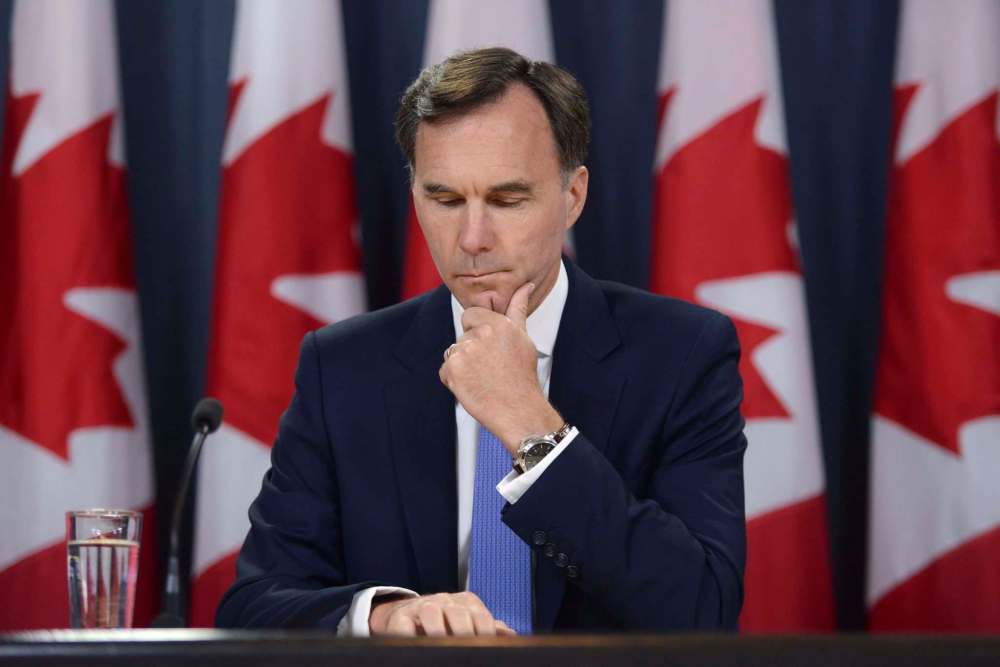
The minister has given the public 75 days to respond.
So far, most of the comments have been rather general. One suggests these provisions will hurt the middle class much more than the rich. This is clearly false, as shown in a study I published with my colleagues last year.
For the bottom 50 per cent of income tax filers in 2011 — those with incomes under $51,600 — well under 10 per cent had a non-trivial interest in a private company. But for the top one per cent, with incomes over $163,300, more than 50 per cent had a significant interest in a private company — and for the top 0.01 per cent with incomes over $2.3 million, this figure jumps to almost 80 per cent.
Further, as I showed in a study published just before the 2015 election and cited in debates at the time between (then) candidate Justin Trudeau and prime minister Stephen Harper, federal and provincial governments were forgoing at least half a billion dollars every year in income tax revenues from the use of these private companies for income splitting.
Among those likely to be affected by the minister’s proposals are higher-income doctors, some of whom have even threatened to flee the country if these loopholes are tightened.
Before the Ontario budget in 2005, doctors’ spouses could not be shareholders in private companies set up to receive the doctors’ income. But as part of the fee negotiations at that time, the government of Ontario made a very obscure change to its corporate law, allowing these spouses to become shareholders. This change was clearly a back-door way to increase the incomes of doctors and their families without most of the public noticing.
Even though the public remained unaware, the number of private doctor companies in Ontario, which had been rising slowly, up to 1,500 in 2004, climbed steeply after the 2005 budget, to more than 16,000 in 2011 — more than a tenfold increase — and, according to the Ontario Medical Association, to over 20,000 today.
Obviously, this obscure legal change must have provided substantial benefits for so many doctors to incur the costs of setting up their own private companies. And if the province of Ontario wants to help doctors maintain their after-tax incomes, they could always support the federal government in closing these loopholes and then use the resulting increased tax revenues to increase their payments to doctors explicitly, through the front door, rather than hiding these very real benefits via obscure back-door tax breaks.
More broadly, many in the business community and some leading economists tout the major benefits of cutting corporate income taxes to improve economic growth.
But there’s a very revealing graph in Morneau’s discussion paper. It shows that the taxable incomes of mainly larger public companies, even with all the major corporate income tax cuts since 2000, were quite stable as a percentage of GDP from 2002 to 2014. Over this same period, the percentage shares of GDP for the incomes of the self-employed fell by about one-quarter. In contrast, the most dramatic growth was for small private corporations, the ones able to exploit the income-splitting loopholes, whose incomes more than doubled as a share of GDP.

Was the decline in incomes of the self-employed, while the incomes in private companies nearly doubled, nothing more than an increasing number of well-advised higher-income individuals learning to exploit tax loopholes?
We cannot tell with the available data. But we could know if the government followed the auditor general’s spring 2015 recommendations to be much more open and fulsome in their public reporting on these kinds of tax provisions.
So no, the sky is not falling on Canada’s small businesses. The minister’s proposals would clearly increase tax fairness.
Indeed, the extra revenues collected from mainly higher-income individuals, by bringing their effective income tax rates more in line with their salaried counterparts, could be used to benefit the poor and those in the middle class.
Michael Wolfson is an expert adviser with EvidenceNetwork.ca and a member of the Centre for Health Law, Policy and Ethics at the University of Ottawa. He is a former assistant chief statistician at Statistics Canada and has a PhD in economics from Cambridge.