

Delay of inquiry into death of inmate a crime
Advertisement
Read this article for free:
or
Already have an account? Log in here »
To continue reading, please subscribe:

Digital Subscription
One year of digital access for only $205*
- Enjoy unlimited reading on winnipegfreepress.com
- Read the E-Edition, our digital replica newspaper
- Access News Break, our award-winning app
- Play interactive puzzles
*First annual payment billed as $205.00 + GST for one year. This annual subscription will automatically renew at $233.00 + GST every 52 weeks (10% off the regular annual price of $259.35). Offer available to new and qualified returning subscribers only. Cancel any time.
To continue reading, please subscribe:
Add Free Press access to your Brandon Sun subscription for only an additional
$1 for the first 4 weeks*
- Enjoy unlimited reading on winnipegfreepress.com
- Read the E-Edition, our digital replica newspaper
- Access News Break, our award-winning app
- Play interactive puzzles
*Your next Brandon Sun subscription payment will increase by $1.00 and you will be charged $17.95 plus GST for four weeks. After four weeks, your payment will increase to $24.95 plus GST every four weeks.
Read unlimited articles for free today:
or
Already have an account? Log in here »
Hey there, time traveller!
This article was published 04/10/2016 (3644 days ago), so information in it may no longer be current.
It’s been almost five months since the death of Bradley Errol Greene in custody at the Winnipeg Remand Centre and there still has not been an inquiry into the suspicious events surrounding his death. It was not even until Greene’s family, friends and other community members held two rallies, including a 24-hour vigil, that the Manitoba Government Employees Union publicly responded.
Greene died in the remand centre in May after suffering an epileptic seizure while speaking on the phone with his wife. The events surrounding his death are ambiguous at best, but it’s known that Greene expressed worry and fear to his wife, as well as his cellmate, that he would have a seizure because he’d been denied his medication for three days. For anti-seizure medications as specific as his, he would have to take it three times a day.
Even one missed dose could trigger a seizure, especially under stress.
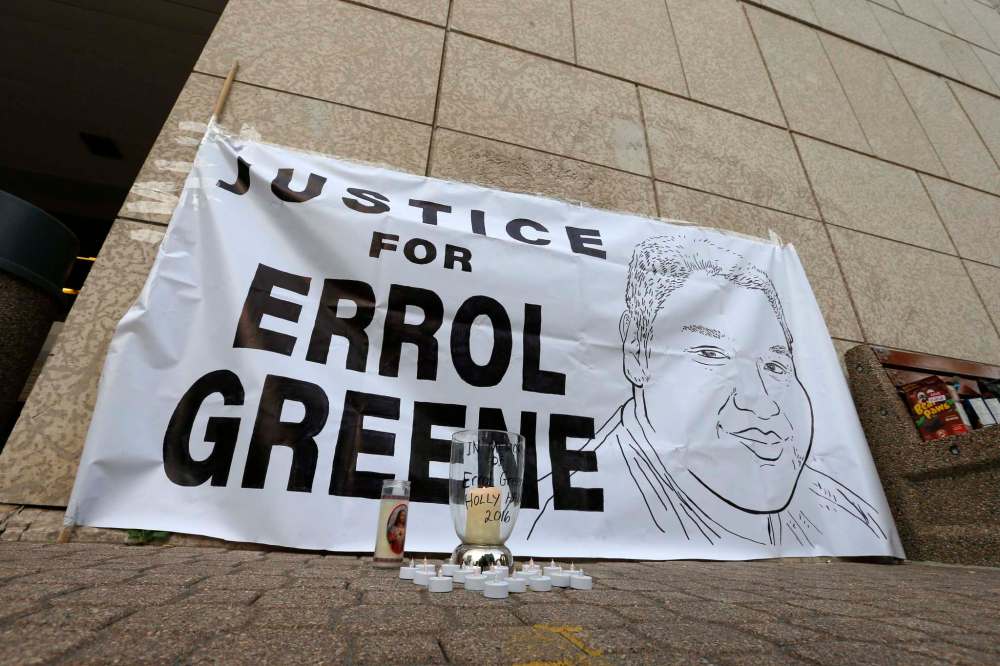
The Winnipeg Remand centre failed to provide adequate care not only once, but nine times before his death. Witnesses report he was restrained and held down to the ground in a fetal position during a seizure the day of his death, when any corrections officer with adequate training should have given him a wide berth in order to prevent injury. Given these facts, the MGEU and Manitoba Corrections’ lack of investigation only create more suspicions as to what incorrect actions may have led to his death.
There are several missing parts to this story which MGEU has failed to answer. Why was Greene denied life-sustaining therapy for so long? Why was he restrained during a seizure, possibly incurring more dangerous injuries? Why withhold autopsy results if there was nothing inappropriate about his treatment?
All of these questions should have already been considered.
According to the Fatality Inquiries Act of Manitoba, the inquiry should have happened immediately, as this was a death at a correctional institution, possibly because of a medical condition, and, as his previous treatment by the guards is on record, it may well have been an act of negligence — from refusing to give him his medication, or possibly, as in the case of Matthew Hines, further violent treatment by correctional officers during an epileptic event.
Hines, a resident of a New Brunswick jail, was beaten and pepper-sprayed in the face four times, by 13 guards, in 2015 after showing epileptic and psychotic symptoms of a condition of which Dorchester Penitentiary, like the Winnipeg Remand Centre, had full records about.
Refusing or stalling an inquiry without legal grounds should be a prosecutable act in itself, and, in doing so, the MGEU, the Remand Centre and Manitoba Corrections incriminate themselves and cause further grief to Greene’s wife and family.
Even as the government on all levels swears up and down that they are committed to indigenous peoples, by neglecting to pursue all avenues in investigating the death of a human being, Manitoba Corrections — and the government at large — fail to recognize the indubitable value of the life of an indigenous person.

Without knowing what happened, how will we know how to prevent it next time? If the rules around medication of people in custody are too strict, they need to be changed. If there is a racist element gumming up the ranks, there needs to be more than a nod and handshake from the government but a definitive plan of action towards meeting the Truth and Reconciliation Commission’s call to action.
If there is a lack of understanding or bad procedure around the treatment of people with cognitive disorders, mental illness, or other disabilities, there needs to be a serious amount of training and education for the guards to understand the specific needs of people with health conditions, much like Greene and Hines.
Refusing to ask questions helps no one. It only reinforces patterns of behaviour that risk the lives and well-being of the thousands of men and women in correctional facilities in Manitoba and across the country.
Furthermore, until measures are taken against preventable deaths, as a person with epilepsy, I will not feel safe with any government employee whose union would not seek to even investigate why I would die in care or in custody.
Hannah Foulger is a writer and theatre artist with a disability.
Related Articles
'I want to know what happened to him -- every damn detail'
Advertisement Advertise With Us
Advertisement Advertise With Us