

Election finance reform hurts small parties
Advertisement
Read this article for free:
or
Already have an account? Log in here »
To continue reading, please subscribe:

Digital Subscription
One year of digital access for only $205*
- Enjoy unlimited reading on winnipegfreepress.com
- Read the E-Edition, our digital replica newspaper
- Access News Break, our award-winning app
- Play interactive puzzles
*First annual payment billed as $205.00 + GST for one year. This annual subscription will automatically renew at $233.00 + GST every 52 weeks (10% off the regular annual price of $259.35). Offer available to new and qualified returning subscribers only. Cancel any time.
To continue reading, please subscribe:
Add Free Press access to your Brandon Sun subscription for only an additional
$1 for the first 4 weeks*
- Enjoy unlimited reading on winnipegfreepress.com
- Read the E-Edition, our digital replica newspaper
- Access News Break, our award-winning app
- Play interactive puzzles
*Your next Brandon Sun subscription payment will increase by $1.00 and you will be charged $17.95 plus GST for four weeks. After four weeks, your payment will increase to $24.95 plus GST every four weeks.
Read unlimited articles for free today:
or
Already have an account? Log in here »
Hey there, time traveller!
This article was published 25/04/2016 (3806 days ago), so information in it may no longer be current.
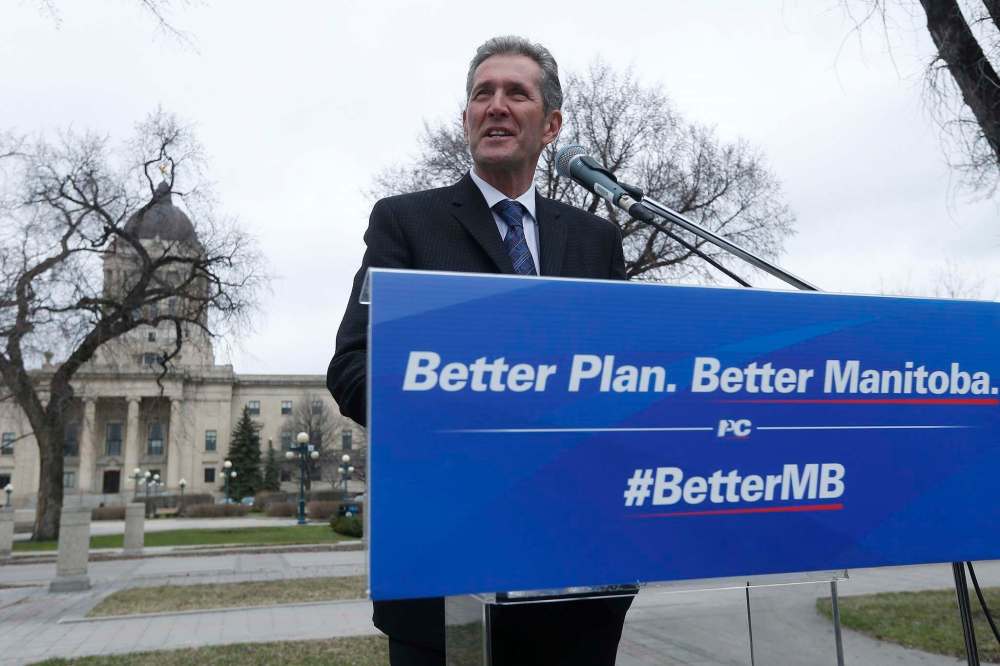
One of the planks of PC Leader Brian Pallister’s platform was to scrap the per-vote subsidy for political parties. The idea of the subsidy is unpopular with voters — many citizens mistakenly believe that this is the only form of subsidy political parties receive, and the PCs, rather than enlighten anyone, chose to promote this myth.
What is really at issue here is that the Tories are proposing to eliminate a relative small subsidy for political parties, undermining their opponents, while continuing to collect millions of dollars in subsidies themselves.
The policy is actually part of a long tradition of governments using high-minded-sounding campaign-finance reform as a way to tip the scales in their own favour. Karl Rove famously did so in Texas in the 1980s, when he used campaign finance to undermine the Democrats and elect George W. Bush governor of that state for the the first time.
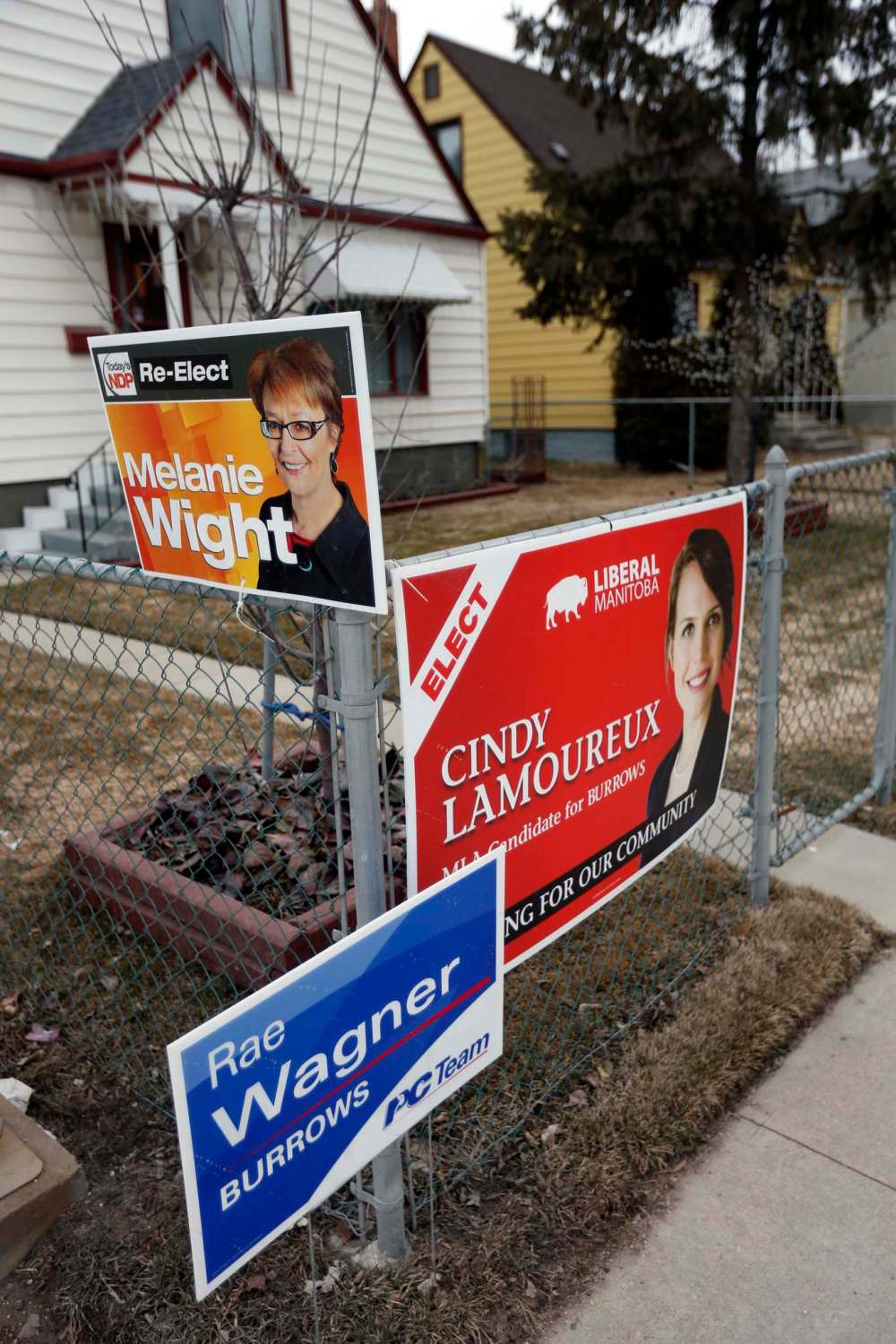
The per-vote subsidy costs about $600,000 for all political parties put together, less than the $700,000 the PCs received as a government rebate after the 2011 election. The NDP also accepted the campaign rebate, while turning down the per-vote subsidy.
That was just for the general election, but the rebate applies in each constituency as well. For example, according to Elections Manitoba, when Brian Pallister won a Fort Whyte byelection in 2012, his campaign spent $32,215.06, and received a government reimbursement of $16,107.54, or 50 per cent.
But donors to Pallister’s campaign also received tax credits from the government, up to 75 per cent. If you give $400 to a political party or candidate, you get back $300. In the Fort Whyte campaign, Pallister’s donors gave $15,893, and would have received $10,876 in tax rebates — nearly a 70 per cent taxpayer subsidy.
Add together the donation and spending rebates and Pallister’s $32,315.06 campaign was supported with $26,861 in public money — or 83 per cent of the cost.
The total amount of money paid out over the years easily exceeds $20 million, and the major beneficiaries are the PCs and the NDP. Your taxes are already going to support a political party you never voted for.
So, are the Tories proposing to eliminate any of this subsidy? No.
In fact, parties who fail to get 10 per cent of the vote aren’t eligible for a rebate. No one bothers to ask why, but the goal of this arbitrary number is clearly to discourage independents and smaller parties from running, and to undermine their finances. Subsidies, it would appear, are for winners only.
The per-vote subsidy that will be scrapped is based on votes earned. The subsidy that the Conservatives will keep is based on money raised and spent. Which is more important to reward in a democracy? Votes or money?
The per-vote subsidy was introduced for several reasons. First, it is to replace funds lost due to the ban on corporate and union donations, which was itself an effort to reduce the influence, real or perceived, of special interests. Parties have to earn the subsidy through votes from citizens, not by having special treatment for donors.
People donate to political parties for many reasons. They may donate because they believe in a cause, because they believe in a person or candidate, or they may donate to whoever they think will win, or to ensure an opponent loses.
But, especially between elections, people will give more to a party in power because it is the party in power.
Some may have a problem with the per-vote subsidy because it supports the work of political parties between elections. This ignores two critical realities. One is that political parties out of power need to keep working between elections on policy and organization, which are both essential to both campaigns and democracy.
The other is that parties with MLAs in government have budgets in the millions of dollars— not just for staff, printing, ads, mailings and so on — that dwarf the budgets of political parties, all funded by the public.
The fundamental basis of democracy is “one person, one vote,” not “one dollar, one vote.” The per-vote subsidy, which is being scrapped, is more closely aligned with democratic principles than the one the PCs intend to keep. These other subsidies suggest that money, and not votes, is what creates democratic legitimacy, when the opposite is true.
There is one simple solution, which is to allow people who want to have their taxes support political campaigns check a box on their tax return to let it happen, and leave it unchecked to decline. This is what the United States has done to provide public funding for elections since the 1960s.

This is an obvious solution that is fair to taxpayers and better for democracy.
Dougald Lamont is a Liberal communications consultant. He ran for the Manitoba Liberal leadership in 2013.
Related Articles
NDP interim leader expected in time for new legislature session
Advertisement Advertise With Us
Advertisement Advertise With Us