

MAID changes create serious questions
Advertisement
Read this article for free:
or
Already have an account? Log in here »
To continue reading, please subscribe:
Digital Subscription
One year of digital access for only $1.44 a week*
- Enjoy unlimited reading on winnipegfreepress.com
- Read the E-Edition, our digital replica newspaper
- Access News Break, our award-winning app
- Play interactive puzzles
*Billed as $5.77 plus GST every four weeks. After 52 weeks, price increases to the regular rate of $19.95 plus GST every four weeks. Offer available to new and qualified returning subscribers only. Cancel any time.
To continue reading, please subscribe:
Add Free Press access to your Brandon Sun subscription for only an additional
$1 for the first 4 weeks*
- Enjoy unlimited reading on winnipegfreepress.com
- Read the E-Edition, our digital replica newspaper
- Access News Break, our award-winning app
- Play interactive puzzles
*Your next Brandon Sun subscription payment will increase by $1.00 and you will be charged $17.95 plus GST for four weeks. After four weeks, your payment will increase to $24.95 plus GST every four weeks.
Read unlimited articles for free today:
or
Already have an account? Log in here »
Hey there, time traveller!
This article was published 03/04/2021 (2025 days ago), so information in it may no longer be current.
MY friend George was told in 2018 he had a particularly brutal type of cancer that was incurable, making him eligible for Medical Assistance in Dying. He didn’t choose that option, though.
He entered palliative care at St. Boniface Hospital, where his pain was lessened by medication, his family was allowed to stay at his bedside and his transition from this life was eased by compassionate medical professionals.
To this day, his family is grateful to the palliative-care staff at St. B for supporting them through George’s suffering and death.
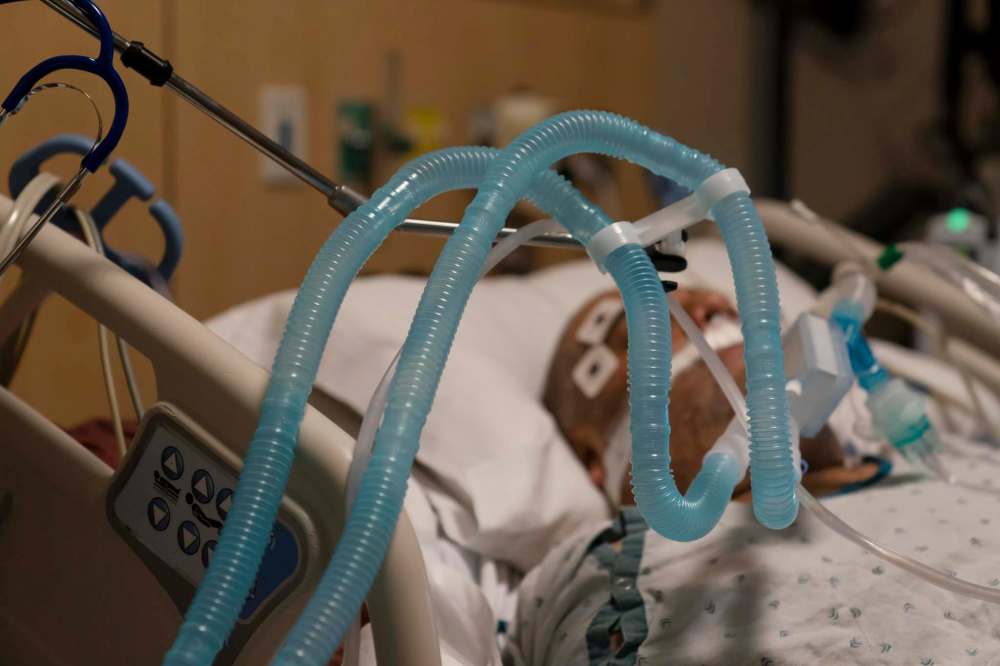
I thought of George often in recent weeks as the federal government debated and then passed on March 17 a law that expands access to medically assisted death.
When MAID was made legal in 2017, it was intended for individuals whose deaths were reasonably foreseeable. The new MAID seems to open the door to people with chronic illness or disabilities even if their death is not near.
The debate provoked a variety of highly emotional reactions, including from Conservative Senate leader Don Plett, who is from Landmark, Man. He spoke for many Canadians who sense a significant shift: the old law was a way to expedite dying; the new law seems to offer a terminal alternative to people who feel their suffering is intolerable.
His fellow senators passed the bill despite Plett’s emotional plea to them: “If there was ever a time to exercise sober second thought, it is now. It is not often that we can truly say that with this vote we have the opportunity to save lives, to prevent the unnecessary premature death of the vulnerable.”
Plett’s concern for vulnerable people was amplified by human-rights groups. They fear expanding assisted-death eligibility will devalue people with disabilities, some of whom will feel pushed to end their lives.
As a real-life example, Roger Foley, who suffers from an incurable neurological disorder, told justice committee MPs in a Zoom call from a hospital in London, Ont., that he needed to pay $1,800 per day in hospital costs or be discharged, even though he couldn’t get the necessary supports to live at home. When hospital staff mentioned MAID as an option, he perceived it as a “threat.”
Another aspect of the new law causing considerable anxiety is that it expands eligibility to people with a mental illness. This part of the law won’t take effect for two years, pending a review to establish safeguards and protocols. Thank goodness this review will have a full two years because they need lots of time for the delicate task of defining when the state will help end the lives of people with a mental illness.
With a physical disease, doctors can accurately offer a prognosis of incurable, which was the a criteria for the old MAID law. But with mental illnesses such as depression, the long-term forecast is less definite. One fear is that MAID may now be provided to people who, if given time and treatment, may have successfully fought their mental illness.
Objections to the expanded MAID law also come from people who consider themselves conscientious objectors. This includes doctors who refuse to offer MAID — some won’t even steer their patients to medical colleagues who will do it. They feel doctors are life-givers, not life-takers, and should adhere to the Hippocratic oath of not doing harm. Some even ask why the fatal MAID injections must be given by doctors, as lots of other professions are trained to give needles.
Personally, I am a conscientious objector on MAID. For religious/philosophical reasons, I believe in the sanctity of life until natural death. I am also aware, though, that I am currently healthy so my conviction comes without cost.
Also, I believe the decision is personal. I hope I will never judge the choice of people who suffer and seek MAID. If someone has been diagnosed with a horrible disease such as amyotrophic lateral sclerosis, also called Lou Gehrig’s disease, it would be merciless for other people to second-guess the victim’s decision on MAID.

What makes me uneasy is that some people will choose MAID because they don’t have access to high-quality palliative care, like my friend George.
A 2018 Health Canada report concludes three-quarters of Canadians would prefer to die at home, but only 15 per cent have access to palliative home-care services. Manitoba’s residential hospice ratio is 0.8 beds/100,000 residents, woefully inadequate for the aging population.
MAID is billed as a choice. But the choice should include the option of a natural death with pain and stress relieved by palliative professionals.
carl.degurse@freepress.mb.ca
Carl DeGurse is a member of the Free Press editorial board.