

More medicine not always better for frail older adults
Less may actually be more for older adults living with frailty
Advertisement
Read this article for free:
or
Already have an account? Log in here »
To continue reading, please subscribe:

Digital Subscription
One year of digital access for only $205*
- Enjoy unlimited reading on winnipegfreepress.com
- Read the E-Edition, our digital replica newspaper
- Access News Break, our award-winning app
- Play interactive puzzles
*First annual payment billed as $205.00 + GST for one year. This annual subscription will automatically renew at $233.00 + GST every 52 weeks (10% off the regular annual price of $259.35). Offer available to new and qualified returning subscribers only. Cancel any time.
To continue reading, please subscribe:
Add Free Press access to your Brandon Sun subscription for only an additional
$1 for the first 4 weeks*
- Enjoy unlimited reading on winnipegfreepress.com
- Read the E-Edition, our digital replica newspaper
- Access News Break, our award-winning app
- Play interactive puzzles
*Your next Brandon Sun subscription payment will increase by $1.00 and you will be charged $17.95 plus GST for four weeks. After four weeks, your payment will increase to $24.95 plus GST every four weeks.
Read unlimited articles for free today:
or
Already have an account? Log in here »
Hey there, time traveller!
This article was published 13/11/2018 (2857 days ago), so information in it may no longer be current.
Prevailing wisdom states that more is better — and it is no different when it comes to our expectation of medical treatments. With the help of the internet, patients and their families have come to expect intensive tests, treatments and therapies at every life stage.
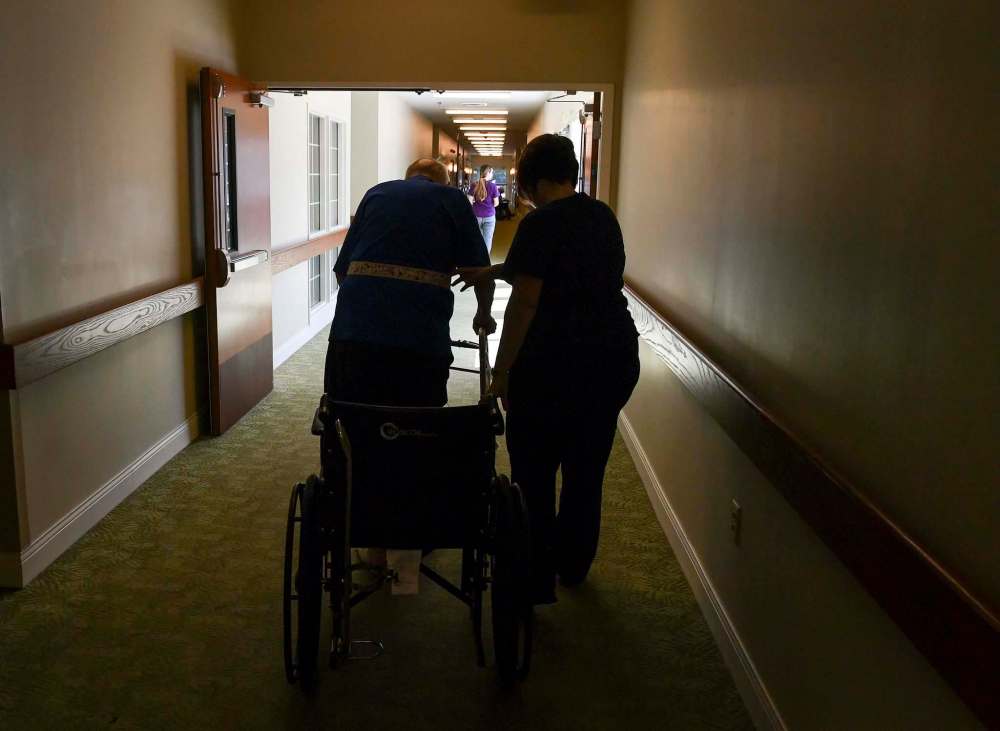
But sometimes, too much treatment can do more harm than good. This is true in all ages but is especially relevant for older adults living with frailty, who are much more likely to receive medical care where treatments often pose a higher risk of adverse effects.
Older adults with frailty are much more likely to be administered life-support therapies, but are much less likely to benefit from them when used.
As an example, researchers recently found that the routine procedure of giving acutely ill seniors in hospital increased amounts of oxygen did not improve their chances of survival. In fact, it increased their chances of death.
Another study looking at the use of emergency life support with mechanical ventilation, found that 31 per cent of patients aged 65 to 74 were discharged from hospital, compared to 19 per cent of those aged 80 to 84. And for patients over the age of 90, the number dropped to 14 per cent. However, even these abysmal statistics don’t tell the whole story.
Of the older patients who survive, only a small percentage of those on mechanical ventilation return to their pre-illness level of function.
By contrast, adapting care to less invasive forms of life support, such as breathing help with a face mask, can lead to good outcomes in those not willing to have usual mechanical ventilation with a breathing tube inserted into the lungs. Why? The patient may not require admission to the intensive-care unit, as they would with a breathing tube, don’t require high levels of sedation and they can remove the face mask to eat, drink and talk with their family and friends, improving their quality of life.
Yet even when the use of life support in late life offers little chance for benefit, it is commonly done resulting in needless suffering and reduced quality of life.
Overtreatment of frail, older adults with diabetes is another area of particular concern. Negative consequences from low blood sugars can result in fainting and falls leading to injury, immobilization, and in some cases, institutionalization. While strict control of diabetes is necessary for younger ages to prevent future complications, there may be less benefit in older adults who may not have the lifespan for complications to develop.
The increasing number of medications in older adults is also a concern.
It’s estimated that nearly two-thirds of seniors over age 65 are prescribed five or more drugs, while more than one-quarter are prescribed 10 — many of which may need to be taken multiple times daily. As the number of drugs increases, so too does the risk of harmful effects, drug interactions, hospitalization and poor outcomes overall.
Studies have found that reducing the number of medications, which may no longer be appropriate for the life stage of the individual, does not cause ill effects, and in some care, improves outcomes.
So, what can be done to address the potential overtreatment of older adults living with frailty?

First, we need to have frank advance-care planning and end-of-life conversations with our loved ones living with frailty. Knowing their preferences in advance is crucial, since these discussions may not be possible during a health crisis.
Regular medication reviews should also be performed. Over time, medication needs may change, so they need to be reviewed to assess their suitability based on current health status.
On the policy side, we need to realize that medical interventions can only go so far and our governments need to invest more in quality of life, improved by home care, social supports and palliative-care options for older Canadians living with chronic conditions and frailty.
As our population ages and many are living longer than ever before, let’s make sure that our extra time is quality time. And let’s not presume that more is better when it comes to medical interventions for older adults.
John Muscedere is the scientific director and CEO of Canadian Frailty Network, and an intensivist at Kingston Health Sciences Centre. He is also a professor of critical care medicine at Queen’s University and a contributor with EvidenceNetwork.ca based at the University of Winnipeg.