

Moving forward in post-pandemic economy
Advertisement
Read this article for free:
or
Already have an account? Log in here »
To continue reading, please subscribe:

Digital Subscription
One year of digital access for only $205*
- Enjoy unlimited reading on winnipegfreepress.com
- Read the E-Edition, our digital replica newspaper
- Access News Break, our award-winning app
- Play interactive puzzles
*First annual payment billed as $205.00 + GST for one year. This annual subscription will automatically renew at $233.00 + GST every 52 weeks (10% off the regular annual price of $259.35). Offer available to new and qualified returning subscribers only. Cancel any time.
To continue reading, please subscribe:
Add Free Press access to your Brandon Sun subscription for only an additional
$1 for the first 4 weeks*
- Enjoy unlimited reading on winnipegfreepress.com
- Read the E-Edition, our digital replica newspaper
- Access News Break, our award-winning app
- Play interactive puzzles
*Your next Brandon Sun subscription payment will increase by $1.00 and you will be charged $17.95 plus GST for four weeks. After four weeks, your payment will increase to $24.95 plus GST every four weeks.
Read unlimited articles for free today:
or
Already have an account? Log in here »
Hey there, time traveller!
This article was published 10/06/2020 (2231 days ago), so information in it may no longer be current.
While most governments around the world have generally opted for policies to stimulate the economy in the hopes of alleviating the worst impacts of the crisis, not all stimulus policies are equally wise. By examining the differing options taken by governments to this crisis, we can distinguish between sensible, forward-thinking stimulus and cautionary tales of policy gone wrong.
Almost every nation, including Canada, has followed the standard crisis-management policy, which is for central banks to pour money into the financial system to provide liquidity (short-term credit for companies and households) and drive down interest rates. Lower interest rates are important because they encourage borrowing and make existing debt easier to service for households, businesses and governments.
For example, although the Japanese government has a debt-to-GDP ratio of more than 200 per cent (the U.S.’s is slightly more than 100 per cent), it is much easier to fund because of Japan’s very low interest rates.
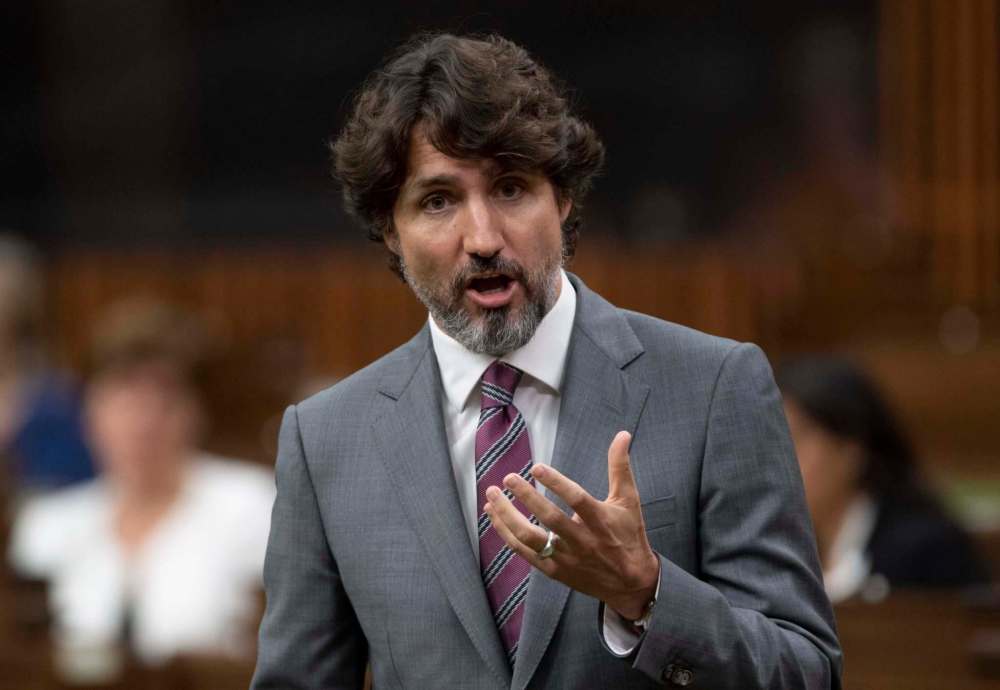
However, many Canadian and American families are still paying remarkably high interest rates on a variety of debt. In the U.S., the average annual interest rate on a payday loan is 391 per cent. Although Canadian banks temporarily cut their annual credit-card interest rates in half, to 10.99 per cent, after being nudged by the prime minister, this is still a very high rate at a time when families are facing severe financial distress — especially considering the very low interest rates at which the commercial banks can currently borrow money from the Bank of Canada.
During the 2008 financial crisis in the U.S., Nobel prize-winning economists Joseph Stiglitz and Paul Krugman, currently a columnist for the New York Times, recommended nationalizing the too-big-to-fail American banks (turning them into a public utility) after the U.S. government had bought up their toxic assets and they refused to serve the public interest by lending money to Main Street, ensuring that they played their economic role in providing a steady flow of credit on reasonable terms.
It remains to be seen what role the private banks will play in the current crisis.
During economic crises, low interest rates are rarely sufficient on their own. Therefore, government needs to spend to provide funding for businesses that have lost revenue and income for families that have lost jobs. This is not only important to alleviate personal hardship, it also reduces the length and depth of the economic downturn by propping up firms’ sales and profits, spurring investment, consumption and growth. The Trudeau government is certainly following this prescription.
But some governments are adding unprecedented conditionality to ensure taxpayer funds are used for the common good instead of corporate self-interest, by denying funds to firms that have used their surpluses and tax cuts for stock buy-backs that enriching stockholders and CEOs. The lesson learned from the 2008 bailout and the 2017 Trump tax bill is that it is a mistake to give more money to corporations if it doesn’t result in higher growth and employment, more investment or higher wages.
Prime Minister Justin Trudeau has gone a step farther, suggesting he will deny bailout money to corporations that avoid taxes by shifting profits to offshore tax havens.
Similarly, not all support for families is equally beneficial. Canada, Australia, New Zealand and Germany have implemented wage-subsidy programs that encourage firms to keep their workers employed. The U.S., by contrast, focused on stimulus cheques (with U.S. President Donald Trump’s name prominently displayed), which, for those still employed with the same income, will go into debt payments and savings rather than stimulating demand.
Premier Brian Pallister mirrored these mistakes by giving seniors of all income levels $200 (with a note signed by him), costing the province $45 million, while cutting taxes, costing the province an additional $75 million — all of which could have been used to contribute to Canada’s wage-subsidy program.

According to the Brookings Institute, maintaining workers’ relationship to employers “will be crucial to how quickly the economy recovers,” because the search for workers is costly, as is the training before they are as productive as workers with experience.
The almost-unprecedented spending by governments around the world creates a remarkable opportunity to influence the direction of the economy. Organizations as diverse as the World Economic Forum (which represents the largest corporations in the world), the United Nations, the European Union, the U.K. Labour party, Canadian unions, progressive elements of the U.S. Democratic Party, and the Green and NDP parties in Canada all argue that public funds should be directed toward a long-term strategy for equity and sustainability.
The working principles of this consensus include: public spending is required to shift from a grey to green economy, so that there are no net emissions of greenhouse gases by a set early date; subsidies to businesses need to be tied to green jobs and sustainable growth; and no person or region should be left behind — the so-called “just transition” to a more environmentally sustainable economy.
The bailouts in this crisis will dwarf those of 2008. The crucial issue will be whether the transition out of this crisis will be led by special interests or a democratic public will.
Robert Chernomas and Ian Hudson teach economics at the University of Manitoba.