

New approach needed to address homelessness
Advertisement
Read this article for free:
or
Already have an account? Log in here »
To continue reading, please subscribe:
Monthly Digital Subscription
$1 per week for 24 weeks*
- Enjoy unlimited reading on winnipegfreepress.com
- Read the E-Edition, our digital replica newspaper
- Access News Break, our award-winning app
- Play interactive puzzles
*Billed as $4.00 plus GST every four weeks. After 24 weeks, price increases to the regular rate of $19.95 plus GST every four weeks. Offer available to new and qualified returning subscribers only. Cancel any time.
Monthly Digital Subscription
$4.99/week*
- Enjoy unlimited reading on winnipegfreepress.com
- Read the E-Edition, our digital replica newspaper
- Access News Break, our award-winning app
- Play interactive puzzles
*Billed as $19.95 plus GST every four weeks. Cancel any time.
To continue reading, please subscribe:
Add Free Press access to your Brandon Sun subscription for only an additional
$1 for the first 4 weeks*
*Your next subscription payment will increase by $1.00 and you will be charged $16.99 plus GST for four weeks. After four weeks, your payment will increase to $23.99 plus GST every four weeks.
Read unlimited articles for free today:
or
Already have an account? Log in here »
Hey there, time traveller!
This article was published 08/03/2021 (1850 days ago), so information in it may no longer be current.
WINNIPEGGERS are growing increasingly alarmed over the increased number of people experiencing homelessness in our city.
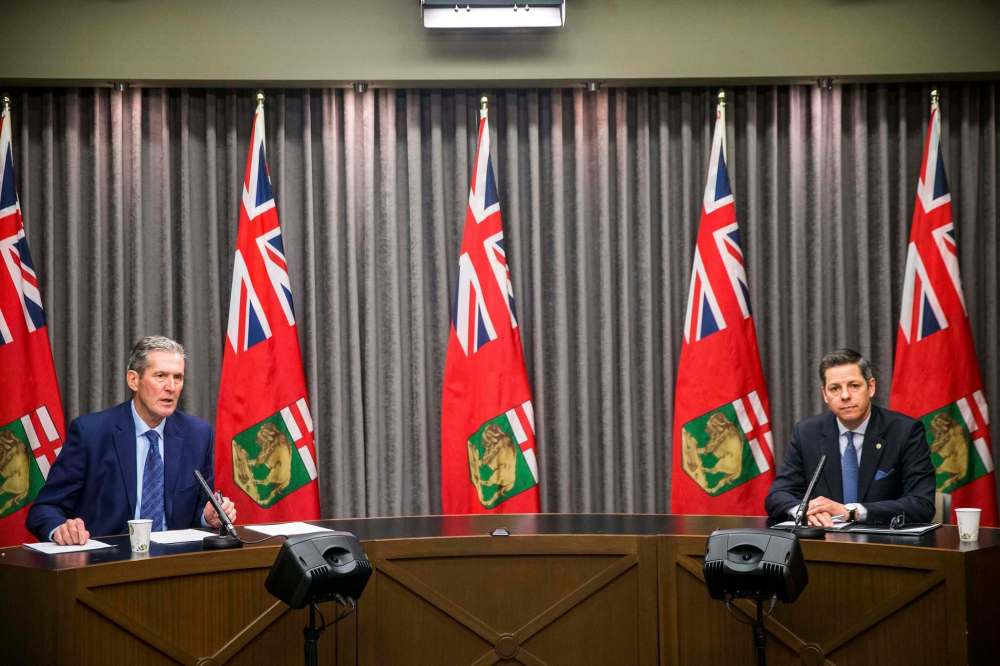
The key to understanding why Winnipeg continues to struggle is highlighted by the unproductive kicking of the can between Mayor Brian Bowman and Premier Brian Pallister. The mayor feels cost pressures of trying to keep up with growing demand for emergency services and the premier, thinking addressing homelessness will cost money, says he doesn’t want to “take the bait” of even discussing the “municipal” matter with the mayor.
But how do these statements jive with the evidence? The results from the At Home/Chez Soi study, the largest research effort of any kind in Canada, confirms that financial savings of providing supportive housing across multiple agencies can be twice what is needed to provide the housing in the first place.
Specifically, the data from six major Canadian cities show a large portion of the homeless population is in constant contact with emergency services. For example, a cohort of 100 would see the various emergency service providers cumulatively more than 10,000 times a year.
Typically, a call to 911 about someone struggling in the cold or sleeping in a bus shelter summons a police car and a fire truck. An ambulance ride is then initiated to take the individual to an emergency room and an eventual stay in a psychiatric bed. Often, people are charged with offences such as disorderly conduct, which triggers Legal Aid, court appearances and jail time. It would be difficult to imagine a more expensive, less effective response. This prompts the question: if providing people with actual help saves money, then why are our political leaders arguing over who is going to pay? Shouldn’t they be arguing about who gets to keep what’s saved?
Going forward, what is needed is a new way of moving money that shifts these emergency systems away from expensively managing problems and toward affordably solving them. Governments need a new tool that will create markets for solutions. Governments are good at buying goods and services; they can choose to buy reduced workload from non-profits.
Non-profit supportive housing agencies can be paid by emergency-service providers based on the value of not having to deploy the resources in the first place. A key difference is instead of funding, non-profits should be paid the actual value of lowering workloads on an outcomes basis. This allows the true value of non-profit work to be realized and will lead to meaningful impact.
When comparing the costs of responding to crises to the costs of avoiding them, emergency-service providers will quickly see the financial benefits of paying non-profits to lower their workloads. This is what value for money looks like.

The premier should well know that 75 per cent of the benefits of reducing homelessness are going to be felt in provincial systems, including courts, jails and in visits to emergency rooms. The mayor can finally address the relentless growth in the percentage of city spending — now 46 per cent — that goes to support overburdened emergency services at the expense of libraries, road renewal and recreation. This approach will also free up the Winnipeg Police Service to focus on crime.
What is clear is that both the premier and mayor are stuck in old thinking that has resulted in bloated government and continued exclusion and suffering of our fellow citizens. They would benefit by embracing the benefits that the non-profit sector has to offer.
Neither the premier nor the mayor wants homelessness. No one does. They both agree their respective systems are struggling under the weight of managing the problem rather than solving it. The good news is that with new thinking, there’s a clear financial and humanitarian benefit in working together, by procuring outcomes that can be delivered by Winnipeg’s trusted and experienced non-profit sector.
I’m hopeful they can see the value in solving problems rather than just managing them.
Shaun Loney is a social entrepreneur and the author of The Beautiful Bailout.