

No ‘star candidate’ treatment for Carney
Advertisement
Read this article for free:
or
Already have an account? Log in here »
To continue reading, please subscribe:

Digital Subscription
One year of digital access for only $205*
- Enjoy unlimited reading on winnipegfreepress.com
- Read the E-Edition, our digital replica newspaper
- Access News Break, our award-winning app
- Play interactive puzzles
*First annual payment billed as $205.00 + GST for one year. This annual subscription will automatically renew at $233.00 + GST every 52 weeks (10% off the regular annual price of $259.35). Offer available to new and qualified returning subscribers only. Cancel any time.
To continue reading, please subscribe:
Add Free Press access to your Brandon Sun subscription for only an additional
$1 for the first 4 weeks*
- Enjoy unlimited reading on winnipegfreepress.com
- Read the E-Edition, our digital replica newspaper
- Access News Break, our award-winning app
- Play interactive puzzles
*Your next Brandon Sun subscription payment will increase by $1.00 and you will be charged $17.95 plus GST for four weeks. After four weeks, your payment will increase to $24.95 plus GST every four weeks.
Read unlimited articles for free today:
or
Already have an account? Log in here »
Hey there, time traveller!
This article was published 16/04/2021 (1982 days ago), so information in it may no longer be current.
Canadians have watched for months as former Bank of Canada governor Mark Carney and the Liberal Party have exchanged furtive glances and batted their eyelashes at one another. The romance came out into the open last week when Carney delivered a speech to the Liberal convention, in which he took several digs at the Conservative Party and pledged to “do whatever I can to support the Liberal Party in our efforts to build a better future for Canadians.”
Carney presumably did not mean by this that he intends to bake cupcakes to sell at party fundraisers. Indeed, it has been an open secret for some time that Carney was likely to take the plunge into federal politics and run with the Liberal Party.
The lack of an open seat will make it difficult for Carney to make his way into Justin Trudeau’s cabinet. Perhaps Trudeau can convince a sitting Liberal MP to take early retirement, and Carney can run in the ensuing byelection? Trudeau could also appoint Carney to the cabinet even before he is elected to the House of Commons, although convention dictates that this would be a short, stop-gap measure.
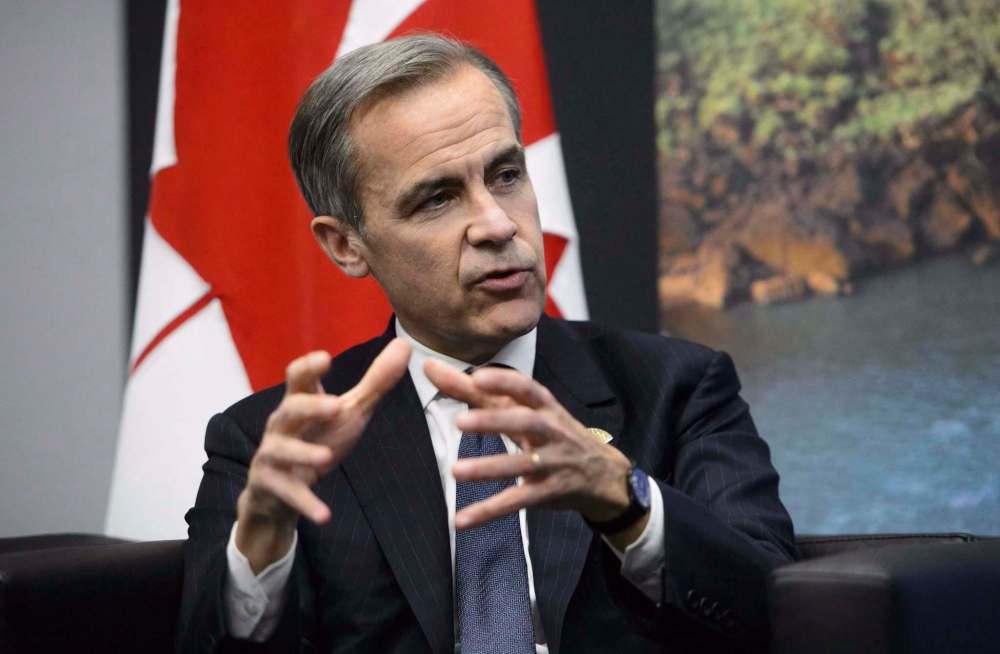
But that raises a question: why should Carney or anyone else get a free ride into Parliament? If Carney wants to be a politician, he should have to do what almost every other MP did before being elected: win a local nomination contest for the right to run as a Liberal candidate.
Political scientist Ken Carty sees Canadian parties as essentially an ongoing deal between party members and the party leader. On one hand, party leaders are given the right to shape the policy of the party, including their election platforms. We saw this principle in action over the last few weeks when all three federal parties held virtual conventions at which party members debated and voted on policy resolutions.
While members gave thumbs-up to some eyebrow-raising policy ideas, they are non-binding and party leaders are free to ignore or even contradict them.
This raw deal for party members, Carty argues, comes with a big consolation prize. In return for allowing leaders to shape policy, party members get the right to select party candidates. So in Canadian parties, it is party members in the constituencies, not the leader, who vote to decide who will run for the party in subsequent elections.
Nomination contests can be low-key acclamations or massive, dramatic, competitive races where supporters sign up new members and bus them to whatever gym or community centre is the locale where votes are counted. They are remarkable democratic events in our country. And, normally, incumbent MPs must win renomination, creating the possibility for MPs who ignore local needs and preferences to be challenged and beaten for the party nomination.
While most party candidates in Canada are selected by party members, there are exceptions. Party committees can “red light” prospective candidates if they uncover embarrassing information from their past. Party leaders must sign off on candidates. In the most extreme cases, party leaders can override local members and appoint candidates, effectively parachuting them into the role. Leaders do so at the cost of alienating local members and activists.

When party leaders use their power to bypass local nominations, who do they tend to parachute in? Sometimes, party leaders use this power to diversify the candidate pool, adding women and members of traditionally disadvantaged groups. But in research I conducted with political scientist Amanda Bittner, we found party leaders primarily use this power to appoint star candidates — people with a high public profile who it is felt should not have to endure the indignity of running in a local nomination race.
Further, we found that these stars overwhelmingly went on to be cabinet ministers once elected. In the meantime, the lowly MPs who won the right to run for the party fair and square in a local nomination race were less likely to make it into cabinet and more likely to shoulder low-profile parliamentary work such as sitting on committees.
I’m no fan of this two-tiered system of democracy. Neither was Stephane Dion when he was leader of the Liberal Party. Rather than giving Justin Trudeau a free pass into Parliament, Dion made him fight in a contested nomination race in a working-class Montreal seat. Trudeau won the nomination and went on to defeat the incumbent Bloc Quebecois MP. In the process, he proved his mettle to some Liberals who had previously seen him as a lightweight.
Hopefully, Trudeau will give Carney the same opportunity. Parachuting him into a safe Liberal seat and then into cabinet would be both unfair and democratically dubious. If Carney wants to be an MP, he should have to secure the endorsement of local party members in some constituency, just like the vast majority of MPs — including Trudeau — were required to do.
Royce Koop is an associate professor in the department of political studies and co-ordinator of the Canadian studies program at the University of Manitoba.