

Politics and sports can’t be separated

Advertisement
Read this article for free:
or
Already have an account? Log in here »
To continue reading, please subscribe:

Digital Subscription
One year of digital access for only $205*
- Enjoy unlimited reading on winnipegfreepress.com
- Read the E-Edition, our digital replica newspaper
- Access News Break, our award-winning app
- Play interactive puzzles
*First annual payment billed as $205.00 + GST for one year. This annual subscription will automatically renew at $233.00 + GST every 52 weeks (10% off the regular annual price of $259.35). Offer available to new and qualified returning subscribers only. Cancel any time.
To continue reading, please subscribe:
Add Free Press access to your Brandon Sun subscription for only an additional
$1 for the first 4 weeks*
- Enjoy unlimited reading on winnipegfreepress.com
- Read the E-Edition, our digital replica newspaper
- Access News Break, our award-winning app
- Play interactive puzzles
*Your next Brandon Sun subscription payment will increase by $1.00 and you will be charged $17.95 plus GST for four weeks. After four weeks, your payment will increase to $24.95 plus GST every four weeks.
Read unlimited articles for free today:
or
Already have an account? Log in here »
Hey there, time traveller!
This article was published 07/10/2017 (3272 days ago), so information in it may no longer be current.
It’s a tough time to be a fan of professional sports.
Between the crimes and misdemeanours of high-profile athletes, the all-too-frequent use of performance-enhancing substances, cynical team owners uprooting teams to pursue new stadiums and the obscene money being paid to people who, at most, work six months a year, it’s hard to find the positive message in professional sports.
This is particularly concerning if you have children. As a fan of almost all sports (sorry, curling — I’ve tried, but you just don’t move me), nary a day goes by without SportsCentre or a game occupying time on the largest television in our home. That means my kids are exposed almost constantly to the stories of the games and the stories of the athletes involved in the games.
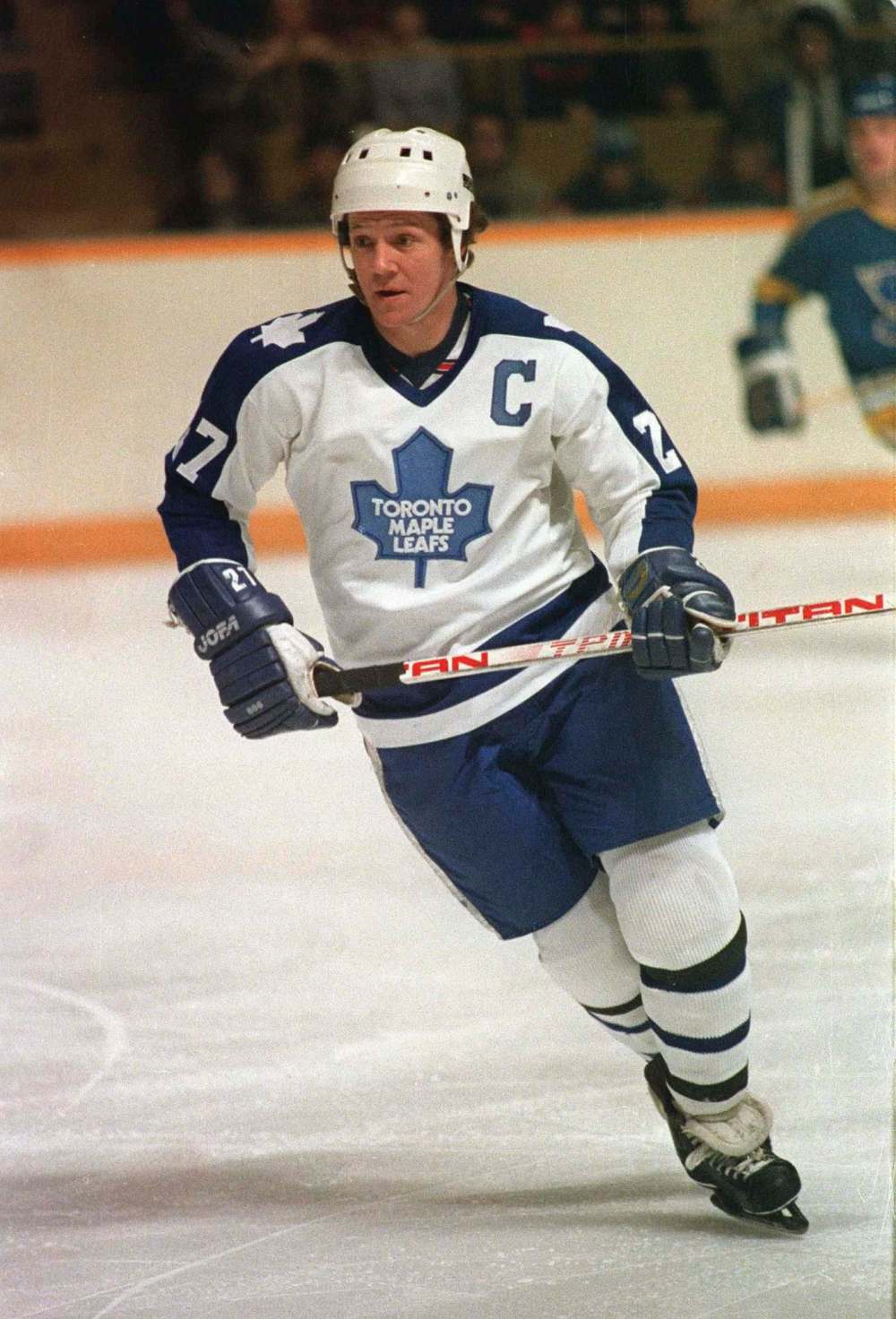
I grew up engaged in the typical long-term love affairs with the sporting heroes of my youth: the quiet intensity of Maple Leafs captain Darryl Sittler; the looming presence of Toronto Argonauts defensive lineman Jim Corrigall; and (later on) the unorthodox athleticism of Blue Jays centre-fielder Rick Bosetti.
I cannot remember if any of those athletes ever said or did anything controversial. They were the stars toiling in a rarefied sphere that was mostly sealed off from the outside world. That is not to say that the sporting heroes of days past did not have skeletons in their closets; some of the most famous sports figures have been revealed, years later, to have been bad people. Fortunately for them and their adoring public, we were rarely confronted by their dirty laundry while they were still playing.
Athletes were able to escape scrutiny and judgment for many reasons. The aforementioned Sittler did not have to contend with the internet and social media. And the tradition among sports journalists back then was to mostly ignore, or conceal, what happened off the field/diamond/ice. For most of the first century of professional sports on this continent, “See no evil, hear no evil, speak no evil” could have been the code of professional conduct for journalists covering sports.
It’s impossible now to maintain a separation between sports and the broader world in which they exist. Media saturation, in particular social media, has shrunk the distance between fans and star athletes. In my lifetime, we have gone from seeing maybe one hockey game and one NFL football game on television to being able to see any and all games at any time. There are more analysts, commentators, journalists and fans talking about sports and athletes than ever.
As a result of that media saturation, athletes have become public figures who are bigger than the characters they play on the field or rink. Their lives are open books and the expectations we have of them — from the way they treat the people in their lives, to the things they do to boost their performance, to the opinions they possess about events outside the sporting arena — are much different, as well.
This, of course, brings us to Colin Kaepernick, the former NFL quarterback who sparked an international debate about race, politics and whether athletes have a right and a responsibility to speak out when they see something wrong. The cost of Kaepernick’s protest was his tenure as an NFL quarterback. Despite the fact that he remains a youthful and dynamic athlete, he has not been offered a contract by any of the league’s 30 teams. The quarterback who first used his professional profile to protest the way black Americans are being treated has been blackballed.
Kaepernick’s solitary protest last season — while he was still employed, he first sat and then knelt during the U.S. national anthem — has become a league-wide obsession. Last month, a clear majority of players joined in some sort of sympathetic protest to highlight Kaepernick’s original point — racial inequality and police brutality.
U.S. President Donald Trump gets a big assist on the game sheet for all that. His disparaging remarks about Kaepernick and other sympathetic NFL players turned his original gesture into a league-wide effort that included many coaches and even drew the support of team owners, a private club that does not count one African American among its members. Trump even sparked support from athletes from other sports, such as U.S.-born Blake Wheeler, the much-loved captain of the Winnipeg Jets.
It has been suggested by many sports commentators and analysts that ultimately, fans won’t put up with the temerity of these athletes. That they want professional sports to remain an escape from both the mundane and the disturbing facts of life outside the game. Like Trump, these fans believe the athletes are paid to entertain, not to lecture.
That is, of course, a desperate bit of misdirection. Sports has never been separated from the world around it. The fact that playing national anthems before games in North America started as a wartime tribute to those serving in the military is a clear example of how sports has always mixed with politics.
Other examples? Baseball helped engineer a quantum leap in the civil rights movement when a small group of visionaries demanded to include African Americans on their rosters. The first African-American player to make a major-league roster, Jackie Robinson, spent his years after baseball as a tireless civil rights activist.
Muhammad Ali, who at his peak would easily have qualified as the most famous person in the world, defied the draft and was sentenced to prison to protest the Vietnam War, a conviction that was later overturned by the Supreme Court. Throughout his life he willingly added his gravitas to the civil rights movement and other social justice causes.
Anyone who has ever lived in a city where a pro sports team tried to blackmail taxpayers into paying for a new stadium or arena should understand the significant overlap between sports and politics. And let’s not forget that politicians have, for many years, curried the public endorsements of athletes to aid their electoral ambitions.

The angry fans and the commentators who sympathize with their decision to tear up their season tickets and burn their replica jerseys in counter protest to the players’ protest, are desperately trying to get away from the fact that they are most upset about what Kaepernick and others are saying, not how they are saying it.
It has been widely reported that 233 African Americans have been killed by police in the 12 months since Kaepernick started his protest. I don’t know what world you live in, but in my house, there would be deep concern if the most powerful and wealthy African Americans in pro sports weren’t using the profile they have earned with their on-field heroics to speak out about injustice.
Anyone who argues that anything that happens on the field or rink is more important than issues such as racial inequality isn’t trying to preserve the sanctity of “the game”; they are trying to bury the issues at the heart of the protests, for all of the worst, ugliest reasons.
The longer Kaepernick goes without a job while NFL teams continue to employ a motley collection of gun-wielding, wife-beating, child-abusing stars, the less likely it is that NFL football will make its way onto my television. I don’t know about you, but there are just certain things I cannot abide in the athletes I cheer for.
dan.lett@freepress.mb.ca
Dan Lett is a columnist for the Free Press, providing opinion and commentary on politics in Winnipeg and beyond. Born and raised in Toronto, Dan joined the Free Press in 1986. Read more about Dan.
Dan’s columns are built on facts and reactions, but offer his personal views through arguments and analysis. The Free Press’ editing team reviews Dan’s columns before they are posted online or published in print — part of the our tradition, since 1872, of producing reliable independent journalism. Read more about Free Press’s history and mandate, and learn how our newsroom operates.
Our newsroom depends on a growing audience of readers to power our journalism. If you are not a paid reader, please consider becoming a subscriber.
Our newsroom depends on its audience of readers to power our journalism. Thank you for your support.
Dan Lett is a columnist for the Free Press, providing opinion and commentary on politics in Winnipeg and beyond. Born and raised in Toronto, Dan joined the Free Press in 1986. Read more about Dan.
Dan’s columns are built on facts and reactions, but offer his personal views through arguments and analysis. The Free Press’ editing team reviews Dan’s columns before they are posted online or published in print — part of the our tradition, since 1872, of producing reliable independent journalism. Read more about Free Press’s history and mandate, and learn how our newsroom operates.
Our newsroom depends on a growing audience of readers to power our journalism. If you are not a paid reader, please consider becoming a subscriber.
Our newsroom depends on its audience of readers to power our journalism. Thank you for your support.
Advertisement Advertise With Us
Advertisement Advertise With Us