

Time for major rethink on Portage Place
Advertisement
Read this article for free:
or
Already have an account? Log in here »
To continue reading, please subscribe:

Digital Subscription
One year of digital access for only $205*
- Enjoy unlimited reading on winnipegfreepress.com
- Read the E-Edition, our digital replica newspaper
- Access News Break, our award-winning app
- Play interactive puzzles
*First annual payment billed as $205.00 + GST for one year. This annual subscription will automatically renew at $233.00 + GST every 52 weeks (10% off the regular annual price of $259.35). Offer available to new and qualified returning subscribers only. Cancel any time.
To continue reading, please subscribe:
Add Free Press access to your Brandon Sun subscription for only an additional
$1 for the first 4 weeks*
- Enjoy unlimited reading on winnipegfreepress.com
- Read the E-Edition, our digital replica newspaper
- Access News Break, our award-winning app
- Play interactive puzzles
*Your next Brandon Sun subscription payment will increase by $1.00 and you will be charged $17.95 plus GST for four weeks. After four weeks, your payment will increase to $24.95 plus GST every four weeks.
Read unlimited articles for free today:
or
Already have an account? Log in here »
Hey there, time traveller!
This article was published 16/03/2021 (2027 days ago), so information in it may no longer be current.
It’s not often government gets a chance at a do-over, particularly on a city-defining project. But that is exactly what we have, now that Starlight Enterprises has come clean with how much government largesse it is truly seeking.
We’ve seen plenty of legitimate criticism of the agreement between three levels of government and Starlight to redevelop Portage Place. Now that Starlight has upped its demand of the federal government, it is quite clear this is another example of the socialization of risk and the privatization of profit.
Since this project was unveiled, the context has drastically changed. The Bay, connected to Portage Place, has closed. The Winnipeg Art Gallery has completed Qaumajuq, its new home for Inuit art. All along the historic section of Portage Avenue, businesses, large and small, are struggling. A pandemic has changed the way that we work, live and play.
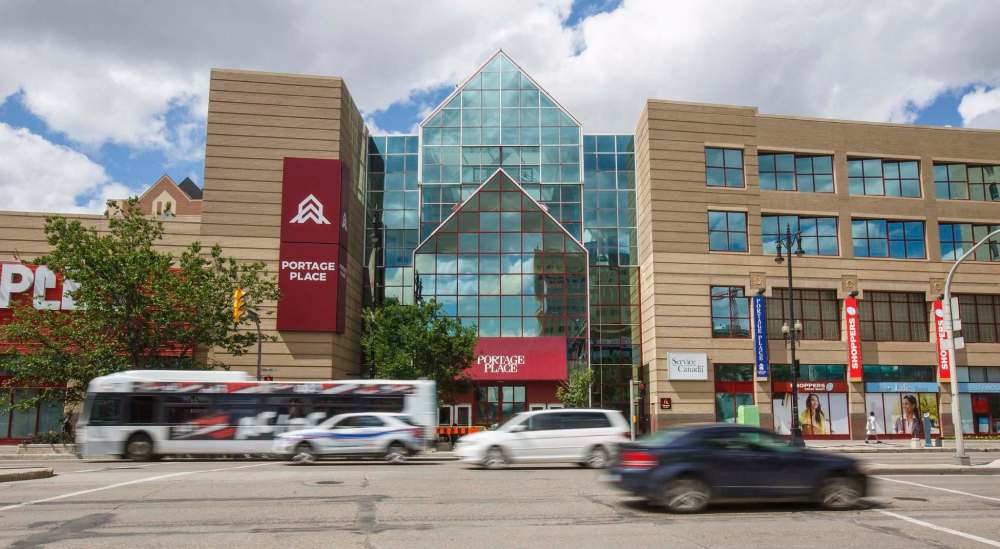
It’s now time to put a pause on the Portage Place redevelopment. It needs more consideration. For years, the city has jumped at any opportunity for downtown revitalization projects — of which, ironically, Portage Place was one. The location of Portage Place, on one of Canada’s most recognizable and iconic streets, in the downtown of a capital city full of beautiful heritage buildings, requires vision and co-ordination.
Due to its size and location, this section of Portage Avenue truly has the potential to define our city.
We need to not singly think about Portage Place, but about the whole of Portage Avenue. It is one of Canada’s great streets, leading to what is arguably Canada’s most famous intersection. It is the gateway to the historic core of Winnipeg, and it should be treated as such. We should be looking at the design of Portage Avenue from Broadway all the way to Main Street.
The bones for an incredible high street are there. The University of Winnipeg campus, the Bay, WAG, Portage Place, countless beautiful heritage buildings, and standout modern buildings such as Manitoba Hydro & Bell MTS Place, but they are all disjointed. Portage Avenue should be a destination street for Winnipeggers and beyond.
Instead, we currently have an aggressive and unwelcoming environment for people. The roadway is designed to get cars through Portage Avenue in and out of downtown as quickly as possible. People are chronicling the boarded-up buildings along Portage, with The Bay being the most recent and prominent added to the list. Rather than a proud showcase, it looks like a street the city has given up on.
It doesn’t need to be this way.
We must think of Portage Avenue as a public space, one that is welcoming to pedestrians, and how to achieve that. Create an environment to support local business — businesses that rely on foot traffic, not another iteration of a suburban shopping centre. Portage can and should be a place where you can spend an afternoon, walking or riding from one end to the other, stopping to sip a coffee, eat ice cream, have a meal, shop, go to the gallery, bring friends and relatives from out of town for the day. This is what it can be; this is what Portage Avenue deserves.
For that, we need to take the time to have the conversation. We must ensure the conversation includes everyone: small business, social agencies, building owners and the Indigenous community, as well as the general public. Starting from a position of inclusion and equity, a plan can be developed for Portage that can meet the needs of reconciliation and be a street we can all be proud of.

Everything should be on the table for discussion; sidewalk widths, street trees, parks and open space, moving transit to the middle, street furniture, patios, bike lanes, building entrances, parking — you name it. All of it should be part of the vision for the future of Portage Avenue.
Portage Place is such a massive block that it is the key to the whole street. What we do with it now will set the tone and direction for the future. Miss that opportunity, and we will cast Portage Avenue as an abandoned street for a long time to come.
Investing in the public realm to lay the bones for the future of Portage Avenue downtown is a public investment that will benefit everyone, not just one developer. Commit to an inclusive community with dignified affordable housing, rather than a developer using affordable housing as the bait to snag government dollars.
Our city council has the opportunity to tell the developers what we want for Portage Avenue, and not have them tell us what they need for their one location. The attitude that we need to redevelop Portage Place at any and all cost, without a clear vision for the future, will completely miss the opportunity that this do-over offers us.
Brian Pincott has lived in Winnipeg for nearly two years; prior to that he was a city councillor in Calgary for 10 years. He is executive director of Vélo Canada Bikes.
Related Articles
True North deserves chance to revive Portage Place

Advertisement Advertise With Us
Advertisement Advertise With Us