

U.S. disrupts cash aid to Cuba
Advertisement
Read this article for free:
or
Already have an account? Log in here »
To continue reading, please subscribe:
Monthly Digital Subscription
$1 per week for 24 weeks*
- Enjoy unlimited reading on winnipegfreepress.com
- Read the E-Edition, our digital replica newspaper
- Access News Break, our award-winning app
- Play interactive puzzles
*Billed as $4.00 plus GST every four weeks. After 24 weeks, price increases to the regular rate of $19.95 plus GST every four weeks. Offer available to new and qualified returning subscribers only. Cancel any time.
Monthly Digital Subscription
$4.99/week*
- Enjoy unlimited reading on winnipegfreepress.com
- Read the E-Edition, our digital replica newspaper
- Access News Break, our award-winning app
- Play interactive puzzles
*Billed as $19.95 plus GST every four weeks. Cancel any time.
To continue reading, please subscribe:
Add Free Press access to your Brandon Sun subscription for only an additional
$1 for the first 4 weeks*
*Your next subscription payment will increase by $1.00 and you will be charged $16.99 plus GST for four weeks. After four weeks, your payment will increase to $23.99 plus GST every four weeks.
Read unlimited articles for free today:
or
Already have an account? Log in here »
Hey there, time traveller!
This article was published 13/03/2020 (2211 days ago), so information in it may no longer be current.
It goes without saying that personal remittances — cash transfers to Cuba from outside family members — are a critical part of daily sustenance on the Caribbean island. Some estimates (because the Cuban government doesn’t typically publish these numbers) put Cuban financial remittances in the top three of foreign exchange-generators (after receipts from medical professionals working abroad and ahead of mass tourism dollars) — bringing in roughly US$6.5 billion annually.
From the very outset, and now with his gaze firmly fixed on retaining the battleground state of Florida, U.S. President Donald Trump has been determined to reverse former president Barack Obama’s policy of engagement with revolutionary Cuba. The Obama White House, after negotiating a ground-breaking 2014 entente, agreed to eliminate restrictions on personal remittances (and enhanced the less costly and widely used Western Union wire transfers) and encouraged Americans to travel to Cuba.
Unfortunately, Trump has only sought to tighten the screws on Cuba economically, diplomatically and militarily. Much of that stems from Trump’s preoccupation with winning the 2020 presidential election and removing Venezuela’s president, Nicolás Maduro, from power in Caracas.
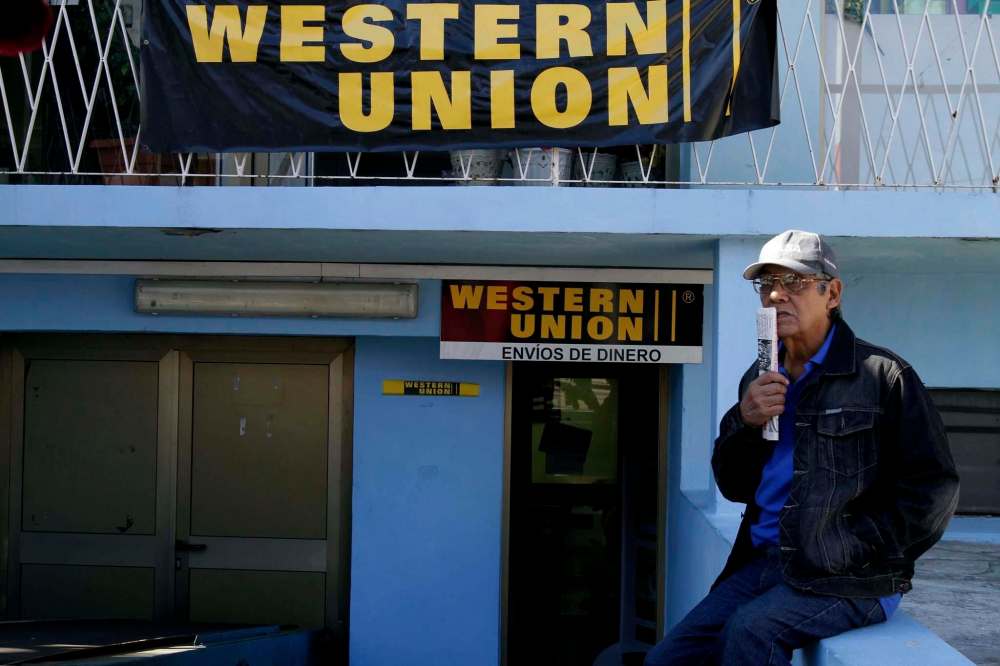
Last September, the Trump administration instructed the U.S. Treasury Department to limit family remittances to Cuba to $1,000 every three months (to a single close relative on the island). This was designed to make life in Cuba more difficult for the struggling Cubans, to increase pressure on the Maduro-friendly government in Havana.
As U.S. Treasury secretary Steven Mnuchin explained, “We are taking additional steps to financially isolate the Cuban regime. The United States holds the Cuban regime accountable for its oppression of the Cuban people and support of other dictatorships throughout the region, such as the illegitimate Maduro regime.”
He then went on to add, “Through these regulatory amendments, Treasury is denying Cuba access to hard currency, and we are curbing the Cuban government’s bad behaviour while continuing to support the long-suffering people of Cuba.”
Then, in late February, Western Union abruptly suspended financial transfers to Cuba (with the exception of those originating from the U.S.) with little in the way of corporate explanation. A statement issued by the company noted the following: “Given the unique challenges of operating remittance services to Cuba from countries outside the United States, Western Union is unable to operate money transfers to Cuba from countries other than the United States as of February 26, 2020.”
It is understood that this damaging move, which does include transactions from Canada, was undertaken to align the U.S. company’s activities with the decades-long U.S. economic blockade of Cuba. It is also possible that Western Union was growing increasingly nervous about the prospects of the company running afoul of the controversial Helms-Burton Act and facing costly lawsuits from Cuban-Americans in such places as Miami.
While this step by the Trump White House won’t prevent other companies in other countries from filling the remittances void left by Western Union (which had a virtual monopoly on these transactions), it will complicate matters for Cubans living abroad.
Similar companies in Latin America are not always trustworthy, face domestic legal restrictions on transfer amounts and do not want to be seen by Washington as violating the U.S. economic embargo of Cuba. In a country such as Canada, financial transfers cost considerably more, take much longer to arrive electronically in Cuba and are just less convenient.

A key question here is whether the Canadian government will have anything to say about this. Canada maintains a cordial diplomatic relationship with Cuba, engages in two-way trade and has a history of challenging the “extraterritoriality” of the U.S. isolation of Cuba. Simply put, the Canadian government does not believe that a flawed U.S. Cuba policy should have implications for American companies operating in Canada.
Of course, this recent Western Union flare-up touches upon Canadian sovereignty, the rights of those living in Canada to engage directly with Cubans, and Ottawa’s long-standing independent position toward Havana. There is also a law on the books, the Foreign Extraterritorial Measures Act (FEMA), which could be invoked by the Liberal government of Justin Trudeau to counter the U.S. move (and potentially to impose fines on Western Union).
But are the Trudeau Liberals, known for their friendliness toward the Cuban government, willing to pick a fight with Trump? I just don’t see it — especially given that Canada is also opposed to the Maduro government.
That’s too bad, though. Standing up to Trump on Cuba might be a worthwhile attempt to bolster our efforts to secure a rotating seat on the UN Security Council. Since Canadians largely prefer Cuban engagement over estrangement, taking a tougher stance would also play well politically in Canada.
Peter McKenna is professor of political science at the University of Prince Edward Island in Charlottetown.