

Venezuelan crisis resonates for Grenadians
Advertisement
Read this article for free:
or
Already have an account? Log in here »
To continue reading, please subscribe:

Digital Subscription
One year of digital access for only $205*
- Enjoy unlimited reading on winnipegfreepress.com
- Read the E-Edition, our digital replica newspaper
- Access News Break, our award-winning app
- Play interactive puzzles
*First annual payment billed as $205.00 + GST for one year. This annual subscription will automatically renew at $233.00 + GST every 52 weeks (10% off the regular annual price of $259.35). Offer available to new and qualified returning subscribers only. Cancel any time.
To continue reading, please subscribe:
Add Free Press access to your Brandon Sun subscription for only an additional
$1 for the first 4 weeks*
- Enjoy unlimited reading on winnipegfreepress.com
- Read the E-Edition, our digital replica newspaper
- Access News Break, our award-winning app
- Play interactive puzzles
*Your next Brandon Sun subscription payment will increase by $1.00 and you will be charged $17.95 plus GST for four weeks. After four weeks, your payment will increase to $24.95 plus GST every four weeks.
Read unlimited articles for free today:
or
Already have an account? Log in here »
Hey there, time traveller!
This article was published 21/05/2019 (2695 days ago), so information in it may no longer be current.
What do the U.S., Grenada and the Venezuelan crisis have in common?
Having just returned in early May from almost two weeks in the tiny Caribbean country of Grenada, I can confirm that the Venezuelan crisis was clearly the talk of the town. Touring around the hilly capital of St. George’s, the locals were eager to chat about the dramatic events unfolding in nearby Venezuela.
Much to the chagrin and horror of my partner and daughter, it was always part of my plan to make a quick trip to Venezuela (just one hour away by air) during my Grenada visit. But it was made very clear to me by my local Air Canada representative that such an excursion would not be a good idea at this time. Besides, she stressed, there were no direct flights from Grenada to Venezuela and she was adamant about not telling me whether I could get there directly from neighbouring Trinidad or Barbados.
Like many Grenadians, she went on about the attempted coup by Venezuelan opposition leader Juan Guaidó on April 30 and the subsequent violent crackdown on dissent by the Nicolás Maduro government. Some Grenadians were even wondering out loud about the possibility of a calamitous U.S. military invasion of Venezuela.
Interestingly enough, I could see three small warships slowly making their way eastward through the Caribbean Sea on May 1 — all steaming for the safe port of St. George’s. I doubt that it was just a coincidence that those vessels were in the area. In fact, it was later confirmed by some locals that they were all actually from the U.S. navy. And let’s be clear here: you typically have to pass by Venezuela in order to get to Grenada from a western position.
It’s worth recalling that the people of Grenada know first-hand what it is like to be in the crosshairs of the U.S. Indeed, the U.S. military — under the presidential orders of the hawkish cold-warrior Ronald Reagan — invaded the so-called “Island of Spice” in late October of 1983.
Many of the reasons put forward by the Reagan White House to justify the invasion lacked credibility — including a scurrilous claim that the lives of American medical students at St. George’s University were at risk. To this day, no one knows the official death count of innocent Grenadians killed during the U.S.-led invasion that involved roughly 6,000 U.S. military personnel (in a country with barely a 1,600-strong professional armed force). I visited the spot where a mental hospital once stood, on the hillside overlooking the capital, where more than 30 patients were killed by wayward U.S. bombs.
A number of countries in the Caribbean, though this is not widely publicized, are deeply concerned about the potential loss of life from any U.S. attempt to compel regime change in Venezuela. They have made it very clear to Washington that they strongly oppose U.S. President Donald Trump’s loose talk about a “military option” for Venezuela.
Commonwealth Caribbean (or CARICOM) member Antigua has gone one step further and rejected outright the coronation of Guaidó as interim Venezuelan president.
“In fact, we (CARICOM) believe that it is an extremely dangerous precedent… which has absolutely no basis in law, it has no constitutional backing, it has no support of international law and it’s really an affront to democracy within the hemisphere,” Antiguan Prime Minister Gaston Browne recently told the Miami Herald.

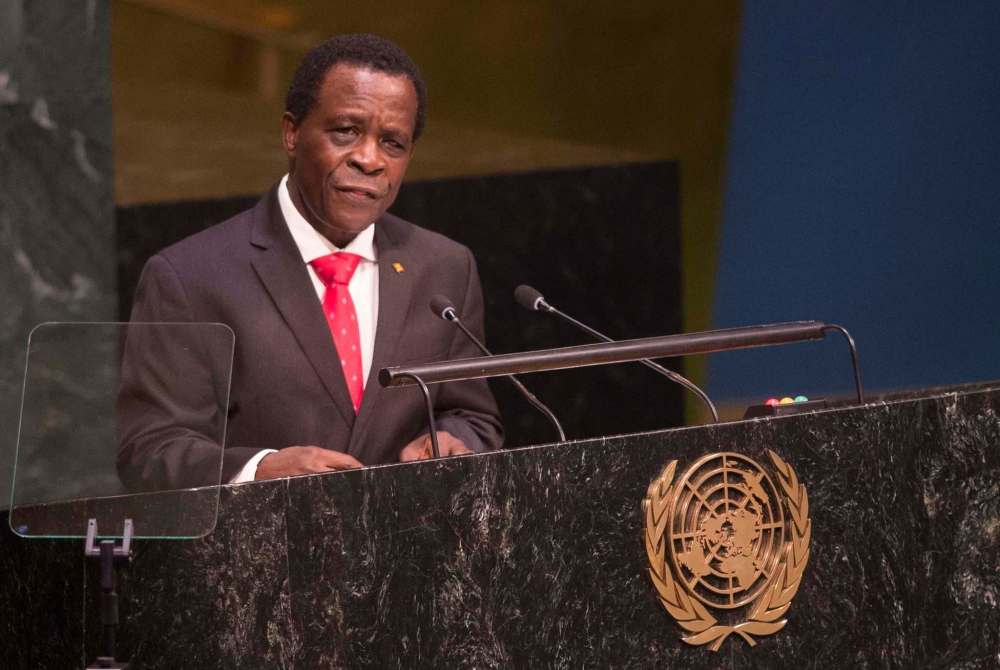
Grenadian Foreign Affairs Minister Peter Charles David recently told Grenada’s The New Today: “We do not want to see happen in the Caribbean what would happen in places like Libya, where you intervene, you overthrow and then a mess is made, as happened in Libya with ISIS and all of that literally taking over the country of Libya.”
He went on to add that regional states would continue to push for a negotiated solution to the Venezuelan crisis and that “we believe in non-interference, non-intervention, democracy, rule of law — all of those principles we as Caribbean countries subscribe to — therefore we urged all of the countries to pull back.”
Perhaps it’s not all that surprising, then, that the centre-right Grenadian government of Keith Mitchell is dead set against any chatter of the U.S. invading beleaguered Venezuela. Like Venezuela, Grenada knows the pitfalls of outside interference, has a strong independence streak amongst its people and has witnessed the igniting of a nationalist flame in the past.
Once again, we see that past U.S. actions can have negative implications for American foreign policy in today’s Caribbean region.
Peter McKenna is professor and chair of political science at the University of Prince Edward Island in Charlottetown.