

Worse than a crime in Egypt
Advertisement
Read this article for free:
or
Already have an account? Log in here »
To continue reading, please subscribe:

Digital Subscription
One year of digital access for only $205*
- Enjoy unlimited reading on winnipegfreepress.com
- Read the E-Edition, our digital replica newspaper
- Access News Break, our award-winning app
- Play interactive puzzles
*First annual payment billed as $205.00 + GST for one year. This annual subscription will automatically renew at $233.00 + GST every 52 weeks (10% off the regular annual price of $259.35). Offer available to new and qualified returning subscribers only. Cancel any time.
To continue reading, please subscribe:
Add Free Press access to your Brandon Sun subscription for only an additional
$1 for the first 4 weeks*
- Enjoy unlimited reading on winnipegfreepress.com
- Read the E-Edition, our digital replica newspaper
- Access News Break, our award-winning app
- Play interactive puzzles
*Your next Brandon Sun subscription payment will increase by $1.00 and you will be charged $17.95 plus GST for four weeks. After four weeks, your payment will increase to $24.95 plus GST every four weeks.
Read unlimited articles for free today:
or
Already have an account? Log in here »
Hey there, time traveller!
This article was published 30/07/2013 (4801 days ago), so information in it may no longer be current.
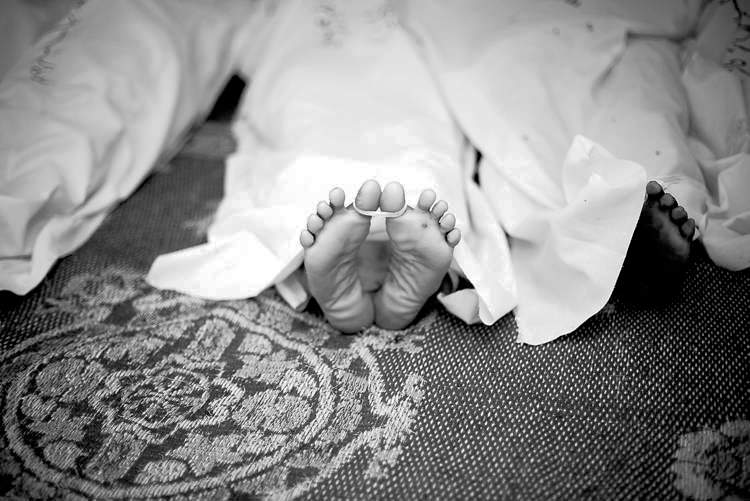
Two massacres committed by the Egyptian army in one week. At least 130 people killed in the streets of Cairo for protesting against the military coup. It is worse than a crime (as the French diplomat Talleyrand remarked when Napoleon ordered a particularly counter-productive execution). It is a mistake.
It is also a crime, of course. The killing has been deliberate and precise: only trained snipers could produce so many victims who have been shot in the head or the heart. Gen. Abdel Fattah al-Sisi and Adly Mansour, the tame president he has installed, tell the kind of lies that generals and politicians always tell when this sort of thing is going on, but the reports of the journalists on the scene leave no room for doubt: this is murder.
But it is, above all, a mistake. When the army fulfilled the demands of the anti-government demonstrators in Tahrir Square on July 3 by overthrowing the elected president, Mohammed Morsi, after only a year in office, it must have known that his supporters in the Muslim Brotherhood would protest in the streets. And it must have had a plan for dealing with those protests. Soldiers always have plans.
The simplest plan would be just to wait the protesters out. The Muslim Brotherhood could put large numbers of people on the streets, but at least in Cairo even larger numbers of people would go to Tahrir Square and support the coup. Use minimum force, contain the demonstrations by both sides, and wait for people to get bored and go home.
In the meanwhile, push on with the process of rewriting the constitution to remove the Islamic bits inserted last year by Morsi’s party and hold a new referendum to ratify it. By the time fresh presidential and parliamentary elections are held early next year, the Muslim Brotherhood will presumably have found more modern and moderate leaders to replace Morsi — and in any case the secular parties will win the election.
Was this really Gen. Sisi’s scenario for the future when he overthrew Morsi’s government? Perhaps: the army’s moderate behaviour in the first week after the coup could support that hypothesis. But it wouldn’t have taken long for the soldiers to understand that things were unlikely to work according to plan.
The problem was not so much the imprisoned president’s refusal to legitimize his overthrow by cooperating with the military, or the tens of thousands of peaceful pro-Morsi demonstrators camped out in the streets. Morsi’s non-cooperation was predictable and so were the pro-Morsi crowds, but his supporters were patient and peaceful. Wait another month or so, and most of them would probably go home.
In this scenario, the turning point would have come when Sisi or his advisers finally realized that the Muslim Brotherhood could wait it out too. Whatever the intervening process, if the Brotherhood was really free to run again in the promised election next year, it might win again. That would be catastrophic for the army’s very privileged position in Egypt — so the Brotherhood had to be excluded from politics.
That is a charitable take on the army’s motives. The likelier explanation, alas, is that Sisi planned to ban the Brotherhood from the start. Democracy be damned: the “deep state,” that permanent collusion between well-fed Egyptian soldiers and bureaucrats and the foreign military and commercial interests who feed them, is making a comeback. And the political idiots on Tahrir Square are cheering it on.
Either way, the army’s political project now requires the massive use of force: the supporters of the Brotherhood must be driven from the streets, by murder if necessary, and its leaders must be criminalized and banned. And other political idiots, in Washington, London and Paris, are going along with that too.
U.S. President Barack Obama is uncomfortable with what is happening, but he won’t call it a coup because then he would be obliged to cut off $1.5 billion a year in aid to the Egyptian army. Instead, he calls it a “post-revolution transition” and promises that the United States will be a “strong partner to the Egyptian people as they shape their path to the future.”

His loyal sidekick William Hague, the British Foreign Secretary (also known as “Tonto”), asks the Egyptian authorities politely to refrain from violence because “now is the time for dialogue, not confrontation.” ‘Fraid not. Now is the time for murder, and foreign democrats are holding the murderer’s coat.
Egypt is the biggest Arab country by far, and so long as the democratic revolution prospered in Egypt you could still say the “Arab Spring” was changing things for the better, even despite the calamity in Syria. But it’s very hard to see how the Egyptians can find their way back from where they are now.
Even worse, the Egyptian coup is stark proof that political Islam cannot succeed by taking the democratic path. The message it conveys to devout Islamists all over the Arab world is Osama bin Laden was right: only by violence can their political project succeed. Thanks a bunch, Gen. Sisi.
Gwynne Dyer is an independent journalist whose articles are published in 45 countries.