

England, Italy intertwined in Beautiful Game
Sunday's match evokes recollection of how sport was spread
Advertisement
Read this article for free:
or
Already have an account? Log in here »
To continue reading, please subscribe:

Digital Subscription
One year of digital access for only $205*
- Enjoy unlimited reading on winnipegfreepress.com
- Read the E-Edition, our digital replica newspaper
- Access News Break, our award-winning app
- Play interactive puzzles
*First annual payment billed as $205.00 + GST for one year. This annual subscription will automatically renew at $233.00 + GST every 52 weeks (10% off the regular annual price of $259.35). Offer available to new and qualified returning subscribers only. Cancel any time.
To continue reading, please subscribe:
Add Free Press access to your Brandon Sun subscription for only an additional
$1 for the first 4 weeks*
- Enjoy unlimited reading on winnipegfreepress.com
- Read the E-Edition, our digital replica newspaper
- Access News Break, our award-winning app
- Play interactive puzzles
*Your next Brandon Sun subscription payment will increase by $1.00 and you will be charged $17.95 plus GST for four weeks. After four weeks, your payment will increase to $24.95 plus GST every four weeks.
Read unlimited articles for free today:
or
Already have an account? Log in here »
Hey there, time traveller!
This article was published 23/06/2012 (5195 days ago), so information in it may no longer be current.
It has been more than a decade since the national teams of England and Italy met on a football pitch — an eternity in a world of profligate FIFA dates — and yet the two nations remain somehow intertwined when it comes to the sport that has done so much to define them these last hundred years or so.
In the beginning it was the English who were the givers. Mediterranean port cities from Genoa in the north to Palermo in Sicily were the first football hotbeds in a country that would, one day, have experienced more international success than any continental rival.
Trade with the Far East was largely to thank for this, and as the English ships passed through their ports en route to India the Italians were quick to pick up on the indirect export.
James Richardson Spensley, an English doctor, is often credited with planting football’s deepest roots in Italy, but in his excellent book Calcio: A history of Italian Football, author John Foot begins by telling the story of Edoardo Bosio, an employee of a Nottingham textile company who brought the game to Turin.
Bosio founded the city’s first club in 1891, and it’s hardly surprising that the first Italian clubs to contest a notable, inter-city match hailed from Genoa and Turin.
But if football was, indeed, an English gift, its value has been repaid time and again, especially recently.
Two of the last three Premier League managers to have won the title have been Italians, and both — Carlo Ancelotti and Roberto Mancini — have lifted FA Cups in that span as well. Roberto Di Matteo, who guided Chelsea to FA Cup glory last month, also became the first manager of a London club to win the European Cup when the Blues defeated Bayern Munich in the Champions League final on May 19.
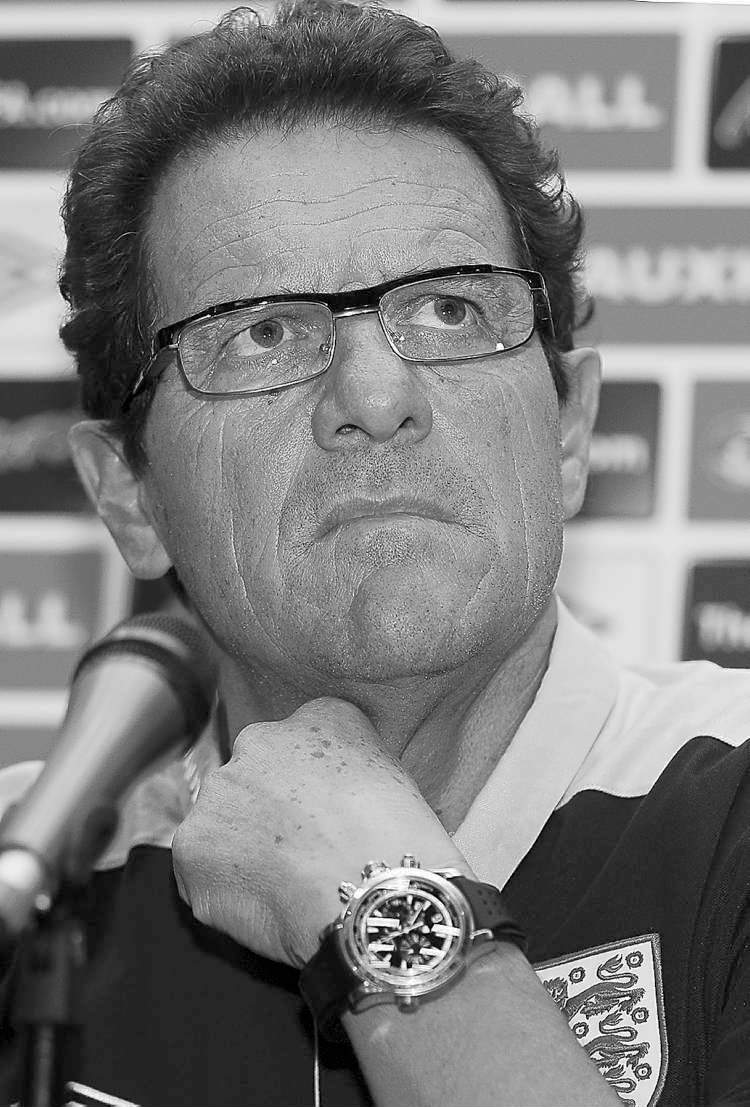
Then there is Fabio Capello. The 66-year-old Friulian became just the second non-Englishman to manage the Three Lions (Sven-Goran Eriksson was the first) when he succeeded Steve McClaren in 2008, and with 28 wins to show from 42 matches, his winning percentage of .667 became (and is) the highest in the history of the English national team.
Capello, of course, resigned his position as England manager following a dispute with the FA last February, but the team that takes the field against Italy on Sunday will nevertheless have his fingerprints all over it. Glen Johnson, John Terry and Ashley Cole held regular spots in his defensive corps while Scott Parker was re-introduced to the national team under his watch. Steven Gerrard — England’s captain at Euro 2012 — was also Capello’s captain at the 2010 World Cup.
There are no links, however, from the current England side to the one that lost 2-1 to Italy in their last meeting at Elland Road in 2002. But Gianluigi Buffon, the Italian captain at Euro 2012, was the starting goalkeeper for the Azzurri that night and made his biggest save just shy of the hour-mark when Ledley King, making his first senior appearance for England, forced him into a diving stop from nearly 20 yards.
The starting lineups from that match in Leeds are a trip down memory lane. Martyn, Mills, Southgate, Campbell, Bridge, Beckham, Butt, Lampard, Sinclair, Heskey and Owen for England; Buffon, Materazzi, Cannavaro, Nesta, Panucci, Zambrotta, Di Biagio, Doni, Zaneti, Delvecchio and Totti for Italy.

Only Buffon and Lampard have anything to do with their national teams these days, and about half of each squad have since hung up their boots.
Ten years is a long time in a relationship, especially one as volatile as that between international football rivals. Here’s hoping England and Italy have a lot more to do with each other in the coming years. They still have a lot to offer one another.
jerradpeters@gmail.com
Our newsroom depends on a growing audience of readers to power our journalism. If you are not a paid reader, please consider becoming a subscriber.
Our newsroom depends on its audience of readers to power our journalism. Thank you for your support.
Our newsroom depends on a growing audience of readers to power our journalism. If you are not a paid reader, please consider becoming a subscriber.
Our newsroom depends on its audience of readers to power our journalism. Thank you for your support.
Related Articles
Alonso spurs Spain to semis



Advertisement Advertise With Us
Advertisement Advertise With Us