

Deal or no deal?
A lot depends on players' reaction to three key points
Advertisement
Read this article for free:
or
Already have an account? Log in here »
To continue reading, please subscribe:
Digital Subscription
One year of digital access for only $1.44 a week*
- Enjoy unlimited reading on winnipegfreepress.com
- Read the E-Edition, our digital replica newspaper
- Access News Break, our award-winning app
- Play interactive puzzles
*Billed as $5.77 plus GST every four weeks. After 52 weeks, price increases to the regular rate of $19.95 plus GST every four weeks. Offer available to new and qualified returning subscribers only. Cancel any time.
To continue reading, please subscribe:
Add Free Press access to your Brandon Sun subscription for only an additional
$1 for the first 4 weeks*
- Enjoy unlimited reading on winnipegfreepress.com
- Read the E-Edition, our digital replica newspaper
- Access News Break, our award-winning app
- Play interactive puzzles
*Your next Brandon Sun subscription payment will increase by $1.00 and you will be charged $17.95 plus GST for four weeks. After four weeks, your payment will increase to $24.95 plus GST every four weeks.
Read unlimited articles for free today:
or
Already have an account? Log in here »
Hey there, time traveller!
This article was published 18/10/2012 (5115 days ago), so information in it may no longer be current.
When the NHL surprised many by putting a new offer to the NHLPA on the table Tuesday, it marked the start of a serious opportunity for a new collective bargaining agreement.
The league, as most expected sooner or later, moved to a proposal for a 50-50 split of hockey-related-revenue.
Several other elements of the proposal are likely to be the flashpoints for extensive discussion and maybe some bargaining in the coming days.
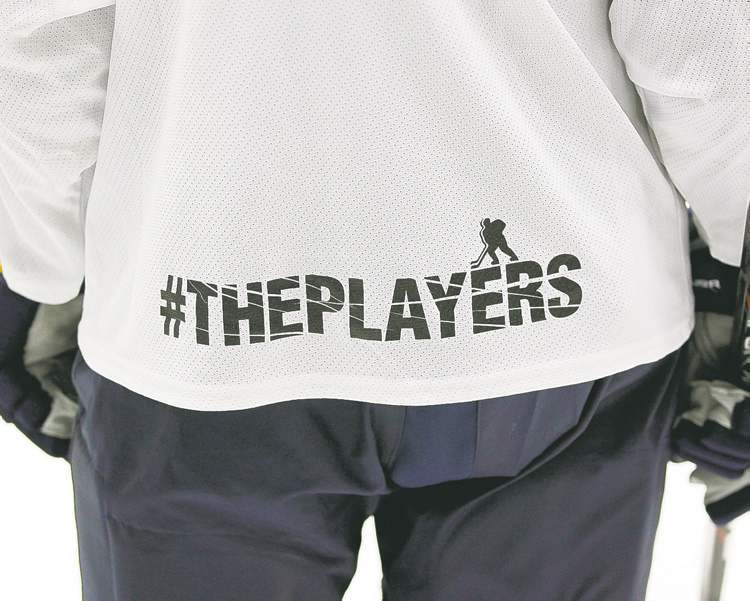
NHL commissioner Gary Bettman, keep in mind, outlined a window of about nine days in which to cut a deal so a full, 82-game season could start Nov. 2.
That was Tuesday. Today is Thursday, two days later, and the sides will meet face to face again in Toronto, where it’s likely the players will have some questions and a response, maybe even a counter-proposal.
Here are three crucial items from the NHL proposal that will be getting attention this week:
THE “MAKE WHOLE” PROVISION
What is proposed: Since the league wants to keep existing salary-range rules, a 50-50 split could see the cap-system range reduced to between $44 million and $60 million (from about $54 million to $70 million). This would result in a 12.3 per cent reduction of money available to players, the NHLPA says. The league has promised to ensure the players will not see any “real-dollar” reduction by proposing that any salary loss due to the new system, including escrow holdbacks, would eventually be paid back to players.
Between the lines: Right now, it’s an olive branch from the NHL, intended to alleviate the players’ concerns that their existing deals will be reduced. The problem is that in this form, the olive branch has syrupy goo all over it — the players see it as a sticky mess. The money they’ll get back down the road to ensure they receive the value that’s written on their contracts will come from future players’ share of revenue (contracts). The league offered the example that with five per cent growth in the business and hockey-related revenue (HRR) going forward, there could be up to $211 million in “deferred compensation” owed that would come out of the players’ share. What the NHL has proposed is a reset on the salary range but no actual loss for anyone with an existing contract, all funded by future players and/or future deals. If the players engage in debate on this proposal — still an “if” — this is one area where they will want alterations.
REVENUE SHARING
What is proposed: The NHL will increase its pool to $200 million to help struggling teams. Based on last year’s $3.3 billion HRR number, it will adjust the number proportionately in the future. The future distribution to those in greatest need will be decided by a new committee, of which the NHLPA will be part. Restrictions on which teams may receive money will be relaxed, including removing disqualification of top-15 revenue teams or large-market teams.
Between the lines: This has been one of the NHLPA’s battle cries in this dispute, that the league must do more via revenue-sharing to deal with problem franchises. This is one area where the players may be able to push their advantage for clearer terms or maybe even a bigger pool. Of course, Bettman’s biggest-revenue teams may have a limit to their perceived “charity.”
CONTRACTS

What is proposed: The NHL wants a limit of five years on any new contract. It wants a maximum of five per cent allowable increase or decrease in salary based on the first year. It wants minor-league salaries above $105,000 to count against a team’s cap space, but not against the players’ overall share of 50 per cent. The league has also proposed the ability to trade up to two contracts’ worth and a maximum $5 million in cap space per season. In terms of the system, the NHL clearly believes moving to a two-year entry-level system, extending arbitration rights out a year to after five years and going to 28 years old or eight years’ service to attain total free-agent status is a way to put a drag on salaries. One other surprise was a “punishment” proposal that would see any long-term existing deal (more than five years) continue as written, but in the event a player stops playing before his contract expires, the cap hit continues. If that player is traded during his contract and stops playing, the original team gets the continuing cap hit.
Between the lines: It’s anyone’s guess how negatively the players will view the “punishment” proposal on existing long-term deals. This would certainly make those candidates (players like Zach Parise, Ryan Suter, Ilya Kovalchuk, Roberto Luongo) more difficult to trade and it undoubtedly would eat up cap room, which means less money for an affected team to pay future players. You should also expect some push-back on the five-year term limit to new contracts. The players will have a tough time defending maintaining the “back-diving” deals that have existed, which the NHL is trying to eliminate by its five per cent variance proposal. The players are likely to resist changes to entry-level, arbitration or free agency, but how strongly is anyone’s guess. As for the ability to trade some cap space, this was a players’ idea and has been well-received.
tim.campbell@freepress.mb.ca
Related Articles
3 more Jets games lost as NHL cancels games through Nov. 1 Bettman, owners 'thoroughly disappointed' with NHLPA counter proposals




Advertisement Advertise With Us
Advertisement Advertise With Us