

Get it through your thick head, NHL
All contact to the cranium must be outlawed -- now
Advertisement
Read this article for free:
or
Already have an account? Log in here »
To continue reading, please subscribe:

Digital Subscription
One year of digital access for only $205*
- Enjoy unlimited reading on winnipegfreepress.com
- Read the E-Edition, our digital replica newspaper
- Access News Break, our award-winning app
- Play interactive puzzles
*First annual payment billed as $205.00 + GST for one year. This annual subscription will automatically renew at $233.00 + GST every 52 weeks (10% off the regular annual price of $259.35). Offer available to new and qualified returning subscribers only. Cancel any time.
To continue reading, please subscribe:
Add Free Press access to your Brandon Sun subscription for only an additional
$1 for the first 4 weeks*
- Enjoy unlimited reading on winnipegfreepress.com
- Read the E-Edition, our digital replica newspaper
- Access News Break, our award-winning app
- Play interactive puzzles
*Your next Brandon Sun subscription payment will increase by $1.00 and you will be charged $17.95 plus GST for four weeks. After four weeks, your payment will increase to $24.95 plus GST every four weeks.
Read unlimited articles for free today:
or
Already have an account? Log in here »
Hey there, time traveller!
This article was published 04/05/2013 (4904 days ago), so information in it may no longer be current.
The NFL has convinced the most violent athletes on the planet to curb their lust for head hunting, so certainly the NHL can demand the same of its players.
Middle linebackers used to drive their helmets into those of opposition running backs and receivers with impunity. No longer. Commissioner Roger Goodell throws $100,000 hit-to-the-head fines around like they were invitations to a Transcona wedding social. Come one, come all.
Ottawa Senators defenceman Eric Gryba’s hit on Lars Eller of the Montreal Canadiens Thursday night wasn’t considered illegal by many observers of today’s NHL. It should be.
NHL vice-president of player safety Brendan Shanahan understands this — he handed Gryba a two-game ban.
Gryba, as many analysts have pointed out, did what defencemen all over the world are trained to do — see a forward with the puck, belt him. Gryba didn’t target the head or launch into the opponent. To many, it was a legal hit.
That view is outdated and dangerous. It needs to change.
The NHL needs to update its rules to meet the realities of player safety. NFLers used to consider the head a perfectly acceptable point of contact. Not anymore. The rules have changed for the better and so has the culture of the game.
Aside from the grumbling of a few players when levied a fine, there’s been no discernible opposition to the changes made by the NFL.
Certainly no one can argue football is any less popular with fans as a result of these rule changes. But Goodell can argue his game is safer.
Gryba’s hit included contact with the head and it was done in open ice. The contact with the head could have been avoided. Gryba could have gone through Eller instead of hitting up. He could have used more hip and less shoulder. There are all sorts of ways to alter the approach.
It shouldn’t be up to Shanahan, who was unavailable for comment on Friday, to intercede on each of these occasions. The rule book should do it for him.
In open-ice, contact with the head can almost always be avoided. Along the wall, there is going to be some unavoidable contact with the head but it’s usually not dangerous. It’s the high-speed, open-ice hits where damage is inflicted.
Traditionalists will argue collateral damage from what is currently viewed as a clean open-ice hit is part of the game. Doctors will argue it causes brain damage.
The NHL’s Rule 48 allows for hits similar to Gryba’s, allowing them if the head wasn’t targeted or wasn’t the principal point of contact. The rule is misguided and should be changed.
“Take the head out of the game is our new mantra. We look to protect defenseless players. Over the years we’ve continued to evolve the rules. Go back to the ’60s and ’70s when Deacon Jones made a living off the head slap. Literally slapping the head of an opponent with his giant hand to knock the offensive lineman down so he could get to the quarterback. We’ve taken that out with rule changes,” said NFL vice president of communications Brian McCarthy, in a phone interview with the Free Press on Friday. “Now the wide receiver going over the middle is a defenseless player and the defensive back or linebacker can’t hit the receiver in the head. You cannot hit the player in the head.”
The NFL is facing 200 lawsuits brought by nearly 4,200 retired players.
The players accuse the NFL of “deliberately and fraudulently” concealing the dangers of head trauma.
McCarthy says the future of the game and safety of its players is behind the league’s attempt to continually evolve.
“We began to make these changes before we faced lawsuits, quite frankly. Our philosophy is based on what’s best for the players and what’s best for the next generation of players. We want them to use the right technique so they can continue to play,” said McCarthy.
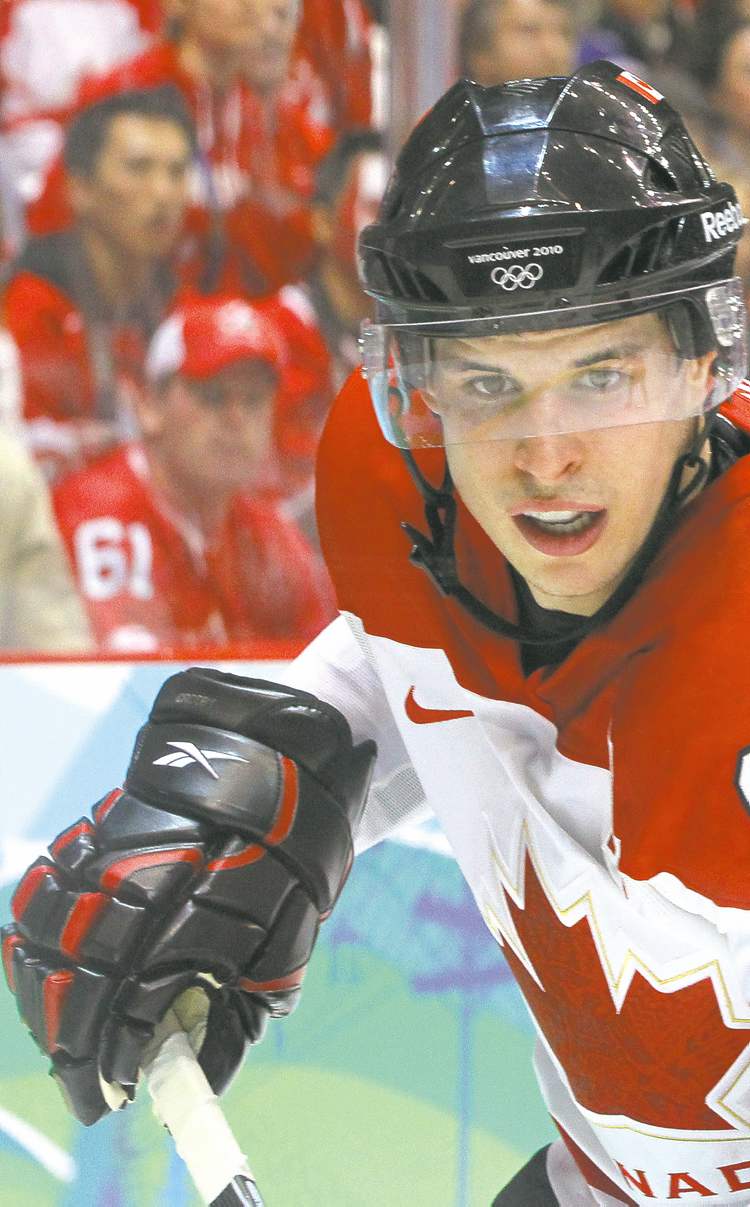
Concussions are a major problem for the NHL. Sidney Crosby, the game’s best player, has missed significant time in previous seasons as a result of blows to the head.
Chris Pronger’s career has been cut short and he’s still suffering the after-effects of post-concussion syndrome as a result of hits to the head.
Concussions ended Pat Lafontaine’s playing time.
The list goes on and on.
A lawsuit aimed at the NHL can’t be far off. But that shouldn’t be the impetus for change. Player safety should be.
Minor hockey in Canada has made all hits to the head illegal and major junior’s Ontario Hockey League has its own Rule 48 which outlaws “the act of checking an opponent to the head in any manner.”
Hockey can be safer and no less entertaining.
The smug mind-set of Andrew Ference, fending off queries about his illegal elbow to the head of Toronto Maple Leafs forward Mikhail Grabovski, has to end.
Ference smirked at his interviewer and kept saying, “what hit?” when asked about the elbow for which he was eventually suspended.
The players won’t help themselves. They’ve proven that again and again. They want to win and they will do whatever they are allowed to and a little more to get the results they want.
But the NHL needs to be above this. It needs to protect the players and the game. Shanahan did just that on Friday.
Now the league needs to support him and change Rule 48. Take out the grey area.
A hit to the head is a hit to the head. And they should all be illegal.
gary.lawless@freepress.mb.ca Twitter: @garylawless
NHL’s letter of the law
Here is the NHL’s rule on hits to the head
Rule 48 — Illegal Check to the Head
48.1 Illegal Check to the Head — A hit resulting in contact with an opponent’s head where the head is targeted and the principal point of contact is not permitted. However, in determining whether such a hit should have been permitted, the circumstances of the hit, including whether the opponent put himself in a vulnerable position immediately prior to or simultaneously with the hit or the head contact on an otherwise legal body check was avoidable, can be considered.
48.2 Minor Penalty — For violation of this rule, a minor penalty shall be assessed.
48.3 Major Penalty — There is no provision for a major penalty for this rule.
48.4 Game Misconduct Penalty — There is no provision for a major penalty for this rule.
48.5 Match Penalty — The Referee, at his discretion, may assess a match penalty if, in his judgment, the player attempted to or deliberately injured his opponent with an illegal check to the head.
If deemed appropriate, supplementary discipline can be applied by the Commissioner at his discretion.
48.6 Fines and Suspensions — Any player who incurs a total of two (2) game misconducts under this rule, in either regular League or playoff games, shall be suspended automatically for the next game his team plays. For each subsequent game misconduct penalty the automatic suspension shall be increased by one game.
If deemed appropriate, supplementary discipline can be applied by the Commissioner at his discretion (refer to Rule 28).
Head shots in Minor Hockey
Hockey Canada approved a new rule regarding all contact to the head that took effect at the start of the 2011-12 season.
Rule 6.5 — Head Contact
(a) In minor hockey and female hockey, a minor penalty shall be assessed to any player who accidentally contacts an opponent in the head, face or neck with his stick or any part of the player’s body or equipment.

(b) In minor hockey and female hockey, a double minor penalty or a major and a game misconduct penalty, at the discretion of the referee and based on the degree of violence of impact shall be assessed to any player who intentionally contacts an opponent in the head, face or neck with her stick or any part of the player’s body or equipment.
(c) In junior hockey and senior hockey, a minor and a misconduct penalty, or a major and a game misconduct penalty, at the discretion of the referee based on the degree of violence of impact, shall be assessed to any player who checks an opponent in the head in any manner.
(d) A major and a game misconduct penalty, or a match penalty shall be assessed any player who injures an opponent under this rule.
(e) A match penalty shall be assessed any player who deliberately attempts to injure or deliberately injures an opponent under this rule.
NOTE: All contact above the shoulders (neck, face and head) is to be called Head Contact under one of the above (In minor hockey and female hockey).

Advertisement Advertise With Us
Advertisement Advertise With Us