

Women’s World Cup shows what could be possible
Advertisement
Read this article for free:
or
Already have an account? Log in here »
To continue reading, please subscribe:

Digital Subscription
One year of digital access for only $205*
- Enjoy unlimited reading on winnipegfreepress.com
- Read the E-Edition, our digital replica newspaper
- Access News Break, our award-winning app
- Play interactive puzzles
*First annual payment billed as $205.00 + GST for one year. This annual subscription will automatically renew at $233.00 + GST every 52 weeks (10% off the regular annual price of $259.35). Offer available to new and qualified returning subscribers only. Cancel any time.
To continue reading, please subscribe:
Add Free Press access to your Brandon Sun subscription for only an additional
$1 for the first 4 weeks*
- Enjoy unlimited reading on winnipegfreepress.com
- Read the E-Edition, our digital replica newspaper
- Access News Break, our award-winning app
- Play interactive puzzles
*Your next Brandon Sun subscription payment will increase by $1.00 and you will be charged $17.95 plus GST for four weeks. After four weeks, your payment will increase to $24.95 plus GST every four weeks.
Read unlimited articles for free today:
or
Already have an account? Log in here »
Hey there, time traveller!
This article was published 06/07/2015 (4083 days ago), so information in it may no longer be current.
Something happens when we play sports. Something fantastical.
For the duration of the contest we are transported to an alternate reality — one where strength, skill, smarts and expression are the currency; where the rigours and worries of everyday life are left to that other, real world in which human interaction is affected by rather less honourable, organic attributes.
Within sports we also have a unique cultural space. Games and practices facilitate socialization, empowerment and teachable moments. They show us the world — the real one — and, in many ways, mirror it.
Thus the unsavoury characteristics of racism, socioeconomic discrimination and sexism we so often try to sneak through the portal. They have no place in sports, but we are human and selfish and try to adapt the alternate reality, the space, to suit ourselves. (It should be the other way around.)
There’s a caveat, of course. Ah, there just had to be one.
This space we like to idealize has typically been the realm of men. We don’t need the histrionics — we’re living them — to explain why this was, and is, but it’s only recently, through a variety of socio-intellectual movements, including suffrage and feminism generally, that women have been able to claim a corner of the space for themselves.
They’ve not exactly been helped along in the process.
Mainstream awareness of women’s sports is paltry at best. And while it’s easy to lay the blame with media outlets that dedicate the majority of their coverage to men’s teams, or with companies that predominantly sponsor male athletes, such lazy fault-finding, as it’s wont to do, completely neglects the heart of the matter.
What women’s sports are up against, what still sets out to trample them, is perception, and wrapped up in perception are expectations, typecasts, customs, formulas and moulds — moulds that need breaking for everyone’s good.
“Imagine how much happier we would be, how much freer to be our true, individual selves, if we didn’t have the weight of gender expectations,” writes Chimamanda Ngozi Adichie in We Should All Be Feminists. “The problem with gender is that is prescribes how we should be rather than recognizing how we are.”
Women’s sports come up against these prescriptions all the time, and they don’t do anyone any good. Not women, not men, not the broader society which, as a whole, is greatly bettered when its portals and spaces are open to everyone, enfranchised and universal.
Sports, to that end, are among the quicker and more reliable vehicles of enfranchisement and universality, and, explains Maggie Mertens in The Atlantic, can be especially so for feminist causes.
“It’s an institution of massive cultural significance and an area rife with serious issues, such as sexual violence, pay inequality and a lack of women in leadership positions,” she writes.
This is why high-profile, global events such as the Women’s World Cup are so vitally important. They mark the top levels of achievement in women’s sports and serve as aspirational ideals. It’s why the legal action taken over the tournament’s use of artificial turf was much more than a lawsuit. It’s why the astronomical television numbers throughout the 2015 World Cup have been so heartening.
Sunday, over the course of the competition’s final 90 minutes in Vancouver, those tens of millions of viewers were treated to one of the most captivating matches in women’s soccer history.

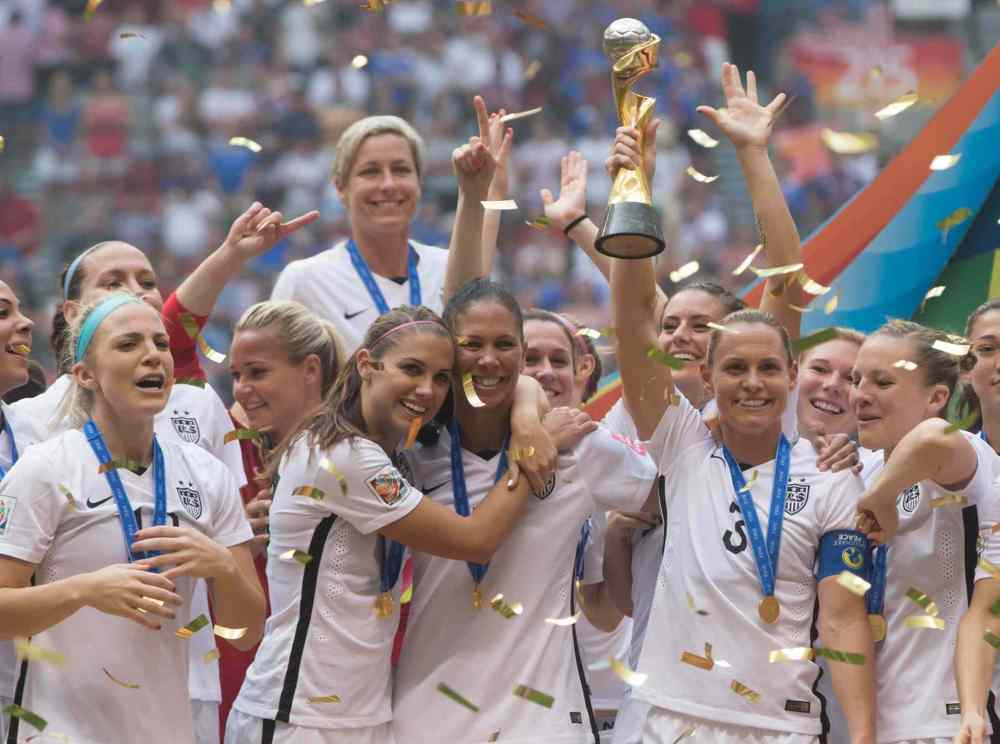
They saw American hat-trick hero Carli Lloyd deliver the performance of dreams; they watched Japanese defender Azusa Iwashimizu reduced to tears on the bench. They were awestruck at the dominance of the United States, which prevailed 5-2, and devastated for Japan, who were second-best from the opening kickoff.
While Christine Rampone and Abby Wambach hoisted the trophy for their teammates and nation, they were also lifting something far bigger and more meaningful above their heads. “To a Greater Goal” — that was the tournament’s slogan, what the competition was pointing to all along.
The United States claimed the World Cup, but everybody won. We celebrated the game and the spectacle of it, but also the strength, skill, smarts and expression that showed a way through the portal and into the alternate reality, the space, for countless women and girls.
This is what happens when we can all play sports. Something fantastical.
jerradpeters@gmail.com Twitter @JerradPeters
Our newsroom depends on a growing audience of readers to power our journalism. If you are not a paid reader, please consider becoming a subscriber.
Our newsroom depends on its audience of readers to power our journalism. Thank you for your support.
History
Updated on Monday, July 6, 2015 8:13 AM CDT: Photo updated.