

Prospects of a minority highlight small issues
Advertisement
Read this article for free:
or
Already have an account? Log in here »
To continue reading, please subscribe:

Digital Subscription
One year of digital access for only $205*
- Enjoy unlimited reading on winnipegfreepress.com
- Read the E-Edition, our digital replica newspaper
- Access News Break, our award-winning app
- Play interactive puzzles
*First annual payment billed as $205.00 + GST for one year. This annual subscription will automatically renew at $233.00 + GST every 52 weeks (10% off the regular annual price of $259.35). Offer available to new and qualified returning subscribers only. Cancel any time.
To continue reading, please subscribe:
Add Free Press access to your Brandon Sun subscription for only an additional
$1 for the first 4 weeks*
- Enjoy unlimited reading on winnipegfreepress.com
- Read the E-Edition, our digital replica newspaper
- Access News Break, our award-winning app
- Play interactive puzzles
*Your next Brandon Sun subscription payment will increase by $1.00 and you will be charged $17.95 plus GST for four weeks. After four weeks, your payment will increase to $24.95 plus GST every four weeks.
Read unlimited articles for free today:
or
Already have an account? Log in here »
Hey there, time traveller!
This article was published 03/10/2015 (3984 days ago), so information in it may no longer be current.
Let’s face it — in the grand federal political scheme of things, Manitoba has never been a big player.
That will come as little surprise to people who live here. We are cursed with a tiny population, minimal petroleum reserves and only 14 federal seats. As a result, Manitoba has only rarely hit above its weight when it comes to federal political influence.
In fact, if political history has shown us anything, it is smaller provinces such as Manitoba need a perfect storm of very specific conditions on which to build some influence in Ottawa. Such as when former Liberal MP and cabinet minister Lloyd Axworthy ruled the federal roost in Manitoba.
Axworthy’s influence in Liberal ranks was earned in the 1980 election, when the Grits won a slim majority government and he became the only Liberal MP west of Ontario. That stoic accomplishment helped make Axworthy one of the most powerful regional ministers in the Liberal governments he served.
That is not to underplay Axworthy’s diligence. Nor is it a criticism of the other regional ministers who followed Axworthy; few of them had the good fortune to arrive in Ottawa under the same, peculiar circumstances. Many, in fact, had to operate within commanding majorities.
And yet, there are signs a perfect storm of conditions is again gathering in the current federal election campaign. Conditions that could, once more, boost the prospects of provinces such as Manitoba.
However, in this election, the theoretical bump in political influence will have little or nothing do with an individual politician. It will have everything to do with a fractured federation and a minority Parliament.
In a minority scenario, many of the small people and issues ignored in a majority government take on a new importance. Local issues that might be starved of attention in a majority government suddenly find audience with decision-makers.
That phenomenon is certainly on display in this campaign.
Making his second campaign stop in Manitoba, Liberal Leader Justin Trudeau announced Tuesday he would commit an unspecified amount of money to help the province build a road for First Nations communities on the east side of Lake Winnipeg. The project — a 30-year, $3-billion undertaking — certainly comes closer to reality with specific help from Ottawa.
How did Trudeau happen to hit upon that as a local policy priority at this stage in an extremely close campaign? The answer of course is because it’s an extremely close campaign, and one in which the Liberals stand to gain seats in Manitoba.
If Trudeau and the Grits were flirting with a majority, it’s not likely this issue would be mentioned. But in this election, every seat counts and that means digging deep for issues that resonate in smaller provinces.
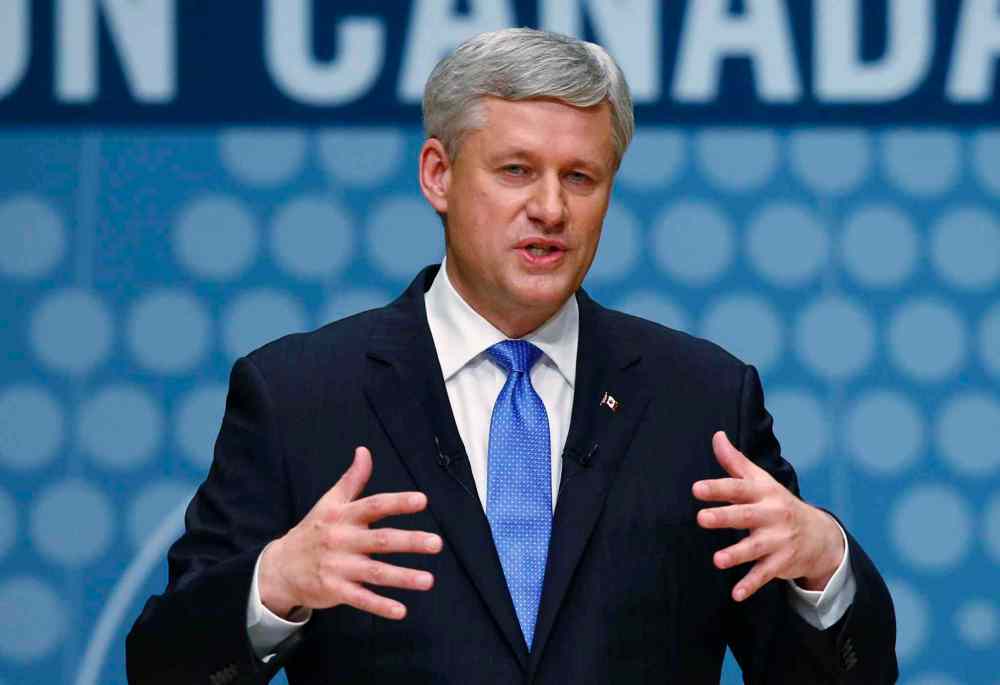
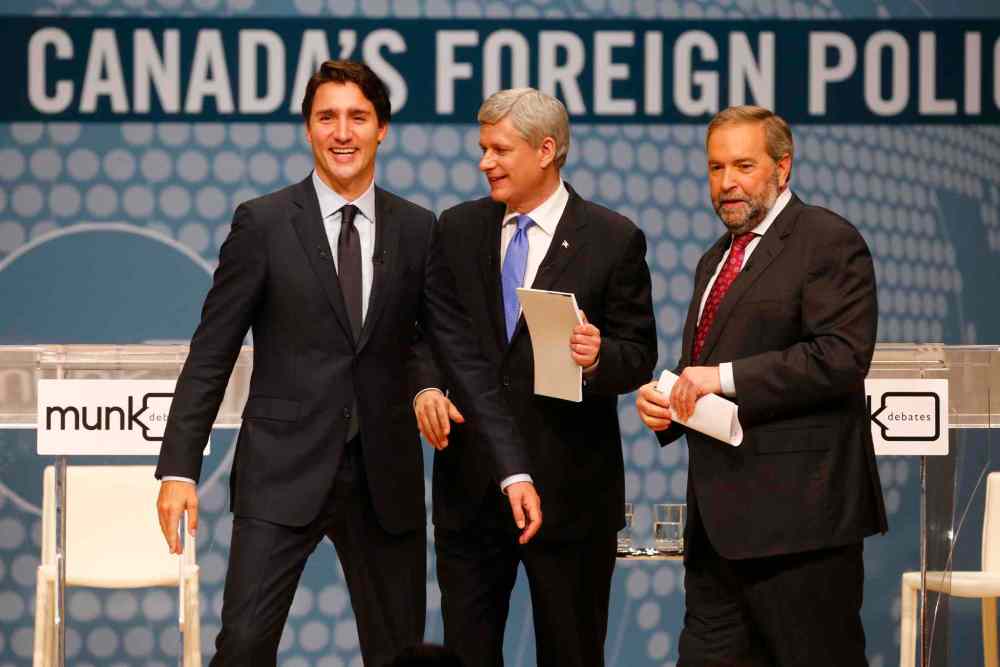
Conservative Leader Stephen Harper has played the same card in this campaign. To be frank, he has played this card in previous campaigns.
In 2007, with Harper toiling under his first minority mandate, he approved $100 million in capital funding and millions more in operating money for the Canadian Museum for Human Rights — a legacy project conceived and championed by Israel Asper, a renowned Liberal.
It is certainly possible Harper could have approved the museum funding if he had a majority. But the reality was, at the time, Harper lived on the razor’s edge of a minority and realized every seat in every province in the country held the promise of a majority.
In this campaign, Harper is facing the very real possibility the best outcome is a minority government. So it came as little surprise Harper is making more stops in Manitoba, and more promises.
On his second visit during this campaign — in itself a remarkable event — Harper announced his government would not appeal a court decision supporting a bid by First Nations to acquire the former Kapyong Barracks properties in west Winnipeg. Until that announcement, the Conservative government had fought tooth and nail to deny the First Nations the right of first refusal on the surplus federal land.

Harper is patently aware, however, Kapyong is a live issue in Winnipeg South Centre, a riding held by the Tories but coveted by the Liberals. The prospect of losing even that one seat is inconceivable for a government fighting for its very political life.
In a larger province such as Ontario, Quebec, British Columbia or Alberta, the outcome of a federal election has little or no impact on who promises what to whom. Federal politicians will always pander to voters in seat-rich provinces regardless of who they vote for because it’s cost-effective. And because you really need to win a significant number of seats in at least two of those three provinces to win a majority government with ease.
For smaller provinces, political influence swells when the results of federal elections are in doubt and when the likelihood of a minority government is very high.
It will be important for any Manitoba MP lucky enough to be a member of a party that forms government to act quickly to enjoy their newfound influence while minority politics rules the country. As we all know, it will only last until the next majority comes around.
dan.lett@freepress.mb.ca Twitter: @danlett
Related Articles
Liberals win 4th mandate as NDP vote collapses and Singh announces he will resign





Advertisement Advertise With Us
Advertisement Advertise With Us