

David Bowie’s legacy lives on

Advertisement
Read this article for free:
or
Already have an account? Log in here »
To continue reading, please subscribe:

Digital Subscription
One year of digital access for only $205*
- Enjoy unlimited reading on winnipegfreepress.com
- Read the E-Edition, our digital replica newspaper
- Access News Break, our award-winning app
- Play interactive puzzles
*First annual payment billed as $205.00 + GST for one year. This annual subscription will automatically renew at $233.00 + GST every 52 weeks (10% off the regular annual price of $259.35). Offer available to new and qualified returning subscribers only. Cancel any time.
To continue reading, please subscribe:
Add Free Press access to your Brandon Sun subscription for only an additional
$1 for the first 4 weeks*
- Enjoy unlimited reading on winnipegfreepress.com
- Read the E-Edition, our digital replica newspaper
- Access News Break, our award-winning app
- Play interactive puzzles
*Your next Brandon Sun subscription payment will increase by $1.00 and you will be charged $17.95 plus GST for four weeks. After four weeks, your payment will increase to $24.95 plus GST every four weeks.
Read unlimited articles for free today:
or
Already have an account? Log in here »
Hey there, time traveller!
This article was published 11/01/2016 (3877 days ago), so information in it may no longer be current.
On Friday, the world was celebrating David Bowie’s 69th birthday and the release of his new album, Blackstar. A dual celebration, feted with GIFs and critical acclaim, both.
And by Monday, it was mourning his death. After an 18-month battle with cancer, David Bowie was gone. Stardust to stardust.
It’s hard to imagine Bowie — iconic, enigmatic changeling Bowie — as ever being mere mortal. He was certainly never described as such, leaving music writers reaching instead for adjectives such as ‘ethereal,’ ‘transcendent,’ ‘alien.’
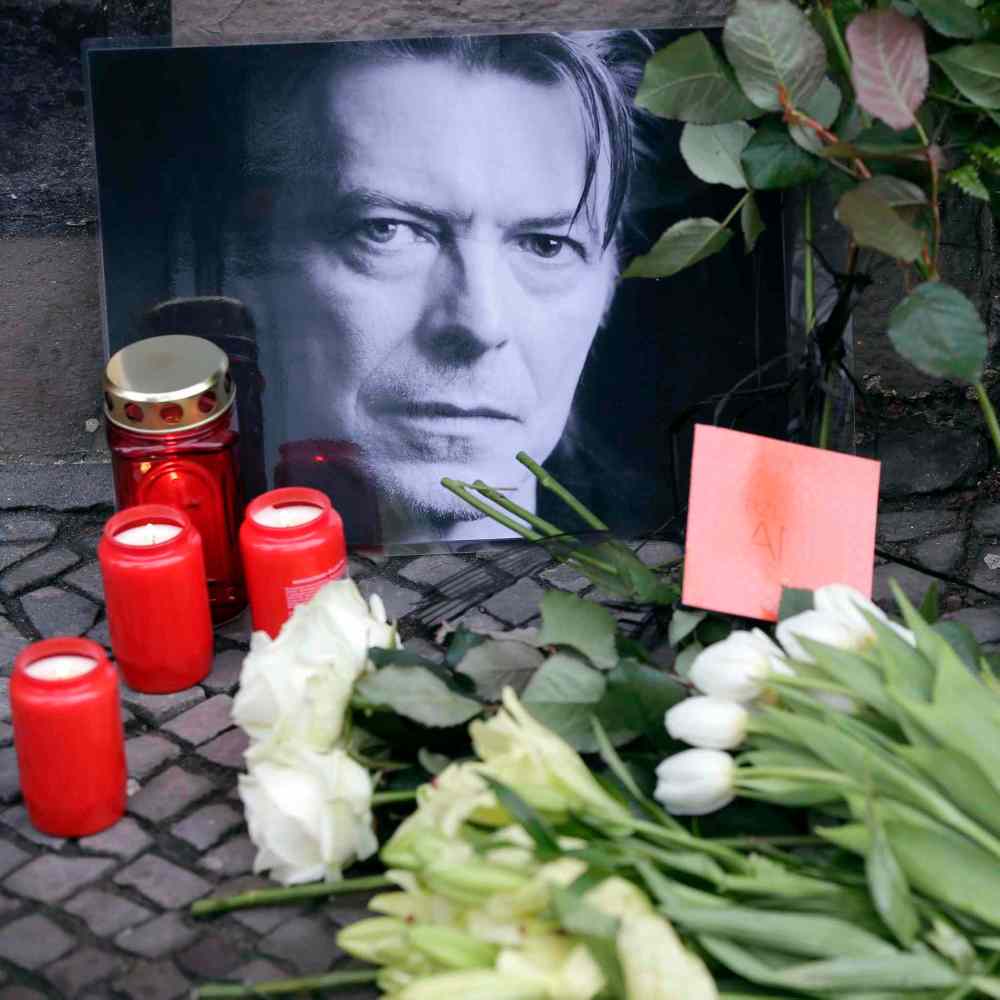
Of course, he was those things and more. He was a pioneer, an influencer, an innovator, a rule-breaker, a boundary-pusher. He was a brilliant artist, a futurist and a non-conformist. Whether it was genre or gender, he subverted convention. He was genderqueer — a person who identifies with neither, both, or a combination of male and female gender — long before we had the vocabulary to describe that idea.
And so, it’s hard to believe someone like that is gone. As Hilton Als so beautifully put it in the New Yorker, “he had been so many people over the course of his grand and immense career, it was inconceivable that he wouldn’t continue to be many people—a myriad of folks in a beautiful body who would reflect times to come, times none of us could imagine but that he could.”
Indeed, David Bowie was a shapeshifter who couldn’t exist in just one iteration. Much has been written — and will be written yet — about his significant contribution to the world of music and the indelible imprint he’s left upon it, his influence far-reaching and enduring. It’s hard to believe there would ever be a Prince or a Madonna or a Lady Gaga or a St. Vincent if there were no David Bowie.
But he also made this world better for the weirdos and the freaks. He articulated ideas about alienation and isolation in his music, and he showed generations of young people that it was OK — nay, good — to be “different,” or “ugly,” or “strange,” or to simply not fit. Bowie represented possibility. He represented progress.
And so, too, he represented change. He encouraged us to turn and face the strange, to be curious and unafraid. He taught us that who you once were isn’t who you have to be — or who you will be later. That there isn’t just one self, but many selves.
Bowie’s genius wasn’t confined to music — albeit, 26 dizzyingly diverse studio albums’ worth. He was also an acclaimed actor with a career’s worth of credits on screen and onstage, famed for his performances in 1976’s The Man Who Fell to Earth and 1986’s Labyrinth, to name just a few. In the 1980s, he played the titular role of The Elephant Man in the Broadway production (He famously wore no stage makeup.) But he had a sense of humour, too, appearing in 2001’s Zoolander and the 2007 made-for-TV animated feature SpongeBob’s Atlantis SquarePantis. High art or low, he wasn’t a snob.
Indeed, there isn’t a cultural sphere that hasn’t been touched by Bowie. He is one of fashion’s most referenced icons — Ziggy Stardust’s lightning bolt and his feathered orange mullet are still being sent down runways. Even his face was a work of art; in fact, his many looks were the subject of a touring retrospective called, fittingly, David Bowie Is.
Of course, he was so much. But he wasn’t immortal, at least not in the way we all thought of him. The news of his death was gutting, blindsiding. We didn’t see it coming. How could we? David Bowie doesn’t die. David Bowie is forever.

And in many ways, he is forever, immortalized by his art.
But Bowie was also a human, and humans are complicated. He had flaws, struggles, skeletons and demons, particularly one in the form a cocaine addiction that nearly took him from us much sooner. He was Ziggy Stardust and the Thin White Duke — these iconic alter egos of his own creation — but he was also a dad and a husband. He was both cool and otherwordly, but warm and down to earth.
I, too, thought of David Bowie as immortal. But I prefer to remember him as human, an extraordinary human, who did so much with his time on this earth. He left it changed.
jen.zoratti@freepress.mb.ca
Twitter: @JenZoratti
Jen Zoratti is a columnist and feature writer working in the Arts & Life department, as well as the author of the weekly newsletter NEXT. A National Newspaper Award finalist for arts and entertainment writing, Jen is a graduate of the Creative Communications program at RRC Polytech and was a music writer before joining the Free Press in 2013. Read more about Jen.
Every piece of reporting Jen produces is reviewed by an editing team before it is posted online or published in print – part of the Free Press‘s tradition, since 1872, of producing reliable independent journalism. Read more about Free Press’s history and mandate, and learn how our newsroom operates.
Our newsroom depends on a growing audience of readers to power our journalism. If you are not a paid reader, please consider becoming a subscriber.
Our newsroom depends on its audience of readers to power our journalism. Thank you for your support.
Jen Zoratti is a columnist and feature writer working in the Arts & Life department, as well as the author of the weekly newsletter NEXT. A National Newspaper Award finalist for arts and entertainment writing, Jen is a graduate of the Creative Communications program at RRC Polytech and was a music writer before joining the Free Press in 2013. Read more about Jen.
Every piece of reporting Jen produces is reviewed by an editing team before it is posted online or published in print – part of the Free Press‘s tradition, since 1872, of producing reliable independent journalism. Read more about Free Press’s history and mandate, and learn how our newsroom operates.
Our newsroom depends on a growing audience of readers to power our journalism. If you are not a paid reader, please consider becoming a subscriber.
Our newsroom depends on its audience of readers to power our journalism. Thank you for your support.
Related Articles
Death cartoons and David Bowie

Advertisement Advertise With Us
Advertisement Advertise With Us