

Win or lose, there’s an awful smell in pro locker rooms
Advertisement
Read this article for free:
or
Already have an account? Log in here »
To continue reading, please subscribe:

Digital Subscription
One year of digital access for only $205*
- Enjoy unlimited reading on winnipegfreepress.com
- Read the E-Edition, our digital replica newspaper
- Access News Break, our award-winning app
- Play interactive puzzles
*First annual payment billed as $205.00 + GST for one year. This annual subscription will automatically renew at $233.00 + GST every 52 weeks (10% off the regular annual price of $259.35). Offer available to new and qualified returning subscribers only. Cancel any time.
To continue reading, please subscribe:
Add Free Press access to your Brandon Sun subscription for only an additional
$1 for the first 4 weeks*
- Enjoy unlimited reading on winnipegfreepress.com
- Read the E-Edition, our digital replica newspaper
- Access News Break, our award-winning app
- Play interactive puzzles
*Your next Brandon Sun subscription payment will increase by $1.00 and you will be charged $17.95 plus GST for four weeks. After four weeks, your payment will increase to $24.95 plus GST every four weeks.
Read unlimited articles for free today:
or
Already have an account? Log in here »
Hey there, time traveller!
This article was published 06/01/2017 (3514 days ago), so information in it may no longer be current.
A confluence of events came together this week that has me thinking — still — about the evolving relationship between pro sports and the media.
The first was the overwhelming reaction to my column earlier this week — posted online Monday afternoon and published in the paper the following day — about the continuing efforts of North American pro sports teams to convince fans to get team news from team-approved websites, instead of the pesky mainstream media.
I am reluctant to say that column went “viral” in a world where Donald Trump has a million retweets by 6 a.m. every day.
But if that column didn’t have a virus, it at least caught a bad cold and by week’s end was still being retweeted all over North America, Europe and, weirdly, in New Zealand. I was, briefly on Tuesday, even big in Finland, after a Helsinki-based hockey writer urged his 27,000 followers to take a look.
I’m pretty sure I’ve never written anything read by as many people — a low bar, indeed… but still. And what I found interesting this week was that the column resonated equally with sports fans and people in sports media.
Those two groups don’t often have a lot in common anymore, but the reaction I saw on social media suggest they both have found common ground in a deep concern about the erosion of a relationship that is making it increasingly difficult to report on pro sports without fear or favour.
What’s media coverage worth?
And then, even as I was pondering what all that might mean, the New York Times ran a story about efforts to quantify the actual monetary value mainstream media coverage has to a team.
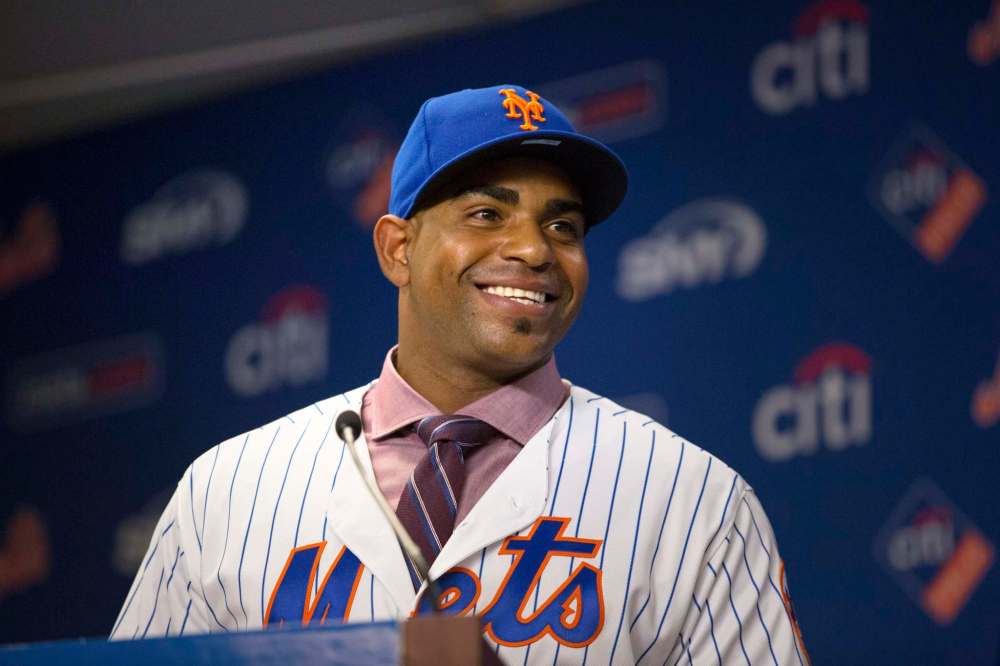
The Times reported that as part of negotiations last fall on a new contract, agents for New York Mets slugger Yoenis Cespedes hired an independent analytics firm in Chicago to study the coverage Cespedes generated in 2016 and attach a dollar figure to what that exposure was worth to the Mets.
The number was an impressive $3.2 million — and that was just the value to the Mets of the approximately 50 tabloid back-cover pages featuring Cespedes in the New York Post, New York Daily News and Newsday.
That’s a lot of free exposure for your brand — and a lot of money for your team. And if that figure is even close to accurate, it suggests all of the pro franchise executives hiring their own “reporting” staffs, restricting access to others and just generally making it more difficult than ever to report on their teams are, in fact, wrapping their hands around the neck of a golden goose.
What I found of particular note in the case of Cespedes was that the mainstream media exposure was deemed to be valuable to the Mets regardless of whether it was positive or negative. Make no mistake, not all those Cespedes back pages were flattering — the guy’s a bit of a flake and his act got old in a hurry last year when he showed up at the ballpark during spring training in a different ride every day.
Arriving for work one day on the back of a horse was awesome, mostly because horses are awesome, period. But the steady stream of different luxury cars he drove every other day was wildly tone deaf; some of those back pages would have reflected that.
The team’s PR staff surely cringed at the Cespedes coverage some days — just as every team’s PR staff does when what’s left of the mainstream press runs roughshod over their carefully cultivated “brand.”
But at the end of the day, what the Chicago firm’s study suggests isn’t new; in fact, it’s one of the oldest adages in the entire PR industry: there’s no such thing as bad publicity.
Just ask — here’s that guy again — Donald Trump, who rode a video in which he openly boasted of sexually assaulting women all the way to the Oval Office.
Mets GM Sandy Alderson admitted as much to the Times, saying he found the presentation Cespedes’s agents made outlining their case for what they called the player’s “value above replacement”’ to be compelling, even if he questioned some of their figures.
“I think the general concept that some players are worth a little more than just the sum of their plate appearances is valid,’’ Alderson said. “It has to be taken into account.’’
No good comes from reading your own press
All of which brings us to Connor Hellebuyck.
The Winnipeg Jets netminder offered some refreshingly frank comments earlier this week about how he handles the intense media exposure that comes with being an NHL goaltender in hockey-rabid Canada.
“I don’t want to get any good or bad thoughts in my head,” he told the Free Press. “So I avoid all that stuff.”
Smart man. But read between the lines of what Hellebuyck is saying in that quote and what emerges is that while media coverage is good for the team’s bottom line, it also comes — at is always has — at a cost to the players.
The smart ones don’t read the papers, watch TV or listen to radio, and that’s been the case forever. No good comes from an athlete ever reading their own press. Someone a lot smarter than me said long ago that you’re never as good, or as bad, as they say you are.
But while it’s not difficult to be disciplined in your mainstream media consumption habits, the bigger challenge for the modern athlete — especially young players attached umbilically to their smartphones — is avoiding the festering cesspool that social media can be.
On Twitter, everyone stinks
I used to play a game on the road with former Winnipeg Sun writer Kirk Penton in which we would search Ondrej Pavelec’s name on Twitter during Jets games when Winnipeg was losing.
It never much mattered whether Pavelec was playing well or stinking up the joint; the guy had become such a lightning rod for everything wrong with the Jets that the Twitterverse would dump on him. All the time.
And because this is Twitter we’re talking about, the comments were so vile and completely over the top that I found it to be a hilarious indictment of just how fine the line is between committed Jets fans — and Jets fans who should be committed.
But what I found funny would surely have generated a much different reaction in Pavelec — who is crazy if he was looking — or anyone else who loves the man.
And so it goes. The Times also had a funny year-end feature recently where they did a Twitter search of all the athletes and teams who Twitter said “stink” in 2016.
The list was endless, but it didn’t read like list of failures; rather, it doubled as a list of everyone who was wildly successful last year.
Lebron James? “Actually stinks. Was born to lose.”
Steph Curry, the unanimous choice as NBA MVP? “Kinda stinks.”
Tom Brady? “Like I’ve always said, Tom Brady stinks in the 4th quarter.”
Peyton Manning? “STINKS. I can’t believe this bum is going to get another Super Bowl ring.”
Serena Williams? “Stinks at tennis. Way to let your country down coward.”
Ronaldo? Lionel Messi? “Stinks” and/or “#stinks.”
You get the picture.

At the end of the day, it’s hard to argue: relations stink between the media — social, mainstream and otherwise — and the teams and athletes we’re all watching.
And as a new year rolls in, it seems unlikely they’re going to start smelling better anytime soon.
email: paul.wiecek@freepress.mb.ca
Twitter: @PaulWiecek
Related Articles
What do you call a press box without press?
Advertisement Advertise With Us
Advertisement Advertise With Us
History
Updated on Saturday, January 7, 2017 7:56 AM CST: Related column added.