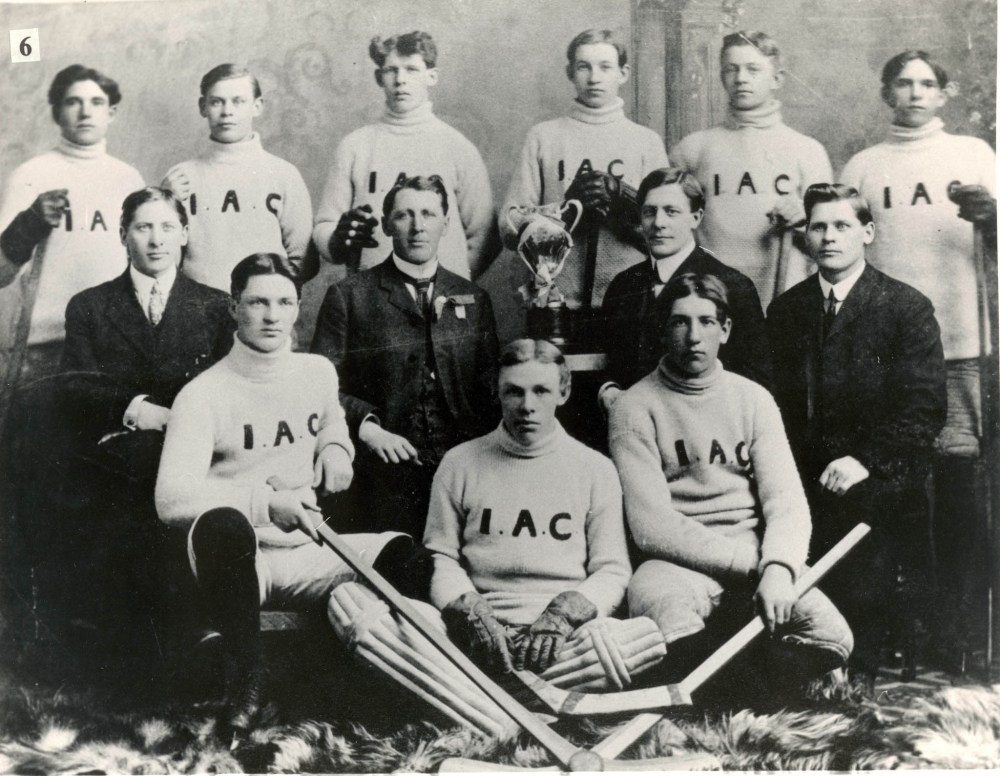
We were golden without them
NHL stars at the Olympics may be history, but...
Advertisement
Read this article for free:
or
Already have an account? Log in here »
To continue reading, please subscribe:
Monthly Digital Subscription
$1 per week for 24 weeks*
- Enjoy unlimited reading on winnipegfreepress.com
- Read the E-Edition, our digital replica newspaper
- Access News Break, our award-winning app
- Play interactive puzzles
*Billed as $4.00 plus GST every four weeks. After 24 weeks, price increases to the regular rate of $19.95 plus GST every four weeks. Offer available to new and qualified returning subscribers only. Cancel any time.
Monthly Digital Subscription
$4.99/week*
- Enjoy unlimited reading on winnipegfreepress.com
- Read the E-Edition, our digital replica newspaper
- Access News Break, our award-winning app
- Play interactive puzzles
*Billed as $19.95 plus GST every four weeks. Cancel any time.
To continue reading, please subscribe:
Add Free Press access to your Brandon Sun subscription for only an additional
$1 for the first 4 weeks*
*Your next subscription payment will increase by $1.00 and you will be charged $16.99 plus GST for four weeks. After four weeks, your payment will increase to $23.99 plus GST every four weeks.
Read unlimited articles for free today:
or
Already have an account? Log in here »
Hey there, time traveller!
This article was published 08/04/2017 (3309 days ago), so information in it may no longer be current.
No Sidney Crosby. No Connor McDavid. No Patrik Laine. No Auston Matthews.
The men’s hockey tournament at the 2018 Winter Olympics will be lacking some serious star power if the NHL sticks to its guns and refuses to allow its players to compete at the Games in Pyeongchang, South Korea.
The league’s decision not to halt the 2017-18 season to accommodate the 2018 Olympics has been met with outrage from some of the biggest names in the game.
No one could have been more blunt than Washington Capitals captain Alex Ovechkin, who insists he’ll be there, whether the NHL decides to go or not.
Winnipeg Jets centre Mark Scheifele was also dejected.
“It definitely sucks to hear that news,” he said. “A lot of guys look forward to that their whole lives, to obviously win a Stanley Cup, but to win a gold medal, as well. I was definitely very disappointed.”
If nothing changes, the important thing to remember is that, even before NHL players joined the party, Canada had an impressive record at the Games, including today’s list of our Top Five Golden Olympic Moments Without the NHL:
5) The Games: The 1924 Winter Olympics in Chamonix, France
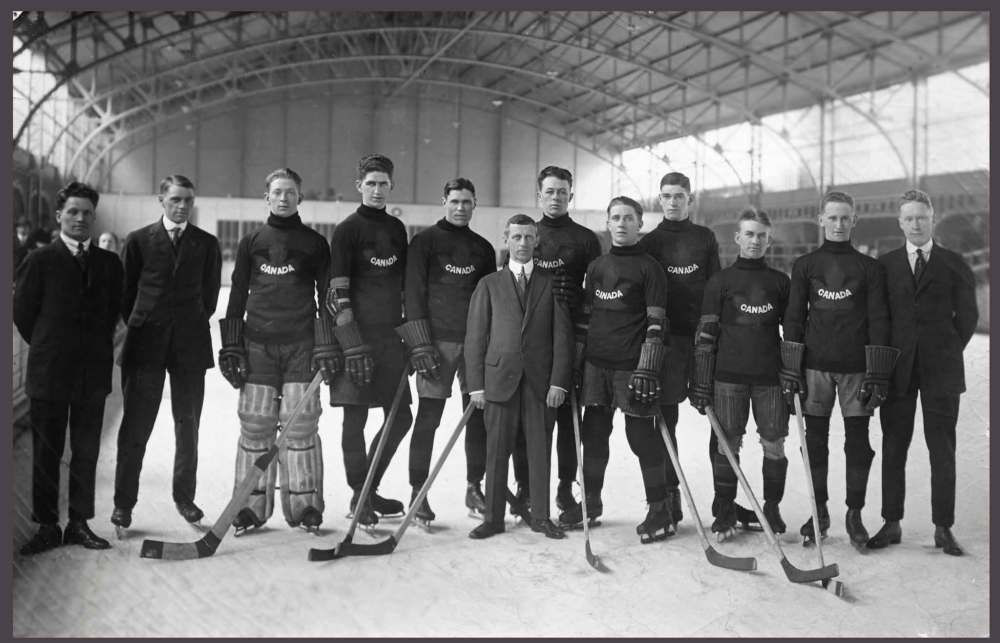
The Golden Boys: The Toronto Granites
Going for the Gold: The Granites — the first organized ice hockey team in Ontario and an offshoot of the Toronto Granite Curling Club — were the second Canadian team to win gold in men’s hockey, but the first to accomplish the feat at a Winter Olympics.
In 1924, the Games were held in Chamonix, France, a village in the Alps. The Chamonix Games were not technically called the Winter Olympics in 1924; the official designation came a year later after some wrangling from the International Olympic Committee.
Canada was represented by the Granites, who had captured the Allan Cup, the trophy given to the nation’s senior amateur men’s champion, in 1922 and 1923. By all accounts, the Granites weren’t just good; they were great.
“And there can be no doubt this was the most dominant team in international hockey history,” chirps the website of Hockey Canada. In a 2014 article for the Free Press, historian Allan Levine wrote: “The word ‘dominant’ does not quite describe how the Canadians overwhelmed their three opponents in the round-robin play. In three games, the Canadians outscored the other teams 85-to-0. In the game against the newly established country of Czechoslovakia, Canadian forward Harry Watson scored 11 goals in a 30-0 victory, and then a record-setting 13 goals two days later in a 33-0 rout of Switzerland. Because so much of the play in all of the games was spent in the other teams’ end, goalie Jack Cameron frequently went for a leisurely skate near his net to keep loose.”
Canada won gold by beating the U.S. 6-1. According to HockeyCanada.ca, Canada’s hero, Watson, eschewed the NHL: “Watson… cherished his amateur status and refused ever to play the game he loved for money.”
4) The Games: The 1928 Winter Olympics in St. Moritz, Switzerland
The Golden Boys: The University of Toronto Varsity Grads
Going for the Gold: In Switzerland, for the third consecutive Olympics, a Canadian senior men’s team waltzed to the gold medal. This time the victors were the University of Toronto alumni team, the Grads, who earned their spot on the international stage by winning Canada’s intercollegiate crown in 1926 and the Allan Cup in 1927.
“Their level of skill and play astounded the Swiss officials at pre-Olympic practices, prompting them to create a qualifying system that allowed the Varsity Grads to sit out round-robin divisional play and proceed directly to the medal round,” notes the U of T website, VarsityBlues.ca. “The skills with which they played were second only to their sportsmanship, style, dedication and enthusiasm.”
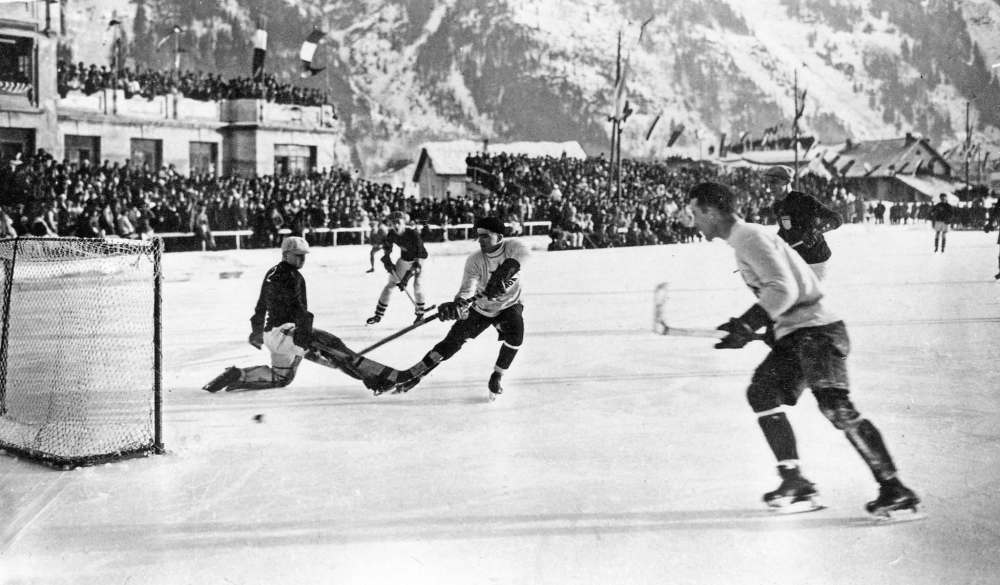
The team was coached by Toronto NHL icon Conn Smythe, whose name adorns the trophy awarded annually to the MVP in the Stanley Cup playoffs. The Grads faced Sweden, Great Britain and Switzerland in games they won with ease: 11-0, 14-0 and 11-0, respectively.
The win over the Swiss earned Canada its third straight Olympic gold in men’s hockey. “Netminders Joe Sullivan and Stuffy Mueller combined for the tournament-long shutout and the offence was led by future NHL star Dave Trottier,” notes HockeyCanada.ca.
In 1928, unlike the first two Olympic tourneys, the games were played on a rink with regulation-height boards and a size comparable to current NHL arenas.
3) The Games: The 1932 Winter Olympics in Lake Placid, United States
The Golden Boys: The Winnipeg Winnipegs
Going for the Gold: Get ready to feel a swell of hometown pride, Winnipeg, because it doesn’t get much more local than the Winnipeg Winnipegs. (Fun fact: For the first five years of their existence, the Winnipeg Blue Bombers were known as the Winnipeg Winnipegs.)
What we’re talking about today is the Winnipeg Hockey Club, better known as the Winnipegs, a senior men’s amateur team founded in our beloved city back in 1890. These are the local lads who earned Canada its fourth straight Olympic hockey gold and the second Olympic crown won by a Winnipeg team.
The team enjoyed a banner year in 1931, capturing the Keane Memorial Cup as Winnipeg champions, the Pattison Cup as Manitoba champs and the Allan Cup as Canadian senior men’s champs. But their true moment in the sun came at the Lake Placid Games in 1932.
“Although the Winnipegs were considered too defensive a team before they left Canada, the team represented its country in Lake Placid with success equal to its three predecessors, winning gold on the strength of two favourable results against the United States,” according to HockeyCanada.ca.
Winnipeg won the first game against the U.S. 2-1 in overtime on a goal by Vic Lindquist. The second game was a 2-2 tie wherein Romeo Rivers tied the game with just 50 seconds remaining. “Although this goal occurred some three-quarters of a century ago, it remains one of the greatest in the nation’s history,” HockeyCanada.ca gushes.
What became of our local heroes? Notes HockeyCanada.ca: “None of the Canadian players went on to stellar NHL careers, most preferring to return to their full-time jobs in Winnipeg after the Olympics.”
2) The Games: The 1952 Winter Olympics in Oslo, Norway
The Golden Boys: The Edmonton Mercurys
Going for the Gold: We don’t normally cheer for teams from Edmonton, but these boys deserve a special place in the hearts of all Canadians.
According to the Edmonton Journal, the team was put together by Jim Christiansen, an avid sports enthusiast and car dealer who wanted to celebrate a line of Mercurys he sold. Roughly half the team — men like 19-year-old defenceman Al Purvis — worked for the auto dealer. “The Edmonton Mercurys could really play hockey,” the Journal notes.
At the Olympics in Oslo, the Mercs went 7-0-1. They won their first seven games by a margin of 68 goals to 11; the lone blemish a 3-3 tie with the U.S. in the final round-robin game — and skated away with Canada’s sixth hockey gold.
Most significantly, it was the last hockey gold Canada would win for 50 years, a devastating drought that would not end until a team laden with Canadian pros reclaimed the gold in 2002 in Salt Lake City.
After claiming gold, the Mercs returned to Edmonton for a victory motorcade down Jasper Avenue, riding in Mercury, Meteor and Lincoln convertibles provided by the dealership. About 70,000 Edmontonians lined the route. The team was inducted into the Canadian Olympic Hall of Fame in 2002. Here’s what HockeyCanada.ca says of these heroic amateurs: “The Mercs were chosen for the Olympics because they were a purely amateur team at a time when the Canadian Amateur Hockey Association (CAHA) was having difficulty trying to find a ‘pure’ team. Not a single player from this team played in the NHL, confirming that although Canada wasn’t winning gold as easily as it had, it was still able to do so with a team that was nowhere near in calibre to the NHL’s Original Six stocked with Canadian pros.”
1) The Games: The 1920 Olympic Games in Antwerp, Belgium

The Golden Boys: The Winnipeg Falcons
Going for the Gold: Get ready to burst with pride, because it’s time to celebrate an historic Olympic achievement that too many Canadians remain unaware of — the first Olympic gold medal in hockey was won by a heroic group of Icelandic-Manitobans!
We’re talking about the Winnipeg Falcons, a senior men’s club that became the best in the world at the first truly international hockey tournament, the 1920 Summer Games in Antwerp. The Falcons were a group of West End Winnipeggers who faced discrimination at home and fought overseas during the First World War. The Falcons’ eight-man roster was made up of Icelandic players who banded together after they were not able to play on other Winnipeg teams because of ethnic prejudice.
“It’s no different than today’s immigrants,” Rick Brownlee, sport heritage manager at the Manitoba Sports Hall of Fame, told the Free Press in 2014. “They were different, they had a different language, they ate different things. People don’t like things that they’re ignorant of.”
The Falcons encountered little opposition in winning the seven-team Olympic tournament, defeating Czechoslovakia 15-0 in the quarter-finals, the U.S. 2-0 in the semifinals and Sweden 12-1 in the gold-medal game.
The Falcons are slowly getting their due. During the 2002 Olympics, the CAHA ruffled some feathers when it mistakenly identified the Toronto Granites as the first gold-medal winners in hockey. The team has been recognized in recent years, with Team Canada wearing replica Falcons jerseys at the 2004 World Cup of Hockey. Along with Winnipeg, the Falcons will always be No. 1.
It would be nice to have NHL players in South Korea, but this country was solid gold long before the pros strapped on their skates.
doug.speirs@freepress.mb.ca