

It’s amateur hour
Some 'athletes' will try anything to realize their Olympic dreams
Advertisement
Read this article for free:
or
Already have an account? Log in here »
To continue reading, please subscribe:

Digital Subscription
One year of digital access for only $205*
- Enjoy unlimited reading on winnipegfreepress.com
- Read the E-Edition, our digital replica newspaper
- Access News Break, our award-winning app
- Play interactive puzzles
*First annual payment billed as $205.00 + GST for one year. This annual subscription will automatically renew at $233.00 + GST every 52 weeks (10% off the regular annual price of $259.35). Offer available to new and qualified returning subscribers only. Cancel any time.
To continue reading, please subscribe:
Add Free Press access to your Brandon Sun subscription for only an additional
$1 for the first 4 weeks*
- Enjoy unlimited reading on winnipegfreepress.com
- Read the E-Edition, our digital replica newspaper
- Access News Break, our award-winning app
- Play interactive puzzles
*Your next Brandon Sun subscription payment will increase by $1.00 and you will be charged $17.95 plus GST for four weeks. After four weeks, your payment will increase to $24.95 plus GST every four weeks.
Read unlimited articles for free today:
or
Already have an account? Log in here »
Hey there, time traveller!
This article was published 24/02/2018 (3075 days ago), so information in it may no longer be current.
For most Olympians, the Games’ official motto — “Faster, Higher, Stronger” — is a source of inspiration.
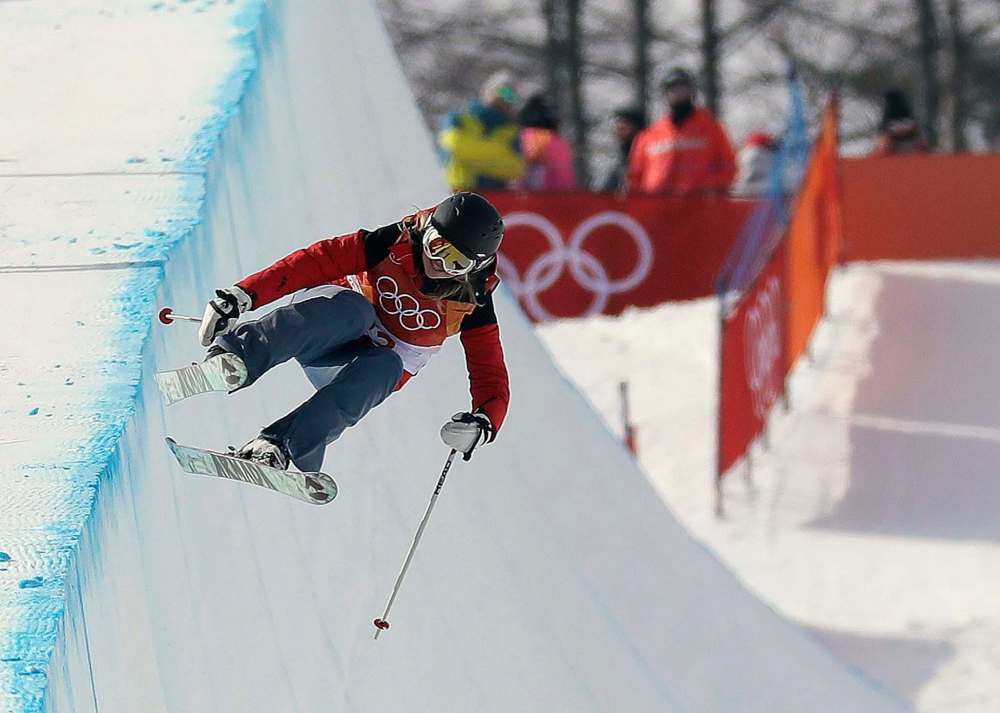
For halfpipe skier Elizabeth Swaney, however, the words “Slower, Lower, Weaker” seem far more appropriate.
Bemused social-media users hailed Swaney as “the worst Olympian ever” last week after witnessing her spectacularly unspectacular performance in the women’s freestyle skiing halfpipe competition in Pyeongchang.
While the rest of the field soared high above the edge of the pipe to perform death-defying tricks, Swaney simply meandered from one side of the pipe to the other, blandly skiing her way to a last-place finish out of 24 participants.
Her ambitious Olympic goal was (wait for it) to finish her runs without falling off her skis. How could this travesty happen on the world’s biggest stage?
Well, Swaney is a U.S. citizen, but knew she had no hope of making the American squad, so she decided to compete for Hungary, the home of her grandparents. She squeaked into the Games through a combination of cunning, awareness and exploiting a lack of female halfpipe skiers.
Qualification for the Games requires achieving a certain number of top-30 World Cup finishes, and Swaney got enough just by showing up for events where less than 30 athletes were competing. As one Twitter user put it: “Worst. Olympian. Ever. Fair play to her though for the hustle and completely playing the system.”
We don’t know if she’s the worst of all time, but she’s certainly in bad company, as we can see from today’s uninspiring list of Five of the Most Inept Olympians in History:
5) The lovable loser: George Stuart Robertson
The Olympics: The 1896 Summer Games in Athens
The agony of defeat: It was the summer of 1896 and the first Olympic Games of the modern era were being held in Athens, Greece. “Greek classics were my proper academic field, so I could hardly resist a go at the Olympics, could I?” the Oxford-educated Robertson later explained to anyone who would listen.
By all accounts, the Oxford grad was a gifted athlete in the hammer-throwing event, having won that competition on three occasions against rivals from Cambridge. In 1896, he plunked down 11 English pounds for a trip to Athens after spotting an advertisement for the event in the window of a London travel agent. When he arrived, however, he quickly got some bad news — hammer throwing, his specialty, was not included at the Games.
What with being a plucky amateur, Robertson bravely decided to sign up for the discus event. According to reports at the time, his performance was described as “neither elegant nor successful.” In fact, his toss of 25.20 metres is considered to be the worst result ever recorded in the Olympics discus event.
Fortunately, this was not his only contribution to these historic Games. At Oxford, he had won the Gaisford Prize for Greek verse in 1894, so he bravely composed a Pindaric ode in classical Greek, which he recited for the king of Greece at the closing ceremonies of the 1896 Games, for which he was rewarded with a laurel branch.
Here is a tiny taste: “Up, comrades! Let your voice raise/The flower of song, the blossom of her praise/And, as we fleet across a halcyon sea/May the god gently waft our song to thee!” So, when it came to poetry, he was a pretty good discus thrower.
4) The lovable loser: Eric (The Eel) Moussambani
The Olympics: The 2000 Summer Games in Sydney
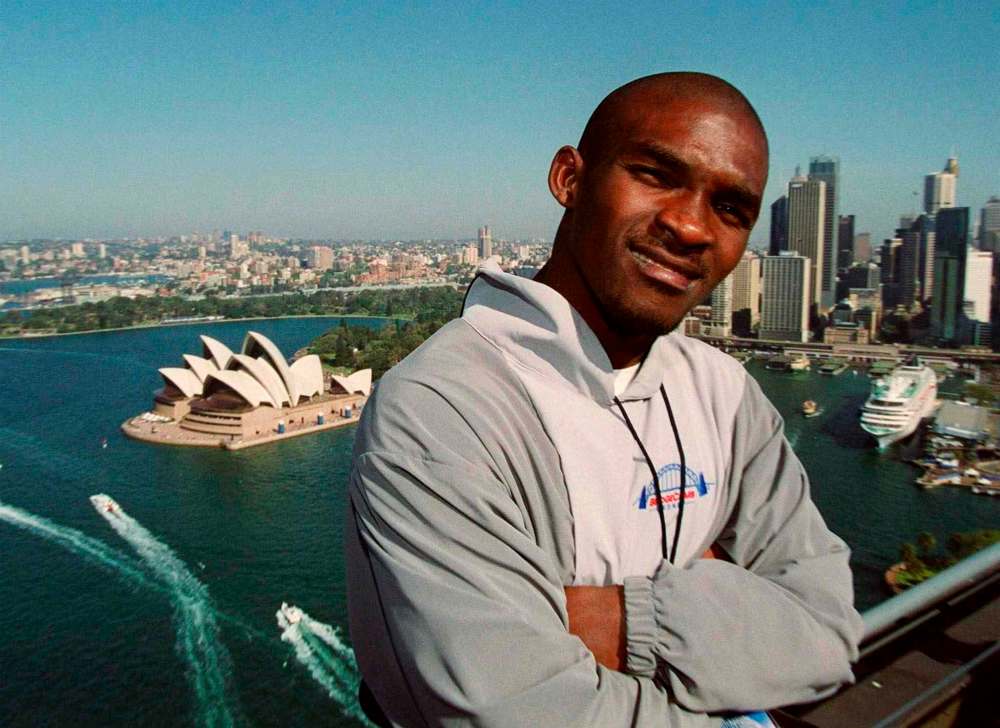
The agony of defeat: Eighteen years later, it is not easy to summon images from the Summer Games in Sydney, Australia. But the memory of one man, Equatorial Guinea’s Eric Moussambani, whose pool performance earned him the nickname “The Eel,” refuses to fade.
When Moussambani arrived at the 2000 Games, he’d only been training for the 100-metre freestyle for about eight months. He’d also never been in an Olympic-sized pool and had never raced more than 50 metres.
Moussambani earned a spot on his nation’s Olympic swimming team because he was the only person that responded to a plea on the radio. Even though he had never seen a 50-metre pool in his life, he was admitted because the International Olympic Committee had relaxed standards to lure more athletes from developing nations.
In the opening heat of the 100-metre freestyle, the man who came to be known as “Eric the Eel” stood alone on the block because his two competitors had jumped the gun and been disqualified. “The Eel” belly-flopped into the pool, then flailed through the water, pausing once to catch his breath, getting slower with every stroke as the crowd cheered desperately and lifeguards stood by to pull him out of the pool if needed.
Halfway through the race, as Eric dog paddled, gasping for air, it looked so dire that commentators seriously worried he was drowning. When he pulled himself from the water, the applause thundered. “I’m going to jump and dance all night long in celebration of my personal triumph!”
The Eel told reporters of his personal best and national record. This non-world-class performance turned a man who had learned to swim roughly 12 months earlier into a sporting icon and an Olympic celebrity.
Embarrassing? Maybe. Inspiring? Without a doubt! He went on to become coach of his national team.
3) The lovable loser: Fred Lorz
The Olympics: The 1904 Summer Games in St. Louis
The agony of defeat: The 1904 Summer Games, the first held outside Europe, arguably earned the U.S. the gold medal for the most bizarre Games in history. St. Louis hosted the Games as part of the World’s Fair — and produced an athletic spectacle that had all the trappings of a carnival midway.
“Although there were moments of surprising and genuine triumph (gymnast George Eyser earned six medals, including three gold, despite his wooden leg), the Games were largely overshadowed by the fair, which offered its own roster of sporting events, including the controversial Anthropology Days, in which a group of ‘savages’ recruited from the fair’s international villages competed in a variety of athletic feats — among them a greased-pole climb, ‘ethnic’ dancing, and mud slinging,” according to Smithsonian magazine.
But for sheer strangeness, it was hard to beat the marathon, the Games’ signature event. Among the marathoners was New Yorker Fred Lorz. By all accounts, it was a scorching day on Aug. 30, 1904, when 32 finely tuned athletes lined up for the marathon. The mercury had soared to 32 C, and the humidity was brutal as the runners navigated a challenging course. It was so tough that only 14 of the 32 starters finished the race.
Finally, after three hours and 13 minutes, Lorz staggered into the stadium and was greeted with enthusiastic cheers. Alice Roosevelt, daughter of U.S. president Theodore Roosevelt, proudly placed a laurel wreath on Lorz’s head.
There was just one minor problem — it turns out Lorz had cramped up about nine miles into the race, which is when he hitched a ride in his trainer’s car for the next 10 miles until the vehicle broke down at the 19-mile mark, prompting a refreshed Lorz to hop out and finish the race on foot.
The man now known as “Lorz of the Rings”insisted he only broke the winner’s tape as a “joke,” but Olympic officials didn’t find it all that funny. The hoax was revealed just as he was about to receive the gold medal.
He was banned from further competitions but reinstated in time to win the Boston Marathon in 1905. We have no idea what kind of car he was driving.
2) The athlete(s): The Tunisian Modern Pentathlon Team
The Olympics: The 1960 Summer Games in Rome
The agony of defeat: Initially, we considered awarding the gold for Worst Olympic Team to the Italian ice hockey squad that competed at the 1948 Games in St. Moritz, Switzerland.
At the 1948 Games, the Italian team etched its name in legend, losing 22-3 to Czechoslovakia, 16-0 to Switzerland, 31-1 to the USA, 21-1 to eventual gold medallists Canada, 13-7 to Poland, 16-5 to Austria, 23-0 to Sweden, and 14-7 to Great Britain. That’s 24 goals for, and 156 against.
With apologies to the Italian pucksters, they can’t hold a candle to the Tunisian Modern Pentathlon Team when it comes to sheer Olympic badness. Or, as History.com put it: “If at first you can’t succeed, cheat. Words to live by for the inept Tunisian Modern Pentathlon Team in the 1960 Rome Games.”
How bad were these guys? Well, apparently they set the standard for ineptitude, even when it came to cheating. According to The Mammoth Book of Losers by Karl Shaw, the Tunisian squad finished a historic last in all five events of the pentathlon and, in some cases failed to score a single point.
In show jumping, the entire team of three fell off their horses. In swimming, one member famously came close to drowning. Wrote Shaw: “The third event was the shooting; one of the team nearly shot an official and they were ordered from the shooting range for fear that they were endangering lives.”
In fencing, the team had a serious handicap — only one person actually knew how to fence. “Hoping nobody would notice, they sent the same team member up three times with his mask on,” the Book of Losers notes. “One of his opponents recognized him as the man he had just fought and the Tunisian was disqualified.”
Notes Shaw: “The total score for Team Tunisia was 5,126, a massive 10,000 points behind the next to last, marking the worst performance by a team in Olympic history.”
If there was a gold medal for cheating, well, these guys wouldn’t have won that, either. But they did fight their way onto our list, and that takes a serious lack of talent.
1) The lovable loser: Michael (Eddie the Eagle) Edwards
The Olympics: The 1988 Winter Games in Calgary
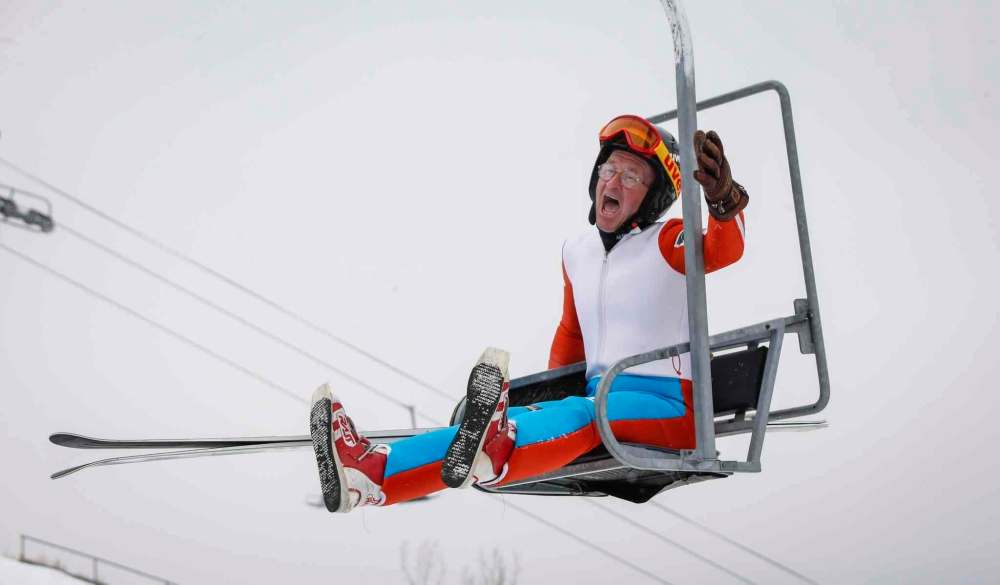
The agony of defeat: When it comes to lovable losers, no one has crash-landed on the Olympic stage with a more resounding thump than the man known as “Eddie the Eagle.” We are putting Eddie at the top of today’s list because, when he took flight at the Calgary Olympics, he finished at the bottom.
A drywaller by trade, Eddie, then 24, shot to international stardom in Calgary when, thanks to lax standards, he became the first man to represent Britain in ski jumping since 1929, and nearly killed himself on live TV.
The world loved Eddie because he was short on talent and experience, but long on heart. He was completely self-funded and competed using borrowed equipment that was way too big. With his self-deprecating humour, crooked grin and vision so weak the lenses of his trademark eyeglasses were as thick as the bottoms of Coke bottles, he endeared himself to fans around the world.
Like Elizabeth Swaney, he got in the Games by picking a sport where his country didn’t have anyone competing. He competed in both the 70-metre and 90-metre events in Calgary.
When he took flight from the 90-metre tower in Calgary and wobbled through the air like a wounded duck, we were never sure whether he’d be alive when he hit the ground.
“I knew I was going to come last in Calgary, but standing at the top of that jump was the greatest thing,” Eddie told this columnist in 2010. “With 90,000 people at the bottom of a run chanting your name, it gives you a lot of inspiration. I didn’t expect to win gold. It was my dream to go to Calgary. My gold medal was just getting there.”
He finished 58th out of 59 competitors, thanks to a French jumper who broke his leg the day before the event.
Organizers later changed the rules to prevent anyone like Eddie from qualifying again. But we loved this heroic loser, because if he could do it, then so could we.
And to prove we have the right stuff, why don’t we get off our couches and take a stab at ski jumping? In the true Olympic spirit, you can go first.
doug.speirs@freepress.mb.ca
Related Articles
Bronze medals worth their weight in gold




Advertisement Advertise With Us
Advertisement Advertise With Us