

City needs to help keep free admission alive

Advertisement
Read this article for free:
or
Already have an account? Log in here »
To continue reading, please subscribe:

Digital Subscription
One year of digital access for only $205*
- Enjoy unlimited reading on winnipegfreepress.com
- Read the E-Edition, our digital replica newspaper
- Access News Break, our award-winning app
- Play interactive puzzles
*First annual payment billed as $205.00 + GST for one year. This annual subscription will automatically renew at $233.00 + GST every 52 weeks (10% off the regular annual price of $259.35). Offer available to new and qualified returning subscribers only. Cancel any time.
To continue reading, please subscribe:
Add Free Press access to your Brandon Sun subscription for only an additional
$1 for the first 4 weeks*
- Enjoy unlimited reading on winnipegfreepress.com
- Read the E-Edition, our digital replica newspaper
- Access News Break, our award-winning app
- Play interactive puzzles
*Your next Brandon Sun subscription payment will increase by $1.00 and you will be charged $17.95 plus GST for four weeks. After four weeks, your payment will increase to $24.95 plus GST every four weeks.
Read unlimited articles for free today:
or
Already have an account? Log in here »
Hey there, time traveller!
This article was published 03/04/2018 (3027 days ago), so information in it may no longer be current.
Free is not dead in Winnipeg. But it’s close.
In the past week, two stories emerged involving formerly free things that are coming to an end: one through policy, the other because of weather.
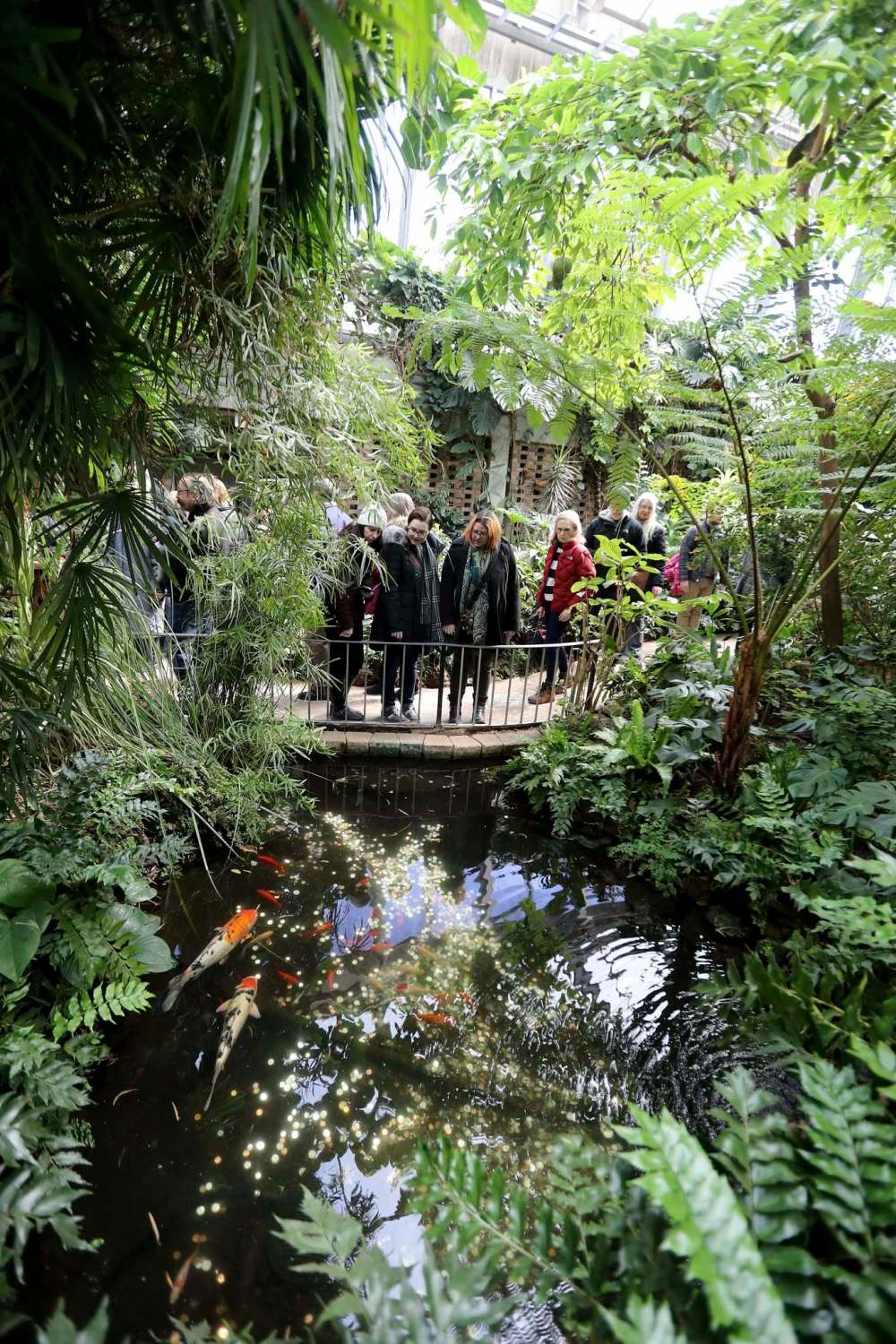
The first was a modest protest last week at Winnipeg’s Assiniboine Park to draw attention to the fact the soon-to-be-constructed Diversity Gardens attraction will charge some form of admission. Diversity Gardens is slated to replace the Assiniboine Park Conservatory, an indoor tropical paradise slated for demolition. For more than a century, it was free to visit.
Hot on the heels of that story, the Free Press ran a tear-jerker of a feature by reporter Randy Turner on the slow, climate change-inspired death of the quintessentially Canadian outdoor rink.
Lamentably, the early returns from a long-term study predict the slowly warming planet will reduce the number of days outdoor rinks can be maintained. With that trend comes a slow wind-down of one of the city’s last, great free recreational activities.
To be fair, free is not totally dead. If you pay property taxes in Winnipeg, it’s still free to obtain a library card, which provides access to a wealth of programs and resources.
Free days and hours are offered at many museums, recreational facilities and attractions. Most city rinks, for example, still offer free public skating. And some of the best of what the city has to offer, such as the green space at Assiniboine Park, the network of wading pools or the world’s longest skating rink — which occupies nearly eight kilometres of the Red and Assiniboine rivers — is free and accessible to anyone.
But many of the best attractions cost money. Lots of it. A family of four pays nearly $80 to get into either the Assiniboine Park Zoo or the triple-header that is the Manitoba Museum and its science gallery and planetarium. Admission fees of $3.25 await any youngster looking for a dip in a city pool. The Winnipeg Art Gallery is not free, but at $28 for a family of four, it’s a bargain when compared to many of the city’s other top attractions.
This is hardly a Winnipeg phenomenon, or even a Canadian one. Every nation that boasts publicly funded facilities, amenities and programs is trying to balance the idealism of free admission with the harsh reality of increasing costs and shrinking revenues.
The City of Winnipeg presents a great example of this dynamic. These days, city hall is all about spending more and more money every year fixing roads, while trying to hold the line on property taxes. That equation means there is less for things such as transit and civic recreational and cultural amenities. The less money the city pumps into those amenities, the more users are expected to make up.
Local government is assisted in this negative trend by the provincial and federal governments, which somehow each year find new and diabolical ways of rationing the funding that flows down to the municipal level. The recent provincial budget, which has slowed funding on transit, ambulance services and other programs borne largely by Winnipeg, provides a good example of how senior levels of government force local government to shrink the number of “free” things they do.
Solutions are going to be hard to come by for this woeful trend. The dual, laser-like focus on infrastructure and property taxes isn’t likely to ease anytime soon. The only way residents are going to get some relief from the relentless upward pressure on user fees is to look to other sources of funding.
In Toronto, for example, library cards are free. However, in Hogtown, a library card also allows you to sign out a Museum + Arts Pass. The MAP (sponsored by Sun Life Financial) provides free admission for some of Toronto’s finest attractions, including the Art Gallery of Ontario, Toronto Zoo, Royal Ontario Museum and Ontario Science Centre.
The MAP passes are not infinite in number, and, in fact, some of them allow free admission to only some of the attractions listed above. But it is a clever and sustainable way to provide greater accessibility to facilities that are mostly publicly funded.
Before Winnipeg can mull establishing a similar program, however, it needs city council to start having a focused conversation about things such as admission fees to Diversity Gardens and other city-funded attractions and amenities. A discussion that has not happened to any great extent.
User fees for city facilities are typically rolled into the annual operating budget, which means citizens find out about them only when the budget is unveiled. In many instances, city council has not debated the policy; it’s driven by bean-counters attempting to balance the overall budget.
That was largely the point being made by Molly McCracken, the regional director of the Canadian Centre for Policy Alternatives and one of the participants in the recent Diversity Gardens protest.

City council’s decision to off-load oversight of Assiniboine Park to a private, not-for-profit group (Assiniboine Park Conservancy) has absolved councillors from having to debate admission fees. That’s a great deal for councillors, but not for everyone else.
Winnipeg Mayor Brian Bowman and council need to move with haste to find other sources of revenue to ease the need for admission fees.
Perhaps the idea of “free for everyone, every time” is already dead. But that doesn’t mean Winnipeg can’t get closer to a framework where it’s free for the people who really need it to be, and reasonable for those who can afford to pay a reasonable fee.
dan.lett@freepress.mb.ca
Dan Lett is a columnist for the Free Press, providing opinion and commentary on politics in Winnipeg and beyond. Born and raised in Toronto, Dan joined the Free Press in 1986. Read more about Dan.
Dan’s columns are built on facts and reactions, but offer his personal views through arguments and analysis. The Free Press’ editing team reviews Dan’s columns before they are posted online or published in print — part of the our tradition, since 1872, of producing reliable independent journalism. Read more about Free Press’s history and mandate, and learn how our newsroom operates.
Our newsroom depends on a growing audience of readers to power our journalism. If you are not a paid reader, please consider becoming a subscriber.
Our newsroom depends on its audience of readers to power our journalism. Thank you for your support.
Dan Lett is a columnist for the Free Press, providing opinion and commentary on politics in Winnipeg and beyond. Born and raised in Toronto, Dan joined the Free Press in 1986. Read more about Dan.
Dan’s columns are built on facts and reactions, but offer his personal views through arguments and analysis. The Free Press’ editing team reviews Dan’s columns before they are posted online or published in print — part of the our tradition, since 1872, of producing reliable independent journalism. Read more about Free Press’s history and mandate, and learn how our newsroom operates.
Our newsroom depends on a growing audience of readers to power our journalism. If you are not a paid reader, please consider becoming a subscriber.
Our newsroom depends on its audience of readers to power our journalism. Thank you for your support.
Related Articles
Publicly funded Diversity Gardens should be kept open to everyone
Advertisement Advertise With Us
Advertisement Advertise With Us
History
Updated on Wednesday, April 4, 2018 7:46 AM CDT: Fixes paragraph break