

Hard to sum up 2018 World Cup
At the very least, this tournament has been unpredictable
Advertisement
Read this article for free:
or
Already have an account? Log in here »
To continue reading, please subscribe:

Digital Subscription
One year of digital access for only $205*
- Enjoy unlimited reading on winnipegfreepress.com
- Read the E-Edition, our digital replica newspaper
- Access News Break, our award-winning app
- Play interactive puzzles
*First annual payment billed as $205.00 + GST for one year. This annual subscription will automatically renew at $233.00 + GST every 52 weeks (10% off the regular annual price of $259.35). Offer available to new and qualified returning subscribers only. Cancel any time.
To continue reading, please subscribe:
Add Free Press access to your Brandon Sun subscription for only an additional
$1 for the first 4 weeks*
- Enjoy unlimited reading on winnipegfreepress.com
- Read the E-Edition, our digital replica newspaper
- Access News Break, our award-winning app
- Play interactive puzzles
*Your next Brandon Sun subscription payment will increase by $1.00 and you will be charged $17.95 plus GST for four weeks. After four weeks, your payment will increase to $24.95 plus GST every four weeks.
Read unlimited articles for free today:
or
Already have an account? Log in here »
Hey there, time traveller!
This article was published 13/07/2018 (3006 days ago), so information in it may no longer be current.
How to sum up the last month of World Cup soccer? We could exhaust a thesaurus attempting to do just that.
From the get-go, this tournament has had a mind of its own, a unique personality, an unexpected charm. It has been volatile, dumping 2014 champions Germany out at the group stage. It has been devastating, sending Senegal home on the disciplinary tiebreaker. It has been ruthless, exposing Argentina’s mediocrity and trampling on the legacy of one of the sport’s greatest ever players in the process.
Neymar, who left Russia with a blotted reputation, found the 2018 World Cup to be harshly judgmental. Spain, the 2010 winners, were so dreadfully dull they didn’t last beyond the Round of 16 — expelled by a moody competition for being too boring. Russia, which eliminated them on penalties, put on a welcoming event that looked good on television and seemed to be enjoyed by travelling fans as well. England actually won a shootout and progressed to a first semifinal in 28 years — a heartwarming story that managed to overshadow the disaster of Brexit back home.
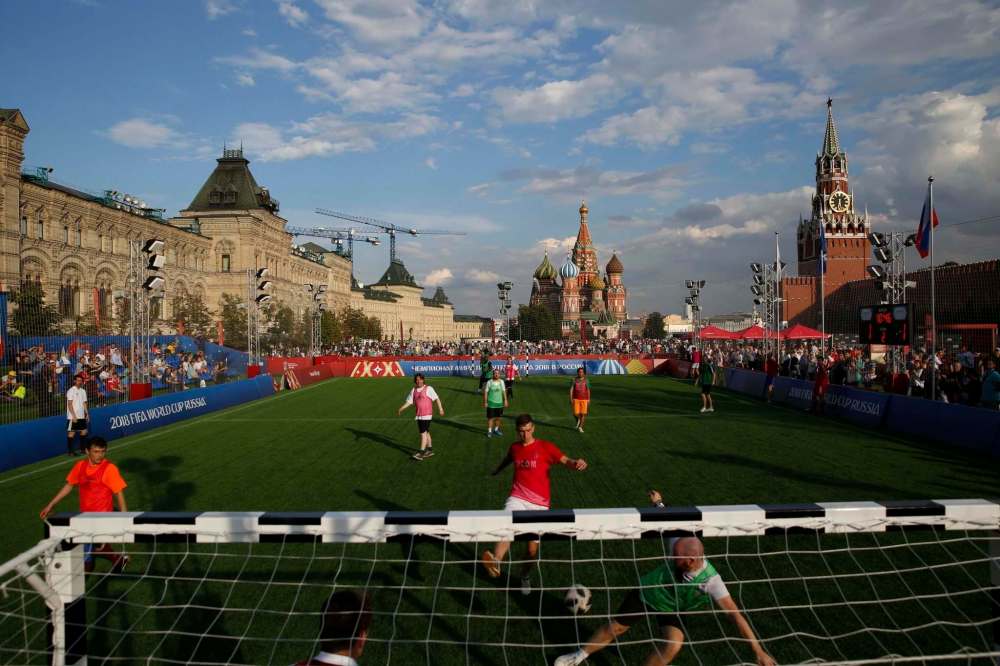
Overall, it has been a thoroughly enjoyable few weeks, if not almost entirely unpredictable. Perhaps largely because of its unpredictability. And so, with a much-anticipated final still to be played, we look for indicators — no matter how futile the search — that might provide some insight into Sunday’s match between France and Croatia.
Naturally, there is the 1998 semifinal between the same nations to examine, and while it makes little sense to extrapolate a result from two decades ago into the present, a recent article France Football compared the French defence of that competition to Les Bleus’ current back-line. Centre-back Lilian Thuram scored twice in the 2-1 triumph at Saint-Denis (his only two goals for his country in 142 appearances), and fellow defenders Laurent Blanc and Bixente Lizarazu also found the back of the net at that World Cup.
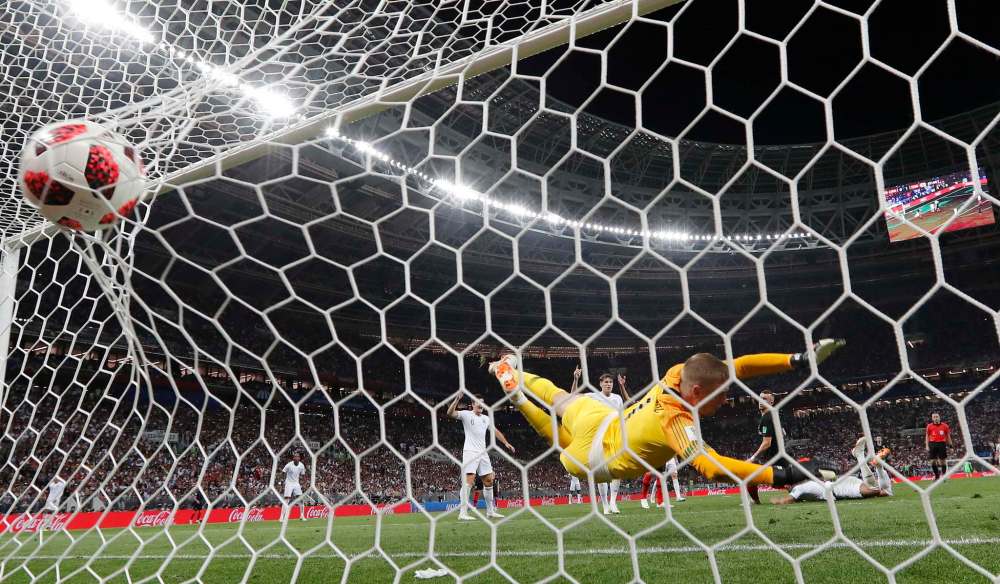
In Russia, Benjamin Pavard scored one of the goals of the tournament against Argentina, and Raphael Varane and Samuel Umtiti notched the winners against Uruguay and Belgium. The latter two have also provided sturdy protection in front of goalkeeper Hugo Lloris. Croatia’s Dejan Lovren can say he is “one of the best defenders in the world” all he likes, but it’s France that has the advantage in the defensive third. Valtreni ’keeper Danijel Subasic, however, gives his side a slight advantage in that position.
It’s in the centre of the park that the Golden Ball award will be decided. Luka Modric delivered what has so far been this World Cup’s best performance when he willed Croatia to victory over Russia in the quarter-finals, possessing the ball nearly 10 per cent of the match and touching it 140 times. Against England on Wednesday he completed 89 per cent of his passes and executed three tackles — all of them in the second half or extra time.
N’Golo Kante, meanwhile, passed at a success rate of 91 per cent against Belgium on Tuesday and made three interceptions in the topsy-turvy 4-3 triumph over Argentina. The Chelsea midfielder is France’s engine, and his displays in Russia may end up generating a bid from Barcelona.
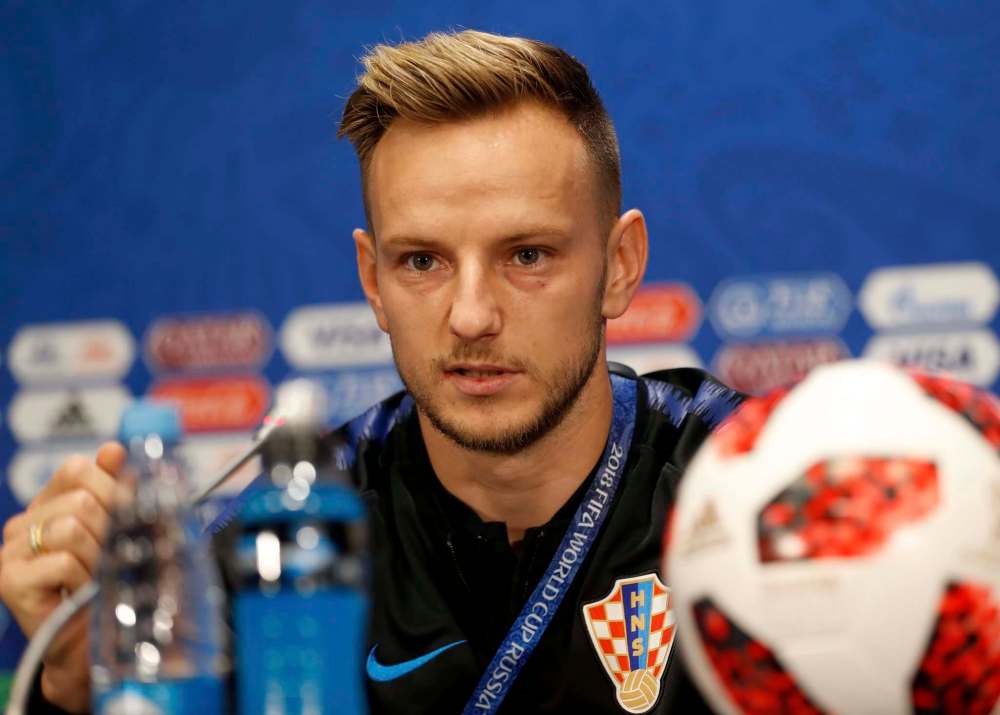
That said, Croatia should be marginally superior in midfield, where Marcelo Brozovic and Ivan Rakitic have also been exceptional, providing equal parts of athleticism and poise, distribution and defensive contribution. And even if Modric isn’t named Player of the Tournament, his exploits here and during the club season with Real Madrid should win him the Ballon d’Or.
If there’s a Golden Ball candidate in the attack, it’s France forward Antoine Griezmann. Kylian Mbappe might have got everyone out of their seats with his spectacular brace in the Round of 16, but Griezmann also tallied against Argentina and then went on to score and assist in the Uruguay quarter-final, where he also made five tackles.
There isn’t a more complete attacker at this World Cup, and Griezmann, who plays his club soccer at Atletico Madrid, has looked very much at home in a system L’Équipe has likened to Atletico’s.
Croatia forwards Ivan Perisic and Mario Mandzukic both scored against England, but it’s France that is stronger up top. Perisic is also struggling with a thigh injury and was treated at a Moscow hospital on Thursday. Even if he plays in the final, it’s unlikely he’ll be as effective as he was in the England victory.
Where the French press has been underlining technical and positional battles Les Bleus might win, the Croatian sports dailies have been highlighting Valtreni’s intangibles. The messaging out of Zagreb-based Sportske Novisti, for example, has emphasized perceived disrespect from English commentators while hailing the desire and endurance of a side that has played the equivalent of a full match extra in the knockout rounds. They have a point. If there’s a team that can dig down deep for a result, it’s Croatia.

Of course, they could just as easily find that the physical and mental fatigue of three overtime sessions and two penalty shootouts has finally caught up with them, and at the worst possible time.
Not that we have any way of knowing in advance of the World Cup final. If the past month has taught us anything, it’s prognostications — even the most objective and evidence-based — are pretty much useless. This event has really asked just one thing from us: to approach it having no idea what to expect.
How to sum up the last month of World Cup soccer? Thankfully, we don’t have to. The final will do it for us.
jerradpeters@gmail.comTwitter: @JerradPeters
Our newsroom depends on a growing audience of readers to power our journalism. If you are not a paid reader, please consider becoming a subscriber.
Our newsroom depends on its audience of readers to power our journalism. Thank you for your support.
Our newsroom depends on a growing audience of readers to power our journalism. If you are not a paid reader, please consider becoming a subscriber.
Our newsroom depends on its audience of readers to power our journalism. Thank you for your support.
Related Articles
Neymar's antics aren't the weirdest thing to happen during the World Cup
Advertisement Advertise With Us
Advertisement Advertise With Us
History
Updated on Friday, July 13, 2018 8:54 PM CDT: Final version, adds art