

Man City digging in for legal battle
Will fight Champions League ban, willing to spend millions in court
Advertisement
Read this article for free:
or
Already have an account? Log in here »
To continue reading, please subscribe:

Digital Subscription
One year of digital access for only $205*
- Enjoy unlimited reading on winnipegfreepress.com
- Read the E-Edition, our digital replica newspaper
- Access News Break, our award-winning app
- Play interactive puzzles
*First annual payment billed as $205.00 + GST for one year. This annual subscription will automatically renew at $233.00 + GST every 52 weeks (10% off the regular annual price of $259.35). Offer available to new and qualified returning subscribers only. Cancel any time.
To continue reading, please subscribe:
Add Free Press access to your Brandon Sun subscription for only an additional
$1 for the first 4 weeks*
- Enjoy unlimited reading on winnipegfreepress.com
- Read the E-Edition, our digital replica newspaper
- Access News Break, our award-winning app
- Play interactive puzzles
*Your next Brandon Sun subscription payment will increase by $1.00 and you will be charged $17.95 plus GST for four weeks. After four weeks, your payment will increase to $24.95 plus GST every four weeks.
Read unlimited articles for free today:
or
Already have an account? Log in here »
Hey there, time traveller!
This article was published 21/02/2020 (2417 days ago), so information in it may no longer be current.
By this time next month, Manchester City will have lodged an appeal at the Court of Arbitration for Sport (CAS). At stake will be nothing less than the future of UEFA’s financial fair play legislation. European football’s entire business landscape will either be bulldozed by the City lawyers or reinforced by a governing body that has never prosecuted a case of this magnitude. Not since the Bosman ruling of 1995, in which the European Court of Justice formally applied its freedom of movement guarantee to footballers, has the sport put such an impactful matter before a judiciary.
Handed a €30 million ($52.2 million) fine and, even more significantly, a two-year Champions League ban by the Club Financial Control Body (CFCB) for allegedly overstating its sponsorship revenue, City’s route through the judicial process was always going to advance to the CAS. But it might not end there. As a club lawyer expressed in an email leaked to German outlet Der Spiegel, City “would rather spend £30 million on the best 50 lawyers in the world to sue (UEFA) for the next 10 years.”
UEFA, however, did not issue the punishment. And here is as good a place as any to start untangling what is a rather knotty affair.
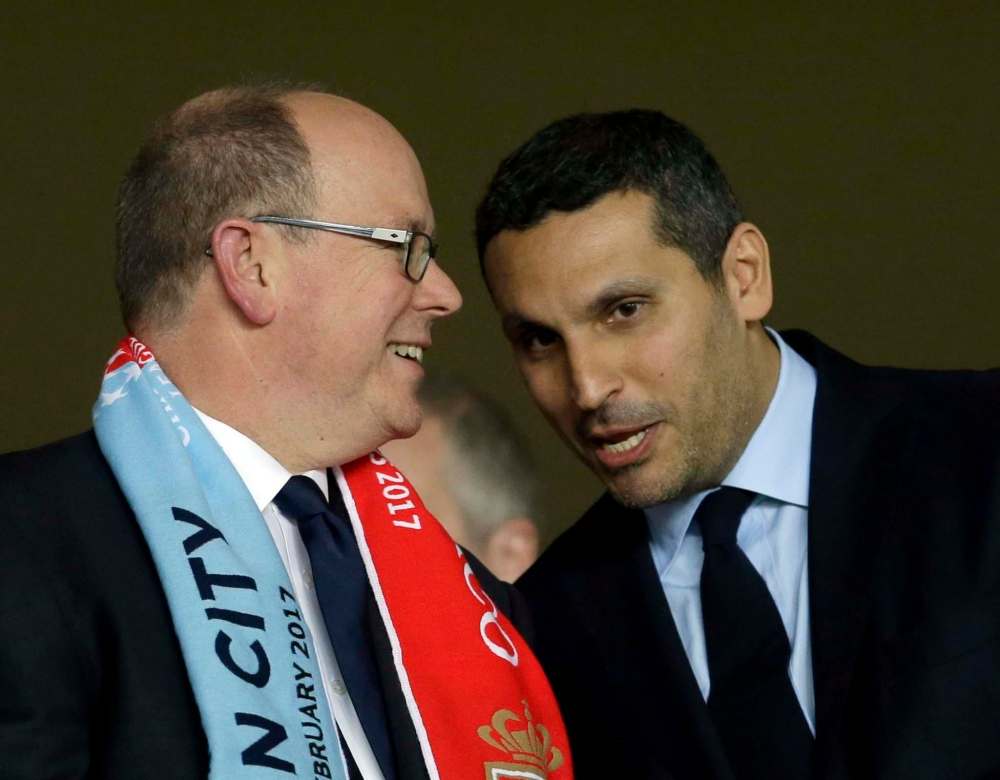
It was the CFCB’s adjudicatory chamber that “found that Manchester City Football Club committed serious breaches of the UEFA club licensing and financial fair play regulations, and as soon as the judgement was delivered on February 14 the reigning Premier League champions had 21 days to appeal to the CAS. March 6 is the deadline.
That City have yet to present their arguments to the Lausanne, Switzerland court would seem to indicate that they’re either building a very robust case or quietly negotiating a settlement with UEFA.
There is precedent for the latter. It was only six years ago that they were first found to be in breach of financial fair play, although they bargained their way to a €60 million fine and modest squad reduction.
That said, in this instance they likely feel they have a chance to not only overturn the CFCB decision but to also obliterate the financial fair play rules they feel prohibit club owner Sheik Mansour bin Zayed Al Nahyan and chairman Khaldoon Al Mubarak from making the sort of investments necessary to keep City among the European elite. It was, after all, Sheik Mansour that the CFCB claim paid most of a £67.5 million Etihad sponsorship through another of his companies — the contention that sparked the investigation last spring.
Now, such a top-up, which quite clearly breaks the financial fair play rules that City, themselves, signed on to, doesn’t, at first glance, seem to position the club in a solid legal position. But they’ll almost certainly argue that financial fair play, as a system, doesn’t withstand the scrutiny of European labour law. They may have a case. Article 101 of the Treaty on the Functioning of the European Union holds that a mechanism designed to “limit or control production, markets, technical development or investment” is “incompatible” with the internal market — a market in which Manchester City will still be a part until Brexit takes full effect on Dec. 31.
Their defence at the CAS could also cite a 2018 Sport & Strategy article in which the CFCB’s Yves Leterme seemed to predict City’s fate before an investigation had even been launched. “If it is true what has been written,” he said, “there might be a serious problem. This can lead to the heaviest punishment: exclusion from the UEFA competitions. The club’s statement, released shortly after the CFCB indictment, also maintained that the case had been “initiated by UEFA, prosecuted by UEFA and judged by UEFA.” Here, too, they may find a hearing as the European Court of Human Rights does not recognize disciplinary bodies whose panellists owe their positions to the overseeing organization.
Failing that, there is a nuclear option. In September 2018 a Brussels judge ruled that the “enforced arbitration” of the CAS held no legal sway as there was reasonable doubt that the Swiss-based court, which isn’t obliged to apply EU law in the first place, was sufficiently distant from the sporting federations and entities that prosecuted within its chambers. Manchester City could conceivably seek to demolish financial fair play and the CAS in one fell swoop.
Generally speaking, City’s defence will be to put UEFA on the defensive. Can financial fair play withstand a legal test? Can the CFCB, which is headed by a one-time general prosecutor of Portugal and includes former judges whose reputations should be beyond reproach, be recognized as a credible investigative and adjudicatory body? Can the CAS survive a challenge to its own authority? These are the questions the club will put forward through its arguments, which makes it quite foreseeable that the process, assuming it’s not expedited, will be tied up in the courts for years.

UEFA’s strategy will be considerably more straightforward. Article 57 of the FIFA statues, to which UEFA is party, “recognizes the independent Court of Arbitration for Sport (CAS)…to resolve disputes between FIFA, member associations, confederations, leagues, clubs, players, officials, intermediaries and licensed match agents.” City, by extension, are also party to this statute. Additionally, UEFA will point to a provision in Article 101 that allows for “any agreement or category of agreements between undertakings” to overrule the free competition law. Financial fair play could well qualify as such an agreement.
Do Manchester City really want to eviscerate the economics and legal procedures of club football in Europe? Do UEFA really want to open the door even a crack to such a scenario? If both sides answer “no” to those fundamental questions overriding the appeal, then a negotiated settlement is a likely outcome.
In the short term, however, City will apply for and likely be granted a stay of proceedings — which means they’ll be back in the Champions League next season, anyway.
jerradpeters@gmail.com
Twitter @JerradPeters
Our newsroom depends on a growing audience of readers to power our journalism. If you are not a paid reader, please consider becoming a subscriber.
Our newsroom depends on its audience of readers to power our journalism. Thank you for your support.
Our newsroom depends on a growing audience of readers to power our journalism. If you are not a paid reader, please consider becoming a subscriber.
Our newsroom depends on its audience of readers to power our journalism. Thank you for your support.
Related Articles
Messi, Ronaldo back in Champions League action








Advertisement Advertise With Us
Advertisement Advertise With Us