

U.S. protests unite rival sides in Sevilla soccer feud
Advertisement
Read this article for free:
or
Already have an account? Log in here »
To continue reading, please subscribe:

Digital Subscription
One year of digital access for only $205*
- Enjoy unlimited reading on winnipegfreepress.com
- Read the E-Edition, our digital replica newspaper
- Access News Break, our award-winning app
- Play interactive puzzles
*First annual payment billed as $205.00 + GST for one year. This annual subscription will automatically renew at $233.00 + GST every 52 weeks (10% off the regular annual price of $259.35). Offer available to new and qualified returning subscribers only. Cancel any time.
To continue reading, please subscribe:
Add Free Press access to your Brandon Sun subscription for only an additional
$1 for the first 4 weeks*
- Enjoy unlimited reading on winnipegfreepress.com
- Read the E-Edition, our digital replica newspaper
- Access News Break, our award-winning app
- Play interactive puzzles
*Your next Brandon Sun subscription payment will increase by $1.00 and you will be charged $17.95 plus GST for four weeks. After four weeks, your payment will increase to $24.95 plus GST every four weeks.
Read unlimited articles for free today:
or
Already have an account? Log in here »
Hey there, time traveller!
This article was published 05/06/2020 (2309 days ago), so information in it may no longer be current.
There isn’t much that unites Sevilla Fútbol Club and Real Betis Balompié.
Beyond sharing the city of Seville — that ornament of arte mudéjar, cast by the collision of Islam and Christianity — the two biggest clubs of the Andalusian capital have little in common.
Sevilla, located in affluent Nervión, was founded by English mining bosses who refused membership to the working classes. Betis, to the south, near the oft-flooding Guidaíra, became the club for the everyman.
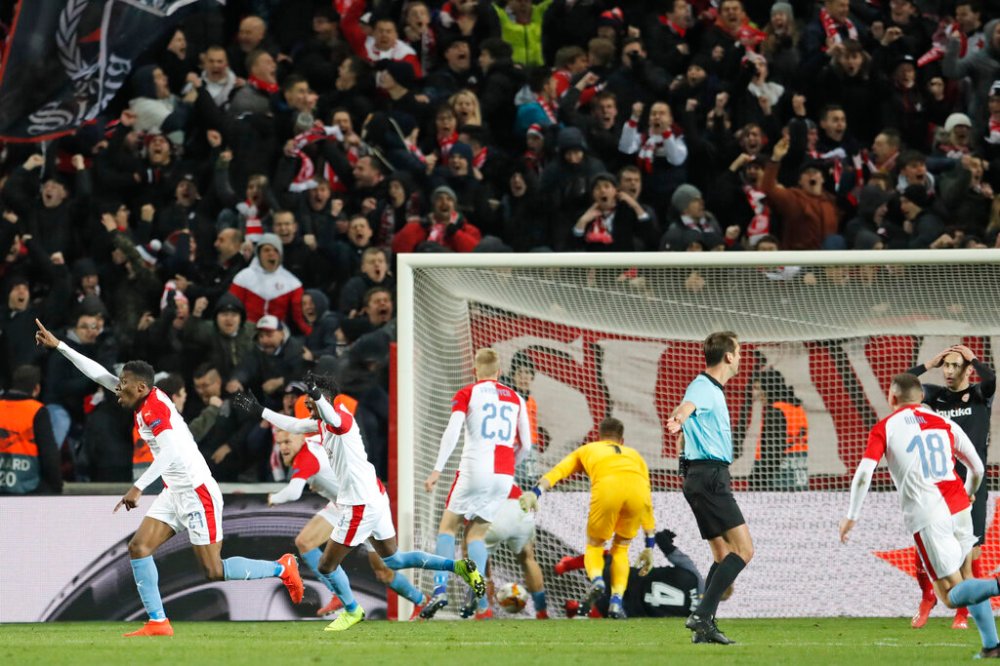
It’s a familiar template, and while class affiliations might not be what they once were, the enmity remains palpable in El Gran Derbi. It is, according to Barcelona-based sports daily AS, “Spanish football’s most passionate rivalry,” and on Thursday its kickoff will signal La Liga’s return from coronavirus lockdown.
Predictably, and importantly, the actual match (3 p.m., beIN Sports) is only one of the talking points being generated by an even bigger than usual build-up.
Estadio Ramón Sánchez Pizjuán will be empty for this derby — a public health precaution in a country ravaged by COVID-19. The unique circumstances will affect both sets of players, as will immediate concern for their own wellness and that of their families.
But even more front of mind is the now-international swell of support for American demonstrators who have taken to their cities’ streets to protest endemic police racism and demand justice for its black population.
Therein is another commonality Sevilla and Real Betis share in this moment.
In a recent interview with Muchodeporte, Sevilla defender Jules Koundé, who was born in Paris, said he’d been “very affected” by the death of George Floyd and likened the American’s murder to that of Frenchman Adama Traoré, who was also suffocated by a police officer.
“In France there are also demonstrations,” he said. “People have to unite to fight this.”
He added: “I think (U.S. president Donald) Trump is a danger… The system is not the same for everyone and it must be changed for justice.”
Koundé’s comments built on the actions of an opponent he’ll be tasked with stopping on Thursday — Real Betis striker Borja Iglesias, who has painted his nails black in solidarity with the Black Lives Matter movement.
“It is a way of raising awareness and fighting from my position against racism,” he stated on Twitter, adding he also rather liked the aesthetic. He was subsequently interviewed by radio station Onda Cero, and in a television appearance on TV Galicia he showed his black fingernails to the camera, after which the popular program host Roberto Vilar revealed that he, too, had pained his nails black.
Incidentally, at the start of the season Real Betis poked fun at Trump, tweeting that because of their green crest they had a more legitimate claim to Greenland than the president, who had ridiculously claimed he would purchase the island.
It seems racism and the Racist in Chief are evils these rivals can agree on, and in that they’re merely part of an activist effort that has accompanied European football’s resumption.
Borussia Dortmund attacker Jadon Sancho revealed a “Justice for George Floyd” T-shirt after scoring against Paderborn on Sunday, and on Thursday the entire Dortmund squad was photographed taking a knee and forming the shape of a heart. Other Bundesliga players have also demonstrated, and, anticipating further actions of protest this weekend, the German football authorities have announced that they won’t discipline any players or clubs that do so.
‘You are the reason why my daughters — who are U.S. citizens — ask me: ‘Why does the president hate black people?”– Liam Rosenior (above left) in an open letter to Donald Trump
In England, former Fulham, Hull and Brighton fullback Liam Rosenior penned a letter to Trump in The Guardian in which he mocked the president’s “vast intellect” and promised that the demonstrations currently underway were “just the beginning.”
“You are the reason,” he wrote, “why my daughters — who are U.S. citizens — ask me: ‘Why does the president hate black people’?”
The Premier League will make its return on June 17, and English anti-racism organization Kick It Out is urging every top-flight player to take a knee in their first game back. The Football Association, like its German counterpart, has said it won’t penalize anyone who participates.
La Liga is yet to make a similar proclamation, although it may not have a choice in the matter as collective action in support of Black Lives Matter gains momentum. Of Europe’s top leagues, the Spanish has had by far the most trouble with racism, and fans of Sevilla and Real Betis have hardly been the exception.
Which is why the words and deeds of Koundé and Iglesias are so vitally important.

They are using their platforms to both make a stand and set an example. Their clubs have to back them, which hopefully means, by default, that supporters who don’t will not be welcome at either the Sánchez Pizjuán or Estadio Benito Veillamarín when attendance restrictions are lifted.
This Gran Derbi will echo in an empty arena, but it may also end up being the loudest encounter of Spanish football’s most virulent matchup.
Solidarity, even more than enmity, can be deafening.
jerradpeters@gmail.com
Twitter @JerradPeters
Related Articles
Spanish league not ruling out fans in stadiums this season








Advertisement Advertise With Us
Advertisement Advertise With Us