

Bale has bailed on soccer
Welsh national just doesn't care anymore
Advertisement
Read this article for free:
or
Already have an account? Log in here »
To continue reading, please subscribe:

Digital Subscription
One year of digital access for only $205*
- Enjoy unlimited reading on winnipegfreepress.com
- Read the E-Edition, our digital replica newspaper
- Access News Break, our award-winning app
- Play interactive puzzles
*First annual payment billed as $205.00 + GST for one year. This annual subscription will automatically renew at $233.00 + GST every 52 weeks (10% off the regular annual price of $259.35). Offer available to new and qualified returning subscribers only. Cancel any time.
To continue reading, please subscribe:
Add Free Press access to your Brandon Sun subscription for only an additional
$1 for the first 4 weeks*
- Enjoy unlimited reading on winnipegfreepress.com
- Read the E-Edition, our digital replica newspaper
- Access News Break, our award-winning app
- Play interactive puzzles
*Your next Brandon Sun subscription payment will increase by $1.00 and you will be charged $17.95 plus GST for four weeks. After four weeks, your payment will increase to $24.95 plus GST every four weeks.
Read unlimited articles for free today:
or
Already have an account? Log in here »
Hey there, time traveller!
This article was published 08/08/2020 (2245 days ago), so information in it may no longer be current.
Gareth Bale is 31. Thirty-one. You have to say it twice to wrap your head around it. What happened? Where did the time go?
Now, 31 is not exactly old age in many sports, never mind working life in general. Even in football, where prime years are typically spread from the early to late 20s, a player who commits to fitness or has the luxury of relying purely on smarts can expect to extend consistent, elite performances well into the next decade. In fact, it’s happening more and more.
Despite the ascendancies of Kylian Mbappe, Kai Havertz, Erling Haaland and other young, blue-chip talents, the two top footballers in the world — still Lionel Messi and Cristiano Ronaldo — are 33 and 35-years-old. The last time a 20-something won the Ballon d’Or was 2015, when Messi was 28.
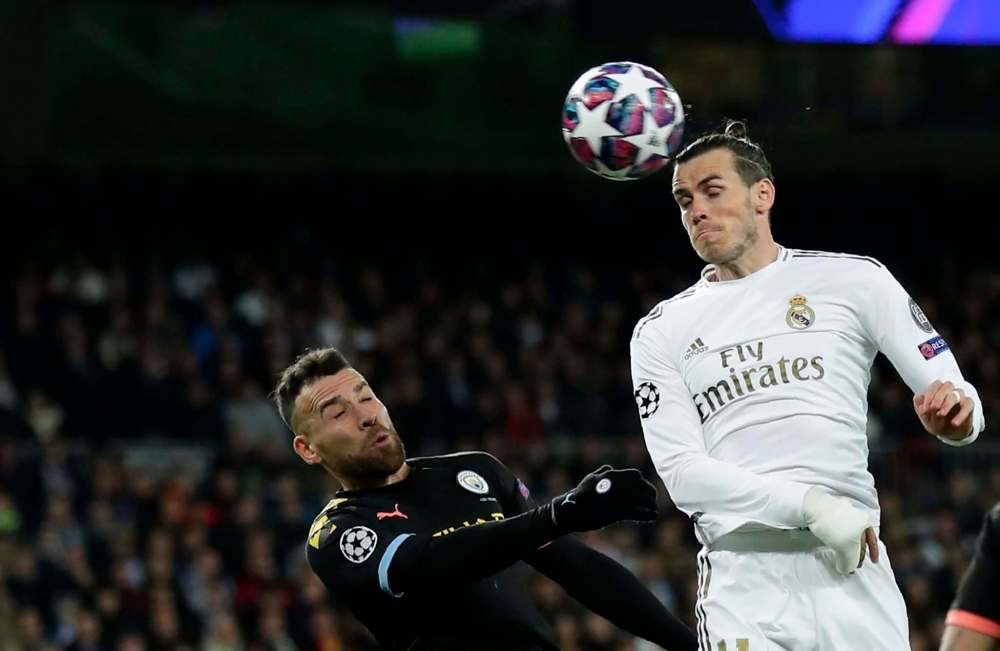
This is all to say that Bale, who turned 31 last month, is still a young man. Or could be. If he wanted to.
Youthfulness, after all, is a mostly psychological state, the possession of an intangible vitality, a mental rigor. Who hasn’t come across an individual of 50, or 60, even 70 or older, and wondered at their energy, their joie de vivre? And, by the same token, there are many of us — far too many, tragically — who have been beaten down by life long before what we consider middle age; others, even more dishearteningly, have simply given up, thrown in the towel.
Gareth Bale would seem to fall into this latter category. It’s part of what makes him a fascinating study, a source of exasperation, derision, even dislike. No need for formal psychoanalysis. We see an elite athlete, gifted by chance and paid in riches, who says, “Nah, I’d rather not,” and we scratch our heads.
Why wouldn’t he? What’s going on? What’s with the slouch? Why won’t he talk? Where’s the smile? How come he asked out of Real Madrid’s Champions League showdown with Manchester City on Friday? What gives?
It feels like forever ago, but it was only in 2013 that Bale left Tottenham Hotspur for the Spanish giants at a world-record fee. He scored 22 goals that season — the 20th a spectacular, top-speed effort that saw him sprint out of bounds to round Barcelona full-back Marc Bartra in a Clasico edition of the Copa del Rey Final. His 22nd won the Champions League — and the coveted Decima — for Madrid.
Those were the first two trophies of the 13 he’d go on to win with Los Blancos. A harbinger of things to come? Sort of. But not really. Sure, there was that sensational overhead kick against Liverpool in the 2018 Champions League Final, but two years on he had next to nothing to do with the Pimera Division title. He started just 12 matches. He scored only twice.
We can use the past tense as his Real Madrid career is almost certainly, mercifully, over.
Earlier this week, ahead of his side’s Round-of-16 second leg against City, Bale asked to be omitted from the squad. Even the suspended Sergio Ramos travelled to England. Bale stayed in Spain. He loves Spain, loves Madrid. The feeling isn’t mutual.
In a poll to mark the end of the 2019-20 campaign, Madrid supporters overwhelmingly chose Bale as their team’s worst player. Given his meagre contribution and apathetic body language, the vote was hardly a surprise. But the Madridistas have never liked him. They may have initially hoped that he’d love them first so they could love him back, but he was never that kind of player. They might have tolerated him had he been able to replace the departed Ronaldo, but injuries prevented that from being a realistic scenario.
Had he so much as spoke to them, they might have come around. But he didn’t do that, either. He reportedly learned a bit of Spanish over his seven years in the capital, but even a tourist picks up some basic phrases.
Frustratingly, it would have been easy, ever so easy, for the Welshman to take at least some control of his narrative. In a unique football culture where one is either “in” or “out,” “one of us” or “not,” and where entry is controlled by the club’s media mouthpieces at Marca, a single interview requested by Bale or his agent, in which he’d declare his affection for the club and ask forgiveness from the fans, would have immediately turned the discourse.
Simple as that.
Needless to say, it didn’t happen. He just didn’t care.
Nor did he care enough about actually playing football — which he won’t do again at the Bernabeu — to move to a Chinese club that would have increased his already mind-boggling wages by a third. Madrid had agreed the transfer, and manager Zinedine Zidane hoped out loud that it would go through, but Bale nixed it.
He didn’t want to live in China. Fair enough. He’s hinted that he might go to Major League Soccer at some point, and with diminished expectations and a comparatively quiet media presence one could see it happening. Not on his current salary, though. And he neither wants to take the pay cut nor understands how it prices him out of a switch to just about anywhere.
There are two years remaining on Bale’s contract, and he might even see the whole of it out. He won’t play — at least not as long as Zidane, whom he doesn’t speak to, is around — but that doesn’t seem to bother him. He can live in Madrid, golf as much as he wants and even turn out for the Welsh national team when he’s bored enough to do so, all the while collecting nearly US $920,000 per week. It’s a nice life.

But is it a meaningful one? Only Bale can say for certain. If it wasn’t, you’d think he go about changing it. He certainly has the wherewithal.
Doesn’t it seem like we’re discussing a man much older than 31? In a way, we are. And he is.
At an age when he could still be among the best players in the world, Bale has made the decision to not even try. He’s been beaten down, and he’s not getting up. He’s quit. He just doesn’t care.
jerradpeters@gmail.com
Twitter @JerradPeters
Our newsroom depends on a growing audience of readers to power our journalism. If you are not a paid reader, please consider becoming a subscriber.
Our newsroom depends on its audience of readers to power our journalism. Thank you for your support.
Our newsroom depends on a growing audience of readers to power our journalism. If you are not a paid reader, please consider becoming a subscriber.
Our newsroom depends on its audience of readers to power our journalism. Thank you for your support.
Related Articles
Canada's Buchanan wins French Cup final MATCHDAY: Man U faces Copenhagen in Europa League QFs








Advertisement Advertise With Us
Advertisement Advertise With Us
History
Updated on Saturday, August 8, 2020 11:16 AM CDT: Adds byline