

Chronic care both ‘a blessing and a curse’
Advertisement
Read this article for free:
or
Already have an account? Log in here »
To continue reading, please subscribe:
Digital Subscription
One year of digital access for only $75*
- Enjoy unlimited reading on winnipegfreepress.com
- Read the E-Edition, our digital replica newspaper
- Access News Break, our award-winning app
- Play interactive puzzles
*Billed as $5.77 plus GST every four weeks. After 52 weeks, price increases to the regular rate of $19.95 plus GST every four weeks. Offer available to new and qualified returning subscribers only. Cancel any time.
Monthly Digital Subscription
$4.99/week*
- Enjoy unlimited reading on winnipegfreepress.com
- Read the E-Edition, our digital replica newspaper
- Access News Break, our award-winning app
- Play interactive puzzles
*Billed as $19.95 plus GST every four weeks. Cancel any time.
To continue reading, please subscribe:
Add Free Press access to your Brandon Sun subscription for only an additional
$1 for the first 4 weeks*
- Enjoy unlimited reading on winnipegfreepress.com
- Read the E-Edition, our digital replica newspaper
- Access News Break, our award-winning app
- Play interactive puzzles
*Your next Brandon Sun subscription payment will increase by $1.00 and you will be charged $17.95 plus GST for four weeks. After four weeks, your payment will increase to $24.95 plus GST every four weeks.
Read unlimited articles for free today:
or
Already have an account? Log in here »
Hey there, time traveller!
This article was published 24/02/2024 (816 days ago), so information in it may no longer be current.
Shawna (Shoshana) Forester Smith is a 41-year-old, chronically ill, disabled Ojibwa writer and health-care advocate who lives on a chronic care unit at Deer Lodge Centre. Chronic care is similar to a medicine unit but for people who can never return home — each individual has complex health conditions and disabilities that require 24-7 medical care. In this column, Smith offers insight into what life is like in chronic care.
Chronic care is a lot like the Island of Misfit Toys in Rudolph the Red-Nosed Reindeer. This is where people end up when there is nowhere else to go. We’re the atypical patients of the health-care system. There are about 180 of us in chronic care and each of us has our own unique story of how we ended up here.
It was a long road of perpetually being hospitalized that led me to the chronic care unit. I was spending up to 10 months a year in hospital, for almost eight years. Sometimes, I wouldn’t even make it out of the hospital before I would collapse, only to end up being admitted all over again.
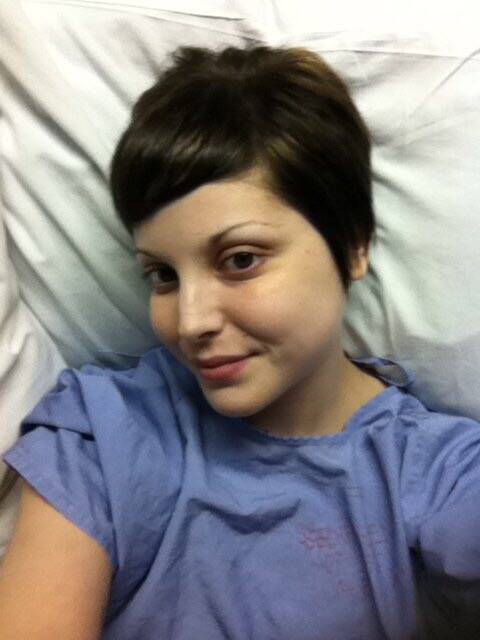
Shawna (Shoshana) Forester Smith
In December 2016, I had chosen to terminate all life-sustaining care, including the nutritional support keeping me alive, and shift to palliative care. The palliative team called a family meeting a few weeks later and suggested chronic care.
I had no clue what that meant. I had worked in the Winnipeg Regional Health Authority’s head office for years and never heard of it. But it sounded much better than what I had been doing. I could get the type of care I required on a medical unit but in a more home-like environment and with better continuity. It was patient-centred care versus provider-centric care like you get in the hospital.
While part of the long-term care continuum, chronic care is not at all like a personal care home. We have challenging and complicated medical conditions that are beyond the scope of what a care home can manage. Things like tracheostomies, peritoneal dialysis, IV therapy, oxygen therapy, blood transfusions, bariatric care, ostomies, complex wound care and feeding tubes.
I am on an intravenous form of nutrition called Total Parenteral Nutrition (TPN) and unable to eat food. It costs about $1,000 per bag and is customized for me. I also have a central line and get IV fluids (I can’t keep myself properly hydrated) and medication. I have a feeding tube in my small bowel for medications and an ileostomy (my entire colon was removed on my 40th birthday in 2022). I have a urinary catheter too. I’m mostly bedridden and unable to walk or ambulate — I need help with most activities of daily living. I suffer from severe motility disorders and intestinal failure, and a bunch of other “fun” health stuff that makes life difficult. Quite simply, I have incredibly complicated medical care.
Chronic care is both a blessing and a curse. A blessing in that I have better continuity of care. I have the same attending doctor (who is amazing), nurses and health-care aides looking after me. These people treat me like I am a family member. They work around my needs, schedule and preferences. They do everything they can to improve my care and quality of life. They are always acting in my best interest. They ensure I get things like my pain medication on time. They truly care about me.
While I appreciate chronic care is available, it’s not an easy existence.
It’s sad knowing I will never live with my husband in the community again. My name is on the mortgage of a condominium I have never been in and never will be able to visit or call home. Home care, as it exists, cannot meet my needs and we cannot afford the private care we would have to hire to make that possible. So, in a way, chronic care isn’t really a choice. The alternative is choosing MAID or palliative care, or refusing to be panelled and being charged $400 a day to stay in hospital, which most people simply cannot afford.

Which brings us to the biggest burden. It can cost up to almost $100 a day to live in chronic care or about $35,000 a year. It’s an enormous sum of money. The policies and methods used to decide how much people are charged are heavily skewed towards the older adult or people who are extremely low income — not people in the age bracket and life stage my spouse and I are in.
We pay more than one-third of our net income towards my costs for chronic care, which after we pay my husband’s living expenses, does not leave much. We have ended up in a situation where we owe Manitoba Health an alarming amount of money after being unsuccessful in three years of appeals trying to have our rate reduced. This is extremely stressful. And nobody in government really seems to care.
It troubles me chronic care isn’t covered entirely as an insured health benefit — especially given that it is life-sustaining. After all, most of us don’t have a choice of anywhere else to go, unless we choose to die. And that’s not much of a choice. It also bothers me because the care is identical to what a patient receives for free on a sub-acute medical unit in the hospital, but at a much lower overall cost. If we are each saving the system hundreds of dollars a day, why are we subsidizing it? This almost seems punitive.
Nobody wants to have to live in an institution. This is not how I imagined my life to turn out. I make the best of it. I volunteer virtually. I have written seven novels. I do advocacy work. I visit with friends, family, chaplains and my elder. I do art, crafts and make cards. I try to use my experiences, connections and education to help others when I can and make the system better for all of us.
I may be a misfit of the health-care system, but like the misfit toys, I am valuable and I can accomplish things that seem impossible. It’s amazing what you can achieve from a hospital bed with a smartphone, Wi-Fi and some ingenuity.