

Woven into Winnipeg’s history
Despite discrimination, city proved to be good fit for Jews fleeing Holocaust
Advertisement
Read this article for free:
or
Already have an account? Log in here »
To continue reading, please subscribe:

Digital Subscription
One year of digital access for only $205*
- Enjoy unlimited reading on winnipegfreepress.com
- Read the E-Edition, our digital replica newspaper
- Access News Break, our award-winning app
- Play interactive puzzles
*First annual payment billed as $205.00 + GST for one year. This annual subscription will automatically renew at $233.00 + GST every 52 weeks (10% off the regular annual price of $259.35). Offer available to new and qualified returning subscribers only. Cancel any time.
To continue reading, please subscribe:
Add Free Press access to your Brandon Sun subscription for only an additional
$1 for the first 4 weeks*
- Enjoy unlimited reading on winnipegfreepress.com
- Read the E-Edition, our digital replica newspaper
- Access News Break, our award-winning app
- Play interactive puzzles
*Your next Brandon Sun subscription payment will increase by $1.00 and you will be charged $17.95 plus GST for four weeks. After four weeks, your payment will increase to $24.95 plus GST every four weeks.
Read unlimited articles for free today:
or
Already have an account? Log in here »
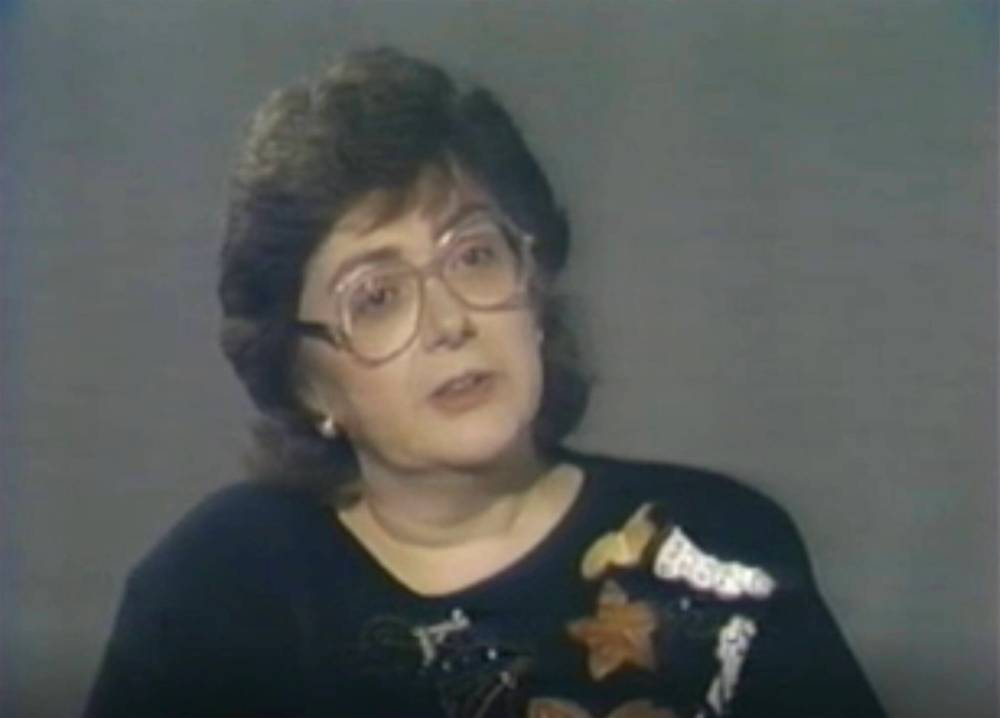
Freda Shiel was 10 years old when the train from Halifax pulled into Winnipeg in 1948. Other families on the platform were met by relatives. Freda and her parents stood there alone. “It was a heartbreaking moment,” she recalled 40 years later, when the Winnipeg Second Generation Group came to record what she remembered.
In the years after May 8, 1945, the end of the Second World War in Europe, hundreds of thousands of survivors and refugees had to find somewhere to go. Some of them, through routes that were rarely straightforward, ended up here. By the late 1950s, roughly 1,000 Holocaust survivors had settled in Winnipeg — more than five per cent of the city’s Jewish population. Forty-eight testimonies including Freda’s, recorded in 1988 and 1989 and now held at the United States Holocaust Memorial Museum, are still relatively unknown. What they say about this city is more precise, and more complicated, than either a story of welcome or of failure.
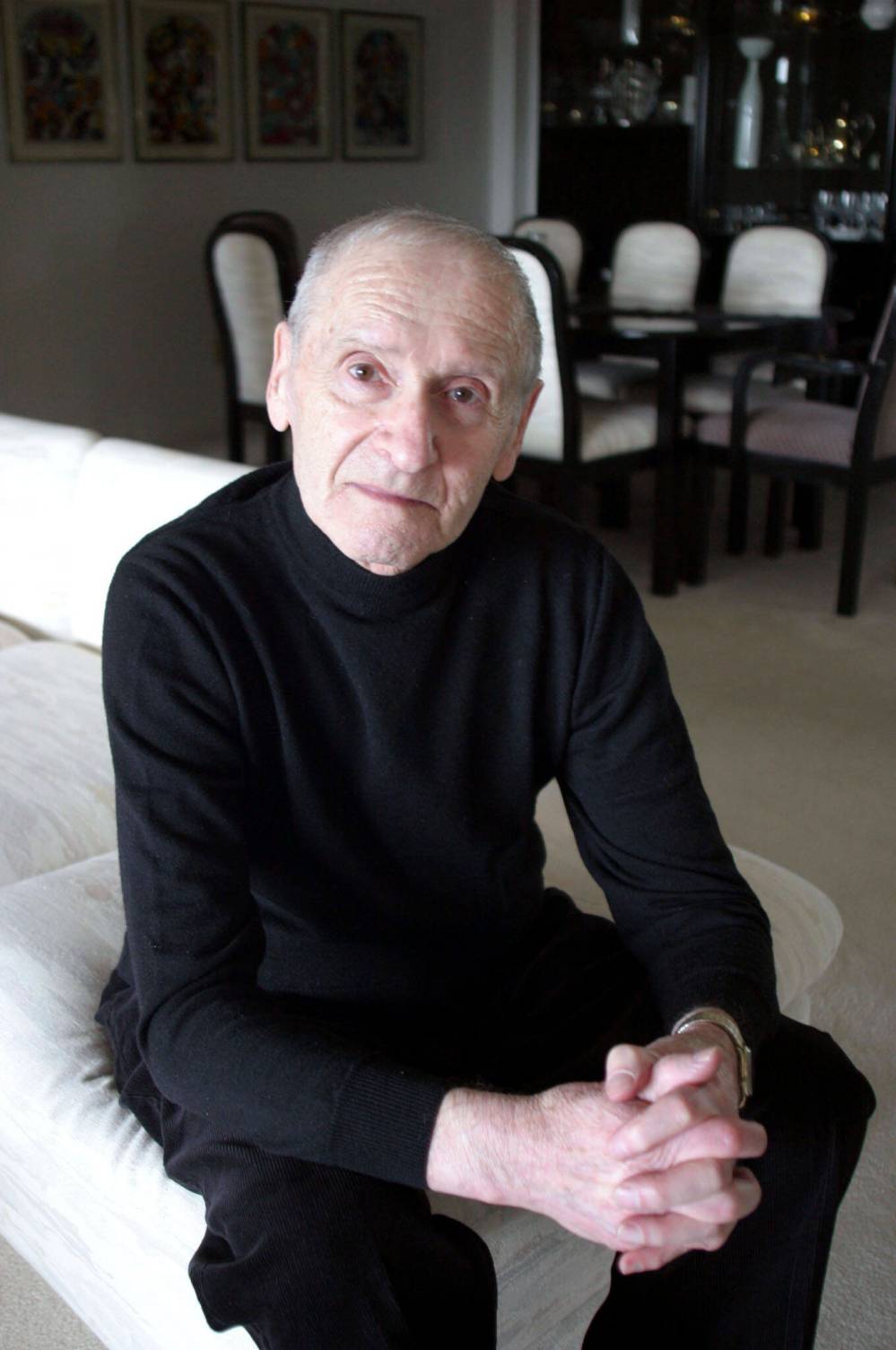
Winnipeg did not simply receive these newcomers. It admitted them on terms they would spend decades reshaping. Philip Weiss arrived the same year as Freda. He had survived the ghettos and labour camps of occupied Poland and finally the Nazi concentration camp Mauthausen, where American troops liberated him on May 5, 1945 — a date he carried for the rest of his life. He landed in Halifax on Feb. 11, 1948, his birthday, and took the train west. After years in cattle cars, he marvelled at the white tablecloths and silver cutlery in the dining car, at cherry pie and banana splits that seemed almost unreal on the Canadian Prairies.
LINDA WENSEL/FREE PRESS file
Philip Weiss was instrumental in building the culture of Holocaust education in Manitoba.
Like Weiss, most survivors came through schemes like the Tailor Project, a joint initiative of the Canadian Jewish Congress, garment manufacturers and the federal government that offered entry on the condition that they work in the needle trades.
Weiss began as a garment cutter at Sterling Cloak earning $18 a week, $5 of which were deducted to repay the government for his passage. He learned English at night school. In time, he built a furniture-manufacturing business, Hi-Grade Upholstery Company, which won awards from the Manitoba Design Institute. He became president of Rosh Pina synagogue in the North End, chaired the Holocaust Remembrance Committee, and spoke for decades in schools and churches across the city.
But Winnipeg was not necessarily welcoming: some survivors encountered suspicion and shunning, even within the Jewish community. One woman who arrived pregnant in 1948 remembered being asked how European Jews could have “let themselves be led to the slaughter.” Others found it difficult to rent housing or to shed the labels that marked them as outsiders. Freda, standing alone on the platform, became the “DP (displaced person) kid” at school — defined before she had a chance to speak.
And yet, many stayed. For all its failures, Winnipeg offered something other places did not: a degree of stability. One survivor who briefly tried New York City returned, recalling that in Winnipeg, at least, children could play safely outside. Life here was not easy, but it was possible. That question — what it means to be admitted, not fully welcomed, and what can grow from that beginning — has not gone away. Manitoba has taken in more Ukrainians per capita than any other province since Russia’s full-scale invasion in 2022.
For those who arrived in 1948, it took years before anyone asked about what happened in Europe. They kept their experiences largely to themselves. “No one was listening,” Weiss recalled. Even within the Jewish community, their accounts seemed too extreme, “bordering on fantasy.” There was also an unspoken sense that Jews should not draw attention. So they worked, built businesses on Selkirk Avenue, raised families and established new routines. As one survivor put it simply: “You can live well without being rich.”

Only gradually did that silence begin to break. Weiss gave his first public talk in a private home in Charleswood, to a small women’s reading circle. From there, he went on to address high schools, churches and universities, helping to build the culture of Holocaust education that Manitoba has now made official policy in its classrooms.
In 1990, the first Holocaust monument on public property in Canada was erected on the grounds of the Manitoba Legislative Building. Weiss chaired the committee that made it happen. The state that had once admitted him on condition that he sew and repay his passage now placed his community’s memorial on public land, after more than four decades. “We landed without money, without language, without any family connections,” he later wrote, “but with the will to build a life for ourselves.”
UNITED STATES HOLOCAUST MEMORIAL MUSEUM ARCHIVES
A still from a March 1989 interview with Freda Shiel as part of a project to interview Holocaust survivors from the Winnipeg area.
This May 8, commemorated across Europe, belongs to Winnipeg as well. In January, swastikas were spray-painted on the outside of Congregation Shaarey Zedek, the city’s oldest synagogue (1889) and where Freda’s husband Chaim served as a teacher. Holocaust education is now mandatory in Manitoba classrooms. The monument still stands on the Legislative grounds.
Freda, who arrived alone on that platform, eventually made her life in this city too. The monument is partly hers. So is the distance between where she stood then and where the city stands now.
Jan Burzlaff is a historian at Cornell University. He teaches and writes on the Holocaust and modern European history.