

We have kept the faith
Advertisement
Read this article for free:
or
Already have an account? Log in here »
To continue reading, please subscribe:
Digital Subscription
One year of digital access for only $1.44 a week*
- Enjoy unlimited reading on winnipegfreepress.com
- Read the E-Edition, our digital replica newspaper
- Access News Break, our award-winning app
- Play interactive puzzles
*Billed as $5.77 plus GST every four weeks. After 52 weeks, price increases to the regular rate of $19.95 plus GST every four weeks. Offer available to new and qualified returning subscribers only. Cancel any time.
To continue reading, please subscribe:
Add Free Press access to your Brandon Sun subscription for only an additional
$1 for the first 4 weeks*
- Enjoy unlimited reading on winnipegfreepress.com
- Read the E-Edition, our digital replica newspaper
- Access News Break, our award-winning app
- Play interactive puzzles
*Your next Brandon Sun subscription payment will increase by $1.00 and you will be charged $17.95 plus GST for four weeks. After four weeks, your payment will increase to $24.95 plus GST every four weeks.
Read unlimited articles for free today:
or
Already have an account? Log in here »
Hey there, time traveller!
This article was published 10/11/2009 (6051 days ago), so information in it may no longer be current.
WHEN Canadians started building memorials to the fallen 90 years ago, there was concern even then that future generations would forget the sacrifices made during the First World War. The survivors of the slaughter, and the people who built the monuments, wanted to ensure we would never forget and that the names of the dead would "liveth for evermore."
Our ancestors can rest easy. Canadians have not forgotten.
A new poll by Ipsos-Reid found that 85 per cent of Canadians intend to observe two minutes of silence Wednesday, while 20 per cent plan to attend a Remembrance Day service, up four points from 2008.
The survey also found that an incredible 70 per cent of Canadians believe that observing two minutes of silence should be compulsory. Nearly 60 per cent said the edict should even be extended to automobiles and public transit.
The notion of legislated remembrance is both extreme and unnecessary, but it underlines the importance that Canadians place in honouring the service of Canadian soldiers.
Other polls show similar support for the traditions of Nov. 11, although there is concern schools aren’t doing enough to teach Canada’s military history. This is an old refrain, but it is also somewhat misinformed, at least in the case of Manitoba.
Students here study history almost every year from Grade 1 to Grade 11, with optional courses for Grade 12. Several of those years are dedicated to Canadian history, which inevitably means learning about wars, rebellions and foreign adventures. Provincial curriculum also stipulates that Remembrance Day be used to educate students about the meaning of peace and war for elementary-school students.
Manitoba schools have also relied heavily on veterans for this purpose, thereby showing the human faces and tragic stories behind the history.
The war in Afghanistan is also undoubtedly linked to rising interest in the act of remembrance. Canada’s wars may previously have seemed like ancient history, but the current war is in the news almost every day. Hundreds of Canadians have been injured and 133 killed in the conflict, the largest loss of soldiers since the Korean War. For a new generation of Canadians, then, Remembrance Day is once again a very personal affair.
Many Canadians have been opposed to a controversial war in a faraway land, but the politics are really irrelevant at a time when everyone is wearing the same red poppy.
Remembrance Day is also an exercise in spirituality, a time for reflection, introspection and quiet contemplation. It doesn’t matter if you are Catholic, Protestant, Jewish, Muslim or an atheist. Everyone will have their own way of remembering the service of both soldiers and civilians who suffered in war.
In that sense, Nov. 11 is one of those rare dates on the calendar that transcend narrow parochial and political interests. It is a day when people can set aside their fundamental differences and join in a universal demonstration of sadness and remorse.
Like the war monuments that were built by the thousands after the First World War, Remembrance Day services do not boast crudely of victory and conquest. They speak only of loss and sorrow.
They are a sign that we have kept the faith.
Related Articles
IN PICTURES: Remembrance Day in Winnipeg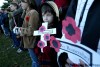
Advertisement Advertise With Us