

Admit mistake, save $350 million
Advertisement
Read this article for free:
or
Already have an account? Log in here »
To continue reading, please subscribe:

Digital Subscription
One year of digital access for only $205*
- Enjoy unlimited reading on winnipegfreepress.com
- Read the E-Edition, our digital replica newspaper
- Access News Break, our award-winning app
- Play interactive puzzles
*First annual payment billed as $205.00 + GST for one year. This annual subscription will automatically renew at $233.00 + GST every 52 weeks (10% off the regular annual price of $259.35). Offer available to new and qualified returning subscribers only. Cancel any time.
To continue reading, please subscribe:
Add Free Press access to your Brandon Sun subscription for only an additional
$1 for the first 4 weeks*
- Enjoy unlimited reading on winnipegfreepress.com
- Read the E-Edition, our digital replica newspaper
- Access News Break, our award-winning app
- Play interactive puzzles
*Your next Brandon Sun subscription payment will increase by $1.00 and you will be charged $17.95 plus GST for four weeks. After four weeks, your payment will increase to $24.95 plus GST every four weeks.
Read unlimited articles for free today:
or
Already have an account? Log in here »
Hey there, time traveller!
This article was published 02/06/2011 (5590 days ago), so information in it may no longer be current.
A new report led by University of Regina scientists concludes that immediately reducing the phosphorus bleeding into streams, creeks and rivers is the fastest way to return Lake Winnipeg to a healthier state. The lake has three times the phosphorus found in lakes Erie and Ontario when they were pronounced “dead” in the 1970s.
The culprit, says limnologist Peter Leavitt, is agriculture — the increased production of crops, the explosion of cattle and pig production and modern tillage practices that increase the rate of runoff of nutrients from manure used as fertilizer, into the Red and Assiniboine rivers.
There is broad agreement between what Prof. Leavitt has found and the evidence of decades of good science (see commentary below on this page) locally on the lake. That work showed a 50 per cent rise in phosphorus and the resulting growth of pernicious, toxic blue-green algae since the 1990s. That science has spurred dozens of scientists to call for cuts to phosphorus.
Where this paper, commissioned by the NDP government, parts company with the bulk of scientific opinion is in its conclusion that the lake is at a “tipping” point where two nastier types of blue-green algae begin to spread. Those types use nitrogen in the lake to grow, hence Prof. Leavitt’s call to cut nitrogen.
Prof. David Schindler, of the University of Alberta, says there is no evidence that Lake Winnipeg is under imminent threat from those types of algae, one of which has been there for years.
Prof. Schindler and the many other scientists assert that cutting nitrogen can make the problem worse. Also, focusing on nitrogen increases the cost dramatically, causing friction among policy-makers and making less money available to get as much phosphorus as possible out of the effluent from agricultural and municipal sectors. The provincial order that Winnipeg remove nitrogen from its waste water will force the city to spend $400 million, rather than $50 million, to upgrade its north-end sewage treatment plant.

The Leavitt paper gives the Manitoba government ammunition to press farmers and livestock producers to cut the phosphorus their businesses send into the rivers.
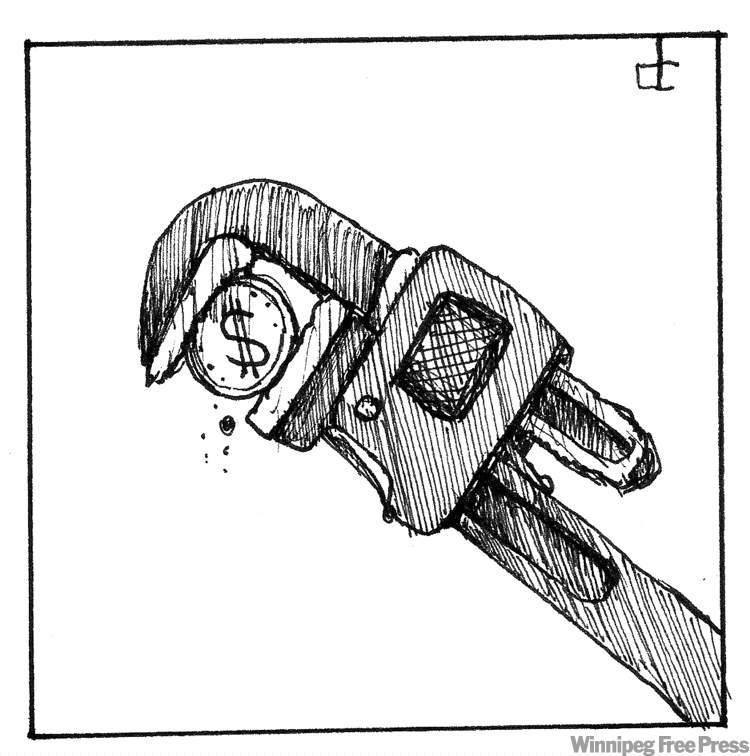
What the government has not yet said is whether, finally, it will let Winnipeg focus on phosphorus, alone. Forcing Winnipeggers to pay $350 million for unnecessary technology in a sewage plant when so many other infrastructure needs go unmet is simply wrong.
Related Articles
Manitoba to tighten hog-industry regulation, require replacement of treatment plant to protect Lake Winnipeg
Advertisement Advertise With Us
Advertisement Advertise With Us