

Why can’t indigenous people be like us?
Advertisement
Read this article for free:
or
Already have an account? Log in here »
To continue reading, please subscribe:

Digital Subscription
One year of digital access for only $205*
- Enjoy unlimited reading on winnipegfreepress.com
- Read the E-Edition, our digital replica newspaper
- Access News Break, our award-winning app
- Play interactive puzzles
*First annual payment billed as $205.00 + GST for one year. This annual subscription will automatically renew at $233.00 + GST every 52 weeks (10% off the regular annual price of $259.35). Offer available to new and qualified returning subscribers only. Cancel any time.
To continue reading, please subscribe:
Add Free Press access to your Brandon Sun subscription for only an additional
$1 for the first 4 weeks*
- Enjoy unlimited reading on winnipegfreepress.com
- Read the E-Edition, our digital replica newspaper
- Access News Break, our award-winning app
- Play interactive puzzles
*Your next Brandon Sun subscription payment will increase by $1.00 and you will be charged $17.95 plus GST for four weeks. After four weeks, your payment will increase to $24.95 plus GST every four weeks.
Read unlimited articles for free today:
or
Already have an account? Log in here »
Hey there, time traveller!
This article was published 19/04/2016 (3818 days ago), so information in it may no longer be current.
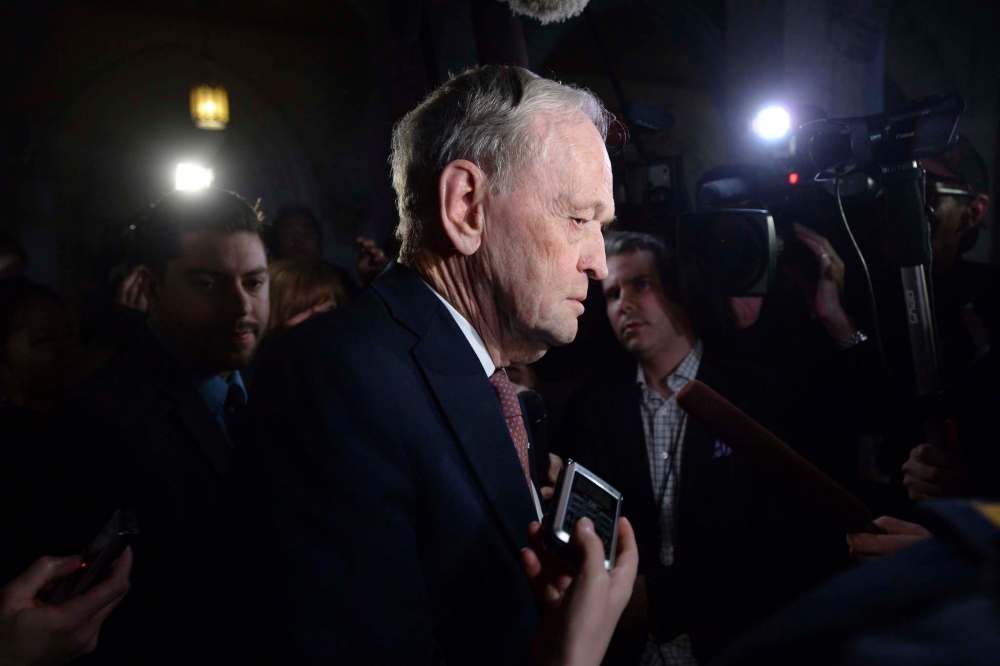
There’s a bitter, bitter irony in former prime minister Jean Chrétien’s suggestion that aboriginal people living on desolate reserves should simply pick up and move to greener pastures. Of course, that’s what every sensible person does when the going gets rough, right? No one with half a brain would stay somewhere so miserable and depressing the only real option is suicide, would they?
Mr. Chrétien’s remarks were made in the context of the latest suicide outbreak at Attawapiskat First Nation in northern Ontario. The community declared a state of emergency earlier this month following 11 suicide attempts in April and 28 recorded attempts in March. Another five children reportedly attempted to end their lives on Friday.
The suicide rate among aboriginal youth is at least 10 times higher than the general population, according to federal Health Minister Jane Philpott. As well, the life expectancy and quality of life of indigenous people is also far below the Canadian average. In Pimicikamak Cree First Nation in Manitoba, to use just one other example of an aboriginal community in distress, six people took their lives and another 18 attempted suicide in mid-December. Obviously, this is another community that, according to Mr. Chrétien, needs to recognize its self-interest lies in hitting the road.
Indeed, that may be the right course for some indigenous people living hundreds of kilometres from mainstream society. But before we start packing their bags, let’s consider a few facts. The history of aboriginal reserves is long and complicated, but by the late 19th century most indigenous people were living on compact parcels of land that were held in trust by the Crown for their exclusive use and benefit.
The devastating effect of residential schools on aboriginal life has been well-documented, but less well-known is the way reserves evolved into virtual prisons. The residents were not allowed to leave without permission. Native people caught off reserve without a pass could be jailed or sent back to their reserve.
In fact, there were many restrictions that prevented indigenous people from pursuing education and employment, or from moving to greener pastures, which Mr. Chrétien now so glibly says is their only option.
When the pass system was eliminated following the Second World War, indigenous people started moving into cities in dribs and drabs. They were searching for jobs, training, education, opportunity — all the things Mr. Chrétien says are there for the taking today.
There was just one problem — racism. Some aboriginal people succeeded in finding work and housing, but many were turned away and dismissed as lazy, shiftless Indians. There isn’t a lot of documentation on this period of history, but many elders have recounted stories of being treated like outcasts in their own land.

Finally, there is the question of whether indigenous people should be encouraged to seek better lives in cities and towns. Is Mr. Chrétien right?
Of course, many people have left their home reserves, while others have remained. It’s not as easy as moving from Cape Breton to Fort McMurray, where both communities share a common language, history and perspective. Canada also forcefully relocated many aboriginal communities, each of which suffered terribly because of it.
Attawapiskat may never be a functional community, but it is a tribal home for 2,000 people, a place they feel accepted and safe, even though it seems to the outside world so dangerous and hostile. They actually feel safer there than among the rest of us.
And despite the gloomy outlook for Attawapiskat and communities like it, there is new hope on the horizon for aboriginal communities. A series of legal victories has given First Nations leverage over resource development on their ancestral lands, as well as a right to be consulted on matters affecting their interests.
These and other victories may be too late to help troubled First Nations communities today, but they have laid a foundation for optimism and hope.
Related Articles
Minister gets earful on visit to Attawapiskat


Advertisement Advertise With Us
Advertisement Advertise With Us