

Time for a stronger all-Canadian grid
Advertisement
Read this article for free:
or
Already have an account? Log in here »
To continue reading, please subscribe:

Digital Subscription
One year of digital access for only $205*
- Enjoy unlimited reading on winnipegfreepress.com
- Read the E-Edition, our digital replica newspaper
- Access News Break, our award-winning app
- Play interactive puzzles
*First annual payment billed as $205.00 + GST for one year. This annual subscription will automatically renew at $233.00 + GST every 52 weeks (10% off the regular annual price of $259.35). Offer available to new and qualified returning subscribers only. Cancel any time.
To continue reading, please subscribe:
Add Free Press access to your Brandon Sun subscription for only an additional
$1 for the first 4 weeks*
- Enjoy unlimited reading on winnipegfreepress.com
- Read the E-Edition, our digital replica newspaper
- Access News Break, our award-winning app
- Play interactive puzzles
*Your next Brandon Sun subscription payment will increase by $1.00 and you will be charged $17.95 plus GST for four weeks. After four weeks, your payment will increase to $24.95 plus GST every four weeks.
Read unlimited articles for free today:
or
Already have an account? Log in here »
The kneebone is connected to … non-contiguously, pretty much every other bone in your body.
Unfortunately.
But more on that later.
File
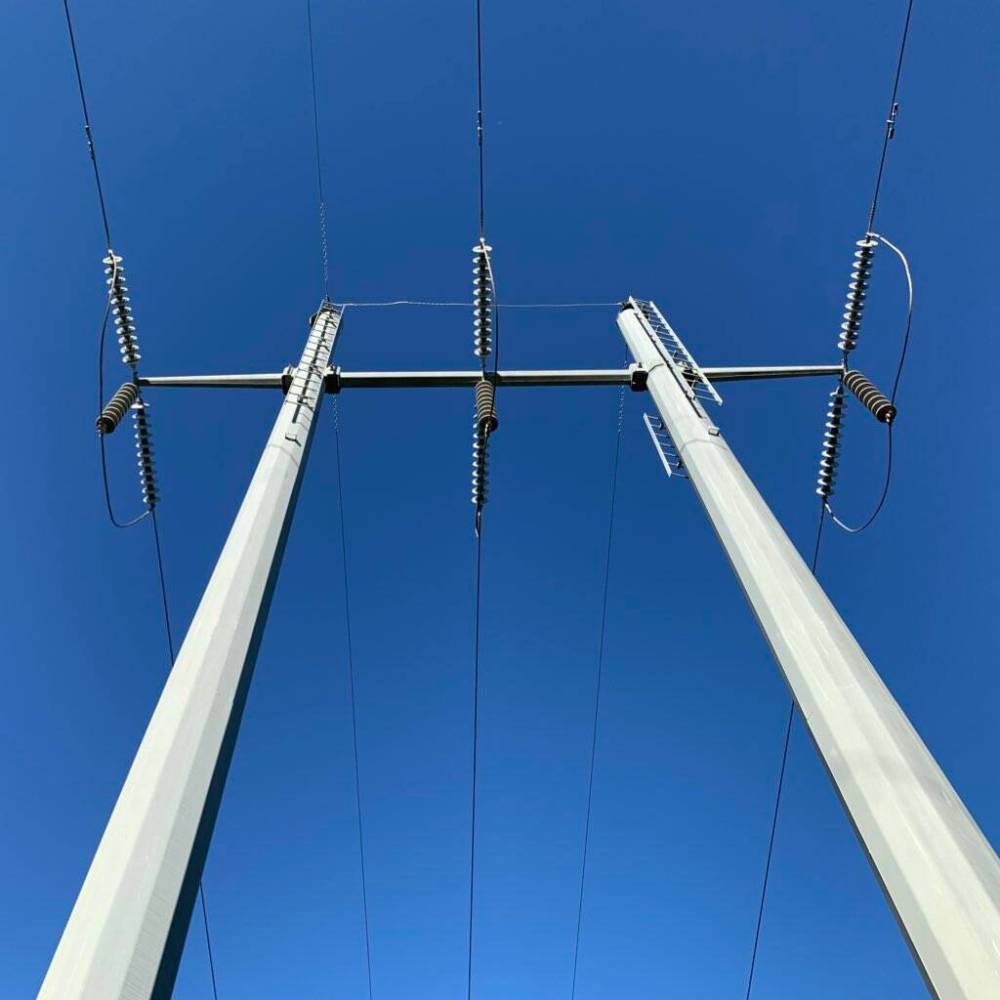
Canada needs its own east-west electrical grid.
The New York Times published a quite terrifying story on the U.S. electrical grid this week, one that points out that, with a few simple directed attacks on nine of 10 major U.S. substations, the entire U.S. power grid could be disabled.
And the power might remain off for as long as 18 months.
Why so long? Well, the power grid was built as a number of individual systems, all Frankenstein-ed together into a sort of unplanned giant.
The main problem? Parts of that grid depend on very old — and very hard to replace — transformers. The average lead time to replace large transformers is 128 weeks and can be as long as five years — and there’s a not-so-subtle irony that the U.S. would need to get transformers from countries such as China, Mexico and South Korea, all countries that have been on U.S. President Donald Trump’s tariff hit list.
In 2013, an attack on a California substation showed just how easy it was to disable a station with simple rifle fire. It involved at least two shooters specifically disabling transformers. The utility involved, Pacific Gas and Electric, was able to reroute power to avoid a blackout because it was an isolated attack, but it took a month to repair the substation. The attackers were never found.
Today, a set of similar, co-ordinated high-powered rifle attacks on an easily-identified set of nine critical substations at crucial points of the grid could trigger a massive shutdown, the U.S. Federal Energy Regulatory Commission has determined. Coupled with the difficulty of obtaining, shipping and installing new transformers, a blackout would last long enough to become a nightmare.
The Times story goes on to detail what the U.S. Department of Energy said about a lengthy power outage in its 2010 report, High-Impact, Low-Frequency Event Risk to the North American Bulk Power System: “The supply of food, water and fuel would degrade within days. The facile communication of information to the general population would be greatly complicated by the loss of cellphones, internet access and television. The economy would virtually shut down as electronic transactions could no longer be processed. After several days, widespread social unrest and confusion would ensue.”
Solely a U.S. problem? Well, not exactly. Because the kneebone …
Many have probably forgotten the Northeast Blackout of 2003, which was caused by trees striking transmission lines in Ohio. A cascading power failure left 50 million people without power across the Northeastern U.S., and in Canada as well. Most of Ontario — including the cities of Toronto, Ottawa, Kingston, Sudbury, Kitchener, London and Windsor — were blacked out as the fault took more than 100 power generation plants offline.
The fault that allowed the power failure to become so large was corrected — but it illustrated how interconnected the North American electrical system is.

This might be the perfect point at which nation-building projects — escaping from being forced to do business with a trade-hostile United States and protecting Canadians from risk — could come together.
Maybe we should be looking at designing and building our own, east-west, distinctly and completely Canadian electrical system and not just to be able to share cheap electrical power across the country.
Prime Minister Mark Carney said at the recent announcement of a hydroelectric deal between Quebec and Newfoundland and Labrador that people should understand that Canadians are in charge of our own house.
Maybe, as part of that house, we should have our own electrical panel.
Just in case something happens to our neighbour’s kneebone.
Related Articles
LeBlanc says 'more work to do' as Trump's tariff deadline nears
Advertisement Advertise With Us
Advertisement Advertise With Us