

Threatened
Advertisement
Read this article for free:
or
Already have an account? Log in here »
To continue reading, please subscribe:
Digital Subscription
One year of digital access for only $1.44 a week*
- Enjoy unlimited reading on winnipegfreepress.com
- Read the E-Edition, our digital replica newspaper
- Access News Break, our award-winning app
- Play interactive puzzles
*Billed as $5.77 plus GST every four weeks. After 52 weeks, price increases to the regular rate of $19.95 plus GST every four weeks. Offer available to new and qualified returning subscribers only. Cancel any time.
To continue reading, please subscribe:
Add Free Press access to your Brandon Sun subscription for only an additional
$1 for the first 4 weeks*
- Enjoy unlimited reading on winnipegfreepress.com
- Read the E-Edition, our digital replica newspaper
- Access News Break, our award-winning app
- Play interactive puzzles
*Your next Brandon Sun subscription payment will increase by $1.00 and you will be charged $17.95 plus GST for four weeks. After four weeks, your payment will increase to $24.95 plus GST every four weeks.
Read unlimited articles for free today:
or
Already have an account? Log in here »
Hey there, time traveller!
This article was published 26/03/2011 (5549 days ago), so information in it may no longer be current.
PRIVATELY owned buildings are protected from demolition only if they’re on the city’s conservation list. But even then, council can delist upon an owner’s request. Here are some buildings, recognized as important to city or provincial history, at risk:
JAMES ARMSTRONG RICHARDSON INTERNATIONAL AIRPORT: Condemned for demolition by the Winnipeg Airports Authority, which turned down a proposal to house the Western Canada Aviation Museum in this icon to modernism, one of two remaining federal airports of its era.
ST. BONIFACE NORMAL SCHOOL: One of the province’s first teacher training schools, this 1902 building at rues Aulneau and Masson was constructed by the francophone community on the heels of the 1897 Laurier-Greenway Compromise. Fourteen years later, the Manitoba legislature repealed the bilingual education provisions in the Manitoba Schools Act, so English-only teachers were trained. The Knights of Columbus want to demolish the vacant building, along with the former seniors residence connected to it. It is designated as a Grade II heritage building. Heritage advocates are trying to stave off its demise.
SALVATION ARMY CITADEL: Built by the army in 1901, the brick building at 221 Rupert Ave. has been vacant for two decades and has changed hands again after previous owners’ plans failed. Its new developer has refused to reveal who bought it or their intentions, raising fears among advocates.
SHANGHAI BUILDING: Condemned to demolition by city council and the Chinatown Development Corp., which has plans for a seniors residence, Heritage Winnipeg is hoping to convince developers to incorporate this Chinatown landmark’s facade in the new complex.
HUDSON BAY COMPANY: A coveted piece of the province and city’s history, new owners have not responded to Heritage Winnipeg’s inquiries on its plans for the building. No one imagines it will be torn down, but it is not protected as a heritage building, so its exterior can be dramatically altered.
New vistas
THERE is a movement to recognize the historical place of neighbourhoods, landscapes and landmarks. In Winnipeg, some stand out:
THE NORTH END: It is widely known as the landing pad for immigrants as Winnipeg was growing into its city skin. Now the home of a huge chunk of the aboriginal community, it remains dotted with cultural landmarks. Drive down Selkirk Avenue from Arlington to Main and walk through its history. A couple of buildings are designated, most are not.
CRESCENTWOOD: Among the first neighbourhoods built when the moneyed class spread beyond downtown, it is deserving of recognition for its stately old homes.
ARLINGTON BRIDGE: The century-old truss bridge stands out, with its command of the CP rail yards, the demarcation for where the North End begins. The bridge is getting expensive to maintain and the city plans to spend $1.5 million to study its viability.
ELM PARK BRIDGE: Winnipeg’s first bridge connects Jubilee Avenue and Kingston Crescent, and is now barred to vehicles. Known as the BDI bridge, it is a cherished memory of all who have walked it while digging into big, goopy ice cream concoctions.
Preserved
THE city takes its hits when storied buildings bite the dust, but decisions are regularly made to preserve, as well:
CARNEGIE PUBLIC LIBRARY, 380 WILLIAM AVE. — The city’s first public library and the original of three built from the generosity of American philanthropist and industrialist Andrew Carnegie, it is now the City of Winnipeg Archives. City council decided to spend $3 million from 2010 to 2015 to address its structural and other age-related problems.
ST. JOHN’S LIBRARY, 500 SALTER ST. — After the library went through a community consultation — in which the spectre of closing this Carnegie Foundation library was raised — the city voted in January to add the building to its conservation list. The third library, the Cornish in Armstrong’s Point neighbourhood, is also designated a heritage structure.
Related Articles
Getting a heritage designation Locked out of jail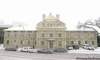
Advertisement Advertise With Us
Advertisement Advertise With Us
History
Updated on Monday, March 28, 2011 11:11 AM CDT: Corrects name of Carnegie involved with library.