

Factors in Winnipeg case could improve chances
Advertisement
Read this article for free:
or
Already have an account? Log in here »
To continue reading, please subscribe:

Digital Subscription
One year of digital access for only $205*
- Enjoy unlimited reading on winnipegfreepress.com
- Read the E-Edition, our digital replica newspaper
- Access News Break, our award-winning app
- Play interactive puzzles
*First annual payment billed as $205.00 + GST for one year. This annual subscription will automatically renew at $233.00 + GST every 52 weeks (10% off the regular annual price of $259.35). Offer available to new and qualified returning subscribers only. Cancel any time.
To continue reading, please subscribe:
Add Free Press access to your Brandon Sun subscription for only an additional
$1 for the first 4 weeks*
- Enjoy unlimited reading on winnipegfreepress.com
- Read the E-Edition, our digital replica newspaper
- Access News Break, our award-winning app
- Play interactive puzzles
*Your next Brandon Sun subscription payment will increase by $1.00 and you will be charged $17.95 plus GST for four weeks. After four weeks, your payment will increase to $24.95 plus GST every four weeks.
Read unlimited articles for free today:
or
Already have an account? Log in here »
Hey there, time traveller!
This article was published 08/09/2012 (5140 days ago), so information in it may no longer be current.
ALEXANDRA KLALES was part of the forensics team that combed through the wreckage of a plane crash in Buffalo, N.Y., three years ago.
A doctoral candidate in the anthropology program at the University of Manitoba, Klales acknowledges the chances of finding the remains of Tanya Nepinak, buried deep in the Brady Road Landfill, are slim, but said several factors unique to the Winnipeg case could help turn this into the rare successful search.
“There are so many factors that complicate finding human remains in a landfill that you wouldn’t have in a normal forensics case,” said Klales, a resident of West Chester, Pa. “But I think it’s still worth the investment for the family.”
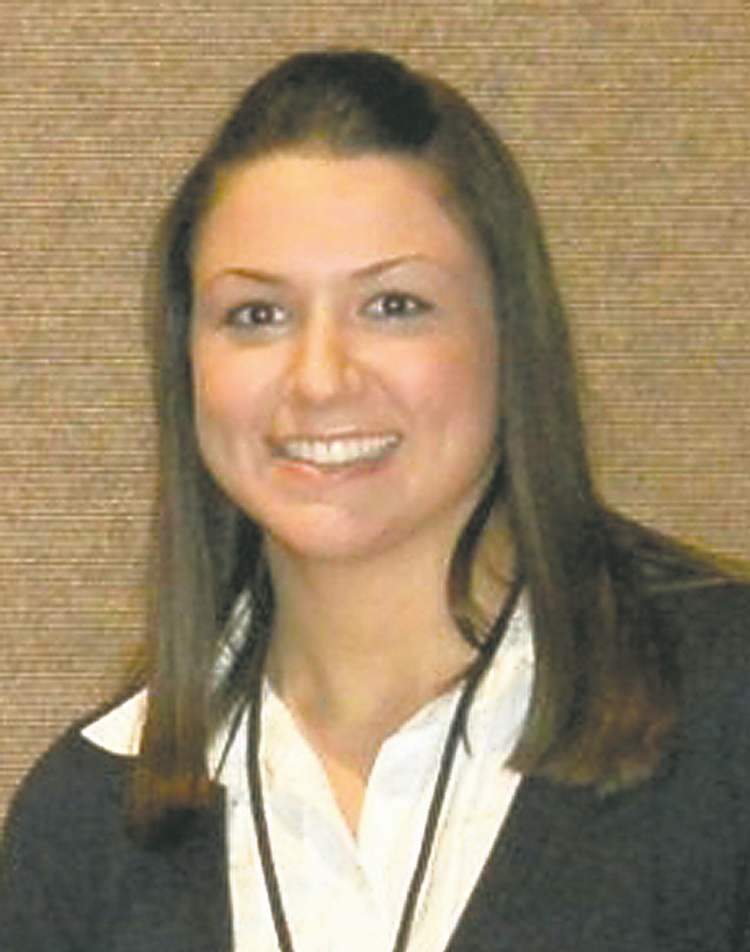
Klales is not involved in the Winnipeg search, but her graduate studies at Mercyhurst College in Pennsylvania included three years as part of the Mercyhurst forensic scene recovery team that worked with police, medical examiners offices, the FBI, the U.S. Department of Homeland Security and the U.S. National Transportation Safety Board.
Among the factors, she said, that could tip the scales in the searchers’ favour are:
— Weather conditions when Nepinak was killed.
— It’s believed Nepinak was wrapped in plastic and her body remains wrapped in plastic.
— Authorities have a general understanding of where the remains are buried.
— Nepinak’s remains were likely transferred to the landfill soon after her death, wrapped in plastic, and preserved under tonnes and layers of compressed debris.
After 10 months, a human body would typically decompose to a skeletal state, Klales said. However, she added it’s possible Nepinak’s remains haven’t decomposed to that extent and are intact, which would make them easier to identify. Being wrapped in plastic, buried during the winter, quickly placed at the landfill and buried deep under several layers of compacted debris will all combine to slow decomposition.
Wrapped in plastic doesn’t mean laid out in an anatomical position and bundled, Klales said, adding bodies placed in bags usually curl into a contorted fetal position.
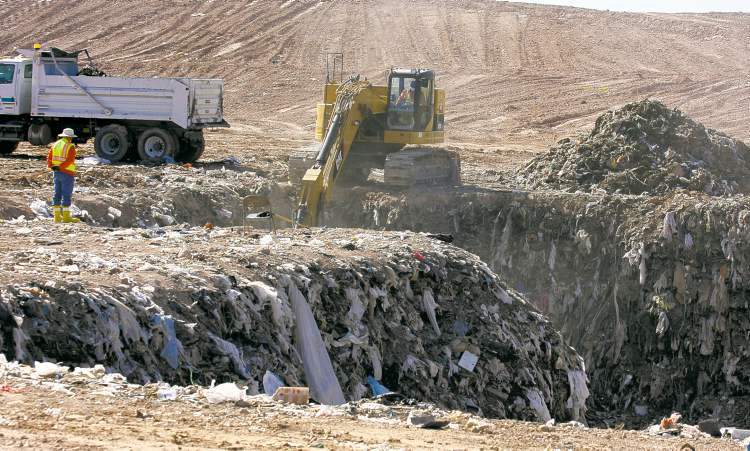
But Klales isn’t confident the remains will still be wrapped in plastic. The remains were subjected to a great deal of abuse: They were initially tossed in a dumpster, then emptied into a garbage truck with other debris piled on top, then emptied at the landfill, where heavy machinery would have pushed, pounded and compacted the remains and piled other debris on top.
And if the body’s not wrapped in plastic, what are the searchers looking for?
“The body begins to decompose, it fragments, colouring changes, and there are different pathognomonic agents that can alter the remains, so it may not look like a fresh, dead body.”
Klales said for that reason, she’d recommend the searchers be individuals trained in human osteology (the study of bones), human anatomy, forensic anthropology and forensic archeology.
Most individuals with that skill set are forensic anthropologists, but others who possess the skills include forensic pathologists, medical examiners and police officers and fire marshals who have received special training.
“It just becomes difficult for people who are not trained in those fields to locate and identify the remains,” Klales said, adding using untrained community volunteers is not ideal nor useful in finding the remains, but they could be employed in other areas.
Using heavy equipment to remove the top eight metres of debris makes sense, from a time, manpower and financial perspective, she said. Once down to the search area, Klales said it would be ideal to conduct the search right at the site where the remains are believed to be buried, but she understands the safety concerns that will prompt the debris to be removed to a clean site.

When the debris is spread onto a clean site, Klales said, it should be laid out in a thin layer on tarps, to make it easier for the searchers to examine and hand screen every item.
Cadaver dogs could also be used to aid in the search, she said. These dogs are trained to block out myriad scents that would be found in a landfill and concentrate solely on the scent of human decomposition.
Klales said a landfill search is a monumental project that requires careful planning. If it’s taken Winnipeg police longer than some anticipated to actually start the search, Klales said the time was likely spent on important logistical work.
“A landfill search is something that is not very common anywhere,” Klales said. “I am sure they have spent quite a bit of time meeting with people, planning and getting the materials they need.”
aldo.santin@freepress.mb.ca

Advertisement Advertise With Us
Advertisement Advertise With Us