

Grim excavation
Two recent fruitless U.S. searches of garbage dumps for missing bodies portend long odds for success in the upcoming Brady Road Landfill hunt for local homicide victim Tanya Jane Nepinak
Advertisement
Read this article for free:
or
Already have an account? Log in here »
To continue reading, please subscribe:

Digital Subscription
One year of digital access for only $205*
- Enjoy unlimited reading on winnipegfreepress.com
- Read the E-Edition, our digital replica newspaper
- Access News Break, our award-winning app
- Play interactive puzzles
*First annual payment billed as $205.00 + GST for one year. This annual subscription will automatically renew at $233.00 + GST every 52 weeks (10% off the regular annual price of $259.35). Offer available to new and qualified returning subscribers only. Cancel any time.
To continue reading, please subscribe:
Add Free Press access to your Brandon Sun subscription for only an additional
$1 for the first 4 weeks*
- Enjoy unlimited reading on winnipegfreepress.com
- Read the E-Edition, our digital replica newspaper
- Access News Break, our award-winning app
- Play interactive puzzles
*Your next Brandon Sun subscription payment will increase by $1.00 and you will be charged $17.95 plus GST for four weeks. After four weeks, your payment will increase to $24.95 plus GST every four weeks.
Read unlimited articles for free today:
or
Already have an account? Log in here »
Hey there, time traveller!
This article was published 08/09/2012 (5141 days ago), so information in it may no longer be current.
Winnipeg police are hoping for a better outcome when they search the Brady Road Landfill for the remains of homicide victim Tanya Jane Nepinak than those of two similar searches conducted this year in Vermont and Arizona.
For 20 weeks, from February to the end of June, police from suburban communities surrounding Phoenix searched a landfill for the body of five-year-old Jhessye Shockley.
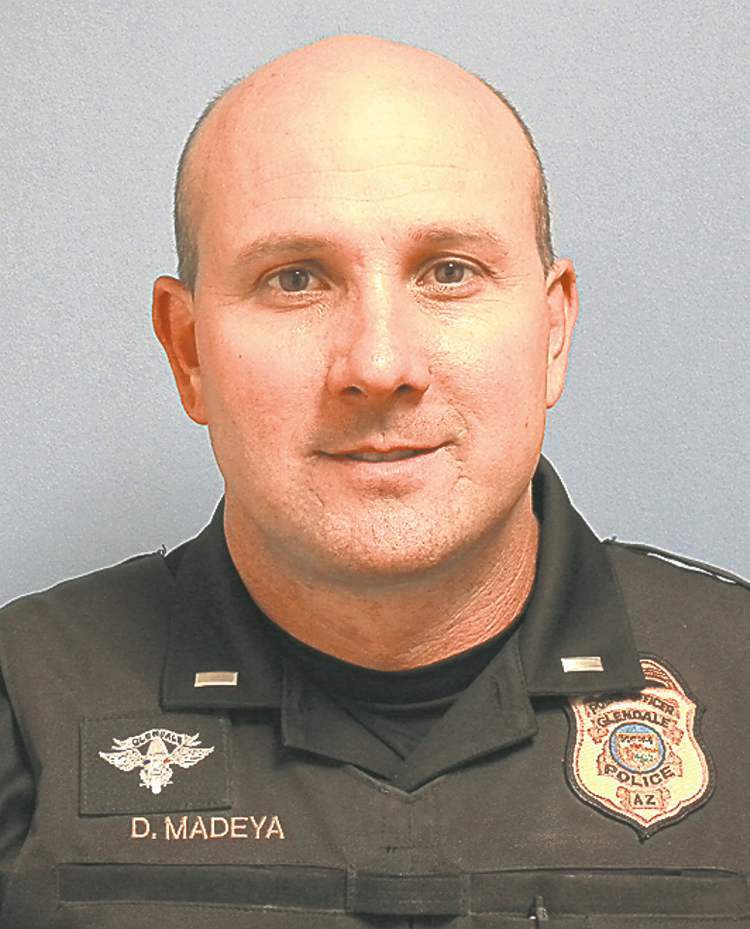
“We did everything we possibly could to get through that entire day that we believe she was dumped out there,” Commander Dave Madeya of the Glendale Police Department said of the search.
“It was hard on people. Nobody really wanted to give up or stop looking.”
More than 4,000 kilometres away, during 11 weeks from May to late July, a team of FBI agents searched a landfill in Vermont for a couple, Bill and Lorraine Currier, who disappeared a year earlier.
In those searches, police believe they knew the day the bodies were placed in the landfills — just as Winnipeg police believe they know when Nepinak’s remains were deposited at Brady Road — allowing them to identify a likely search area in each case.
However, the searches failed to find the missing bodies.
On Aug. 8, Winnipeg police Chief Keith McCaskill said the decision to conduct the search was made after reviewing similar searches, knowing the kind of work a search would entail and the chance of success.
McCaskill rates the likelihood of finding the body at five per cent. An FBI review of 20 landfill searches found success in only two instances — a 10 per cent success rate — and Madeya said the national average for such searches in the United States was around seven per cent.
“When you’re talking trash that is compacted and compacted, the chances of finding something are very low, and we knew that going in, too,” Madeya said.

McCaskill has not said when the search will begin.
The search process in such cases is similar: By determining when the body was placed in the landfill, authorities can determine the general target area, or cell, to be searched. How far down the body is buried depends on how long ago it was placed there and how much trash has been piled above it.
In Glendale, police believed little Jhessye was killed in October and her body placed in the landfill shortly thereafter.
In Vermont, the Curriers disappeared after work in June 2011. The following April, police searched the site of a demolished home for their buried remains. When that turned up nothing, they then searched an area landfill where the construction debris from the demolition was taken.
In Winnipeg, police said they confirmed Nepinak had been killed and where her body had been placed shortly after the arrest of Shawn Cameron Lamb at the end of June. Lamb has been charged with her murder and those of two other women.
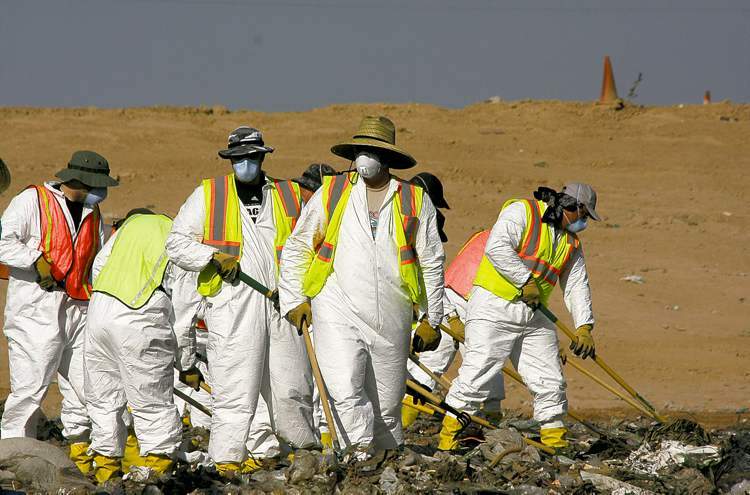
Both Vermont and Glendale used police officers to conduct the physical search of the debris.
Madeya said he knows of other searches that accepted untrained volunteers from the community, but Glendale did not go that route.
Police officers know how to work as part of a team, he said, and possess other advantages.
“The biggest reason we did that was that if we found her, it’s just easier for a police officer to write up a report to say exactly what he did and easier for him to go to court than just a volunteer that doesn’t have that experience and training.”
Madeya said there were other, vital roles for community volunteers, adding without their contribution, the search could not have taken place. Heavy equipment operators cleared the site and deposited trash daily to be searched. Other volunteers gathered, delivered and distributed food and water.
McCaskill said the Winnipeg search would not take place among the compacted trash because of the danger that poses to the searchers.
The Glendale search found the site was still dangerous for searchers. Pulling apart the compacted trash released deadly methane gas. Monitoring teams were sent in daily ahead of the searchers to ensure methane levels were at safe levels.
And pulling apart the trash proved more difficult than anticipated.
Crews who work at landfills are intent on compacting trash in the most efficient manner. Searchers had to learn how to undo what they had been doing.
“It takes a while to get used to what you’re not used to doing — pulling up the trash instead of taking it in,” Madeya said. “It’s a long, tedious process.”
Madeya said it was decided the search of the debris from the suspected area would be done in a separate area. The heavy equipment operators had to learn how much debris could be removed for the number of searchers participating each day, and lay the material down in a layer thin enough to make a search feasible.
“We got pretty good at getting a pattern down, getting it spread out thin enough for us to go through and pull it apart to look for bones or any part of human anatomy.”
Searchers walked through the trash, using rakes to sift through the material, searching for bones and human remains.
Madeya said Glendale opted not to have an anthropologist on site. Instead, every time a bone was found, it would be photographed, digitally scanned and then the image was electronically transmitted to an anthropologist.
“Within a few minutes, the anthropologist would tell us right away if that was an animal bone or a human bone.”
The Glendale searchers had to deal with daytime temperatures that reached 38 C, forcing searchers to begin early to avoid the hot Arizona sun.
Madeya said he expects Winnipeg searchers will have to cope with cold weather and possibly even snow.
Madeya said Winnipeg searchers may have an advantage compared to other landfill searches. Searchers at Brady will be looking for the body of a woman wrapped in plastic.

“We were looking for a five-year-old girl. (Winnipeg) will be looking for the body of a larger woman, so it might be easier to find her if she hasn’t been torn apart by the compacting process.
“If the lady was wrapped in plastic, it could help (slow) the decaying process and help keep her body intact. They’ll be looking for that type of plastic, whatever colour it might be, and it could make it easier for them.”
Even though everyone involved realized the odds were slim, ending the search was a painful decision, Madeya said.
“It did take its toll on people,” Madeya said. “Everybody involved wanted to find her. They were vested in making it happen. The more that people were out there, they got more emotionally involved in trying to find this little girl because nobody deserved to be buried in a landfill.”
aldo.santin@freepress.mb.ca
Similar searches
Bill Currier, 50, and Lorraine Currier, 55
Essex, Vt.
Last seen at their workplace on June 8, 2011
Eleven-week search of an area landfill began May 7, 2012, ended late July 2012
Bodies never found
Cost: $1 million
178 FBI agents from 38 field offices involved
9,000 tonnes of trash searched
Jhessye Shockley, 5
Glendale, Ariz.
Reported missing October 2011
Twenty-week search of an area landfill began February 2012, concluded in late June 2012
Body not found, believed to be buried somewhere in the landfill
Cost: $1 million
8,600 tonnes of trash cleared; another 5,400 tonnes of trash searched where the body of the little girl was believed to have been buried
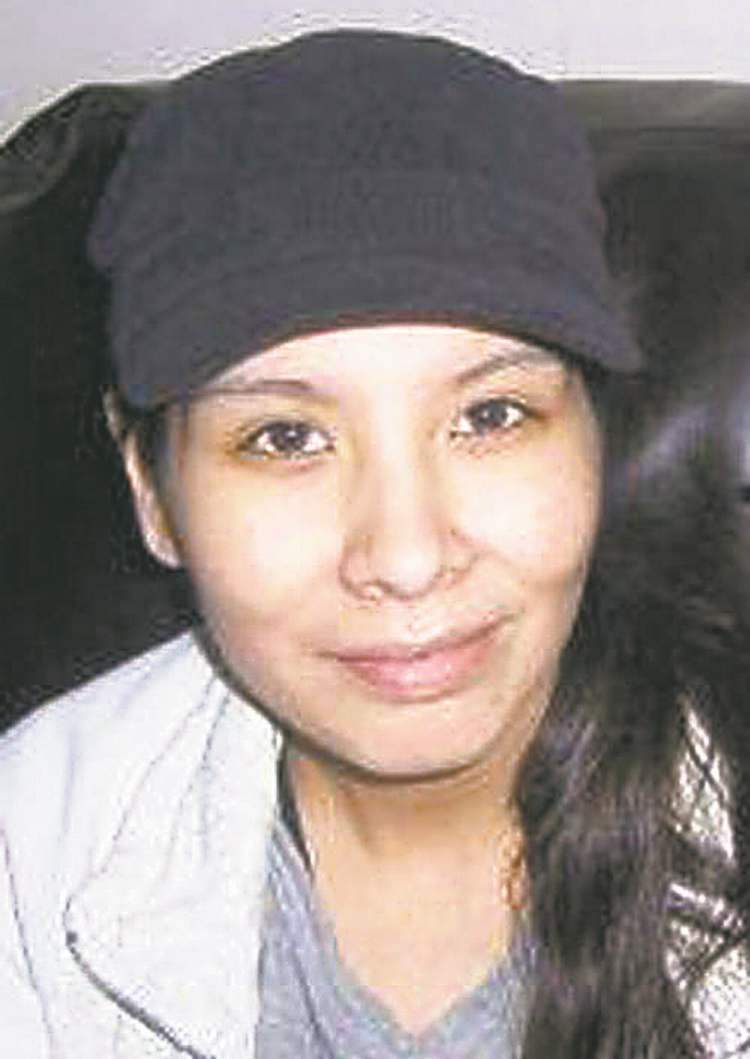
Tanya Jane Nepinak, 31
Winnipeg
Last seen Sept. 13, 2011, believed killed shortly thereafter
Believed to be buried deep within the Brady Road Landfill
Search will require the removal of 90,000 cubic metres of compacted trash, to allow the search of 10,000 cubic metres of trash where the remains are believed to be buried
The search for Tanya Nepinak
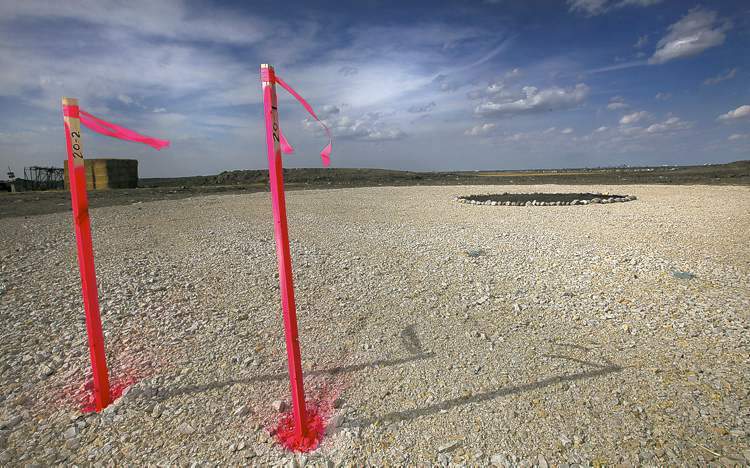
Tanya Nepinak’s body is believed to be buried eight to 13 metres below the surface at the Brady Road Landfill, in an area, or cell, about 100 metres long by 20 metres wide by five metres deep.
Heavy equipment will remove the top eight metres of compacted trash in an area the size of two football fields, side by side — 100 metres by 200 metres.
Once the top layer, a clay covering, has been removed, more trash will have to be moved to gain access to the target area.
Once the target area has been exposed, heavy equipment will move this trash to a clean site, where a team of searchers will probe the debris by hand.
It was estimated it would take one month to prepare the site, at a cost of about $500,000, before the search could begin.
Related Articles
Police to conduct scaled-down search for woman's body in landfill

Advertisement Advertise With Us
Advertisement Advertise With Us
History
Updated on Saturday, September 8, 2012 10:57 AM CDT: adds fact box