

City scenarios plot comeback from COVID-19

Advertisement
Read this article for free:
or
Already have an account? Log in here »
To continue reading, please subscribe:
Monthly Digital Subscription
$1 per week for 24 weeks*
- Enjoy unlimited reading on winnipegfreepress.com
- Read the E-Edition, our digital replica newspaper
- Access News Break, our award-winning app
- Play interactive puzzles
*Billed as $4.00 plus GST every four weeks. After 24 weeks, price increases to the regular rate of $19.95 plus GST every four weeks. Offer available to new and qualified returning subscribers only. Cancel any time.
Monthly Digital Subscription
$4.99/week*
- Enjoy unlimited reading on winnipegfreepress.com
- Read the E-Edition, our digital replica newspaper
- Access News Break, our award-winning app
- Play interactive puzzles
*Billed as $19.95 plus GST every four weeks. Cancel any time.
To continue reading, please subscribe:
Add Free Press access to your Brandon Sun subscription for only an additional
$1 for the first 4 weeks*
*Your next subscription payment will increase by $1.00 and you will be charged $16.99 plus GST for four weeks. After four weeks, your payment will increase to $23.99 plus GST every four weeks.
Read unlimited articles for free today:
or
Already have an account? Log in here »
Hey there, time traveller!
This article was published 08/03/2021 (1873 days ago), so information in it may no longer be current.
The City of Winnipeg predicts its financial recovery from COVID-19 will drag on into 2022 and could still erase millions of dollars of revenues this year.
But it also believes recovery has finally begun.
“The shocks happened last year and we’re slowly either levelling off or rebounding slowly over the next couple of years. The picture is very different (now). Last year, it was almost exclusively negative,” said Tyler Markowsky, the city’s economist.
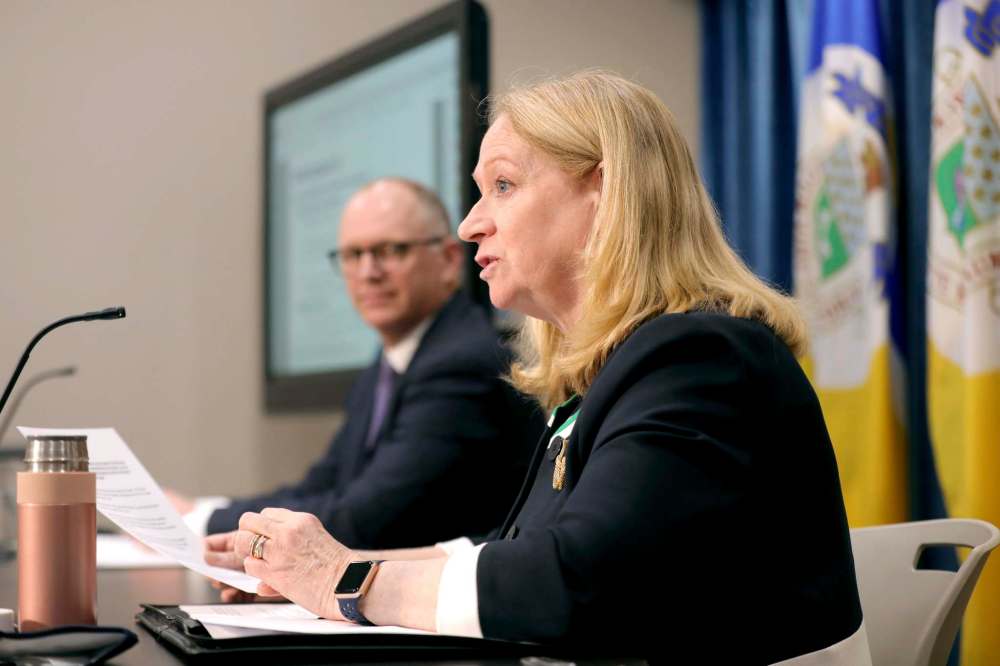
On Monday, the city released a range of economic planning scenarios to cope with COVID-19 during 2021.
In a best-case scenario the city envisions vaccines proving effective against COVID-19 and its variants, allowing pandemic restrictions to be relaxed in May and again in July of this year, with 70 per cent of Manitoba adults vaccinated by Aug. 31. A “broad reopening” of businesses occurs. The unemployment rate reaches 5.7 per cent by 2022 (still above the 5.3 per cent in pre-pandemic 2019).
A more moderate view offers a medium-case scenario in which a virus variant triggers a new wave of pandemic spread, starting in May, though vaccines prove effective against all variants. The additional wave allows some business restrictions to be relaxed until April before they are re-imposed from May to July. By August, that spread subsides and 70 per cent of the adult population gets vaccinated by the end of November. The unemployment rate remains at 5.7 per cent in 2022.
A worst-case scenario pictures a new pandemic wave still emerging in the spring, while a variant requires a booster shot that isn’t deployed until December 2021 and is still being distributed in 2022. That results in further code red-restrictions and an unemployment rate of 6.7 per cent in 2022.
Under the worst-case scenario, the city would suffer from multimillion-dollar revenue losses for Winnipeg Transit ($20 million), recreation programs ($6 million), parking revenues ($5 million) and accommodation taxes ($2 million).
If cost-cutting measures are needed, the financial plan includes options to dip into Transit’s retained earnings, cut discretionary spending, impose a hiring freeze, suspend new vehicle fleet purchases, add a voluntary furlough program and/or transfer funds from city reserves.
While the city can’t completely rule out layoffs or service cuts to balance its books, these would not be the initial cost-cutting options considered, said Catherine Kloepfer, the city’s recently appointed chief financial officer.
“The plan that we’ve put forward here, in terms of how to weather a potential worst-case scenario, doesn’t require any additional layoffs … We (will look) at other discretionary expenditures first before we would ever resort to the layoffs,” said Kloepfer.

Markowsky noted the city is currently largely tracking along “best-case” levels overall. However, Transit revenues remain between 56 and 66 per cent lower than pre-pandemic levels, while the 2021 budget predicted they would lag 45 per cent below normal, said Kloepfer.
The city also expects its rainy day fund is secure enough to get through the year.
“We would have sufficient funds in the stabilization reserve to absorb the worst-case scenario,” said Coun. Scott Gillingham, council’s finance chairman.
joyanne.pursaga@freepress.mb.ca
Twitter: @joyanne_pursaga
Joyanne is city hall reporter for the Winnipeg Free Press. A reporter since 2004, she began covering politics exclusively in 2012, writing on city hall and the Manitoba Legislature for the Winnipeg Sun before joining the Free Press in early 2020. Read more about Joyanne.
Every piece of reporting Joyanne produces is reviewed by an editing team before it is posted online or published in print — part of the Free Press‘s tradition, since 1872, of producing reliable independent journalism. Read more about Free Press’s history and mandate, and learn how our newsroom operates.
Our newsroom depends on a growing audience of readers to power our journalism. If you are not a paid reader, please consider becoming a subscriber.
Our newsroom depends on its audience of readers to power our journalism. Thank you for your support.
Joyanne is city hall reporter for the Winnipeg Free Press. A reporter since 2004, she began covering politics exclusively in 2012, writing on city hall and the Manitoba Legislature for the Winnipeg Sun before joining the Free Press in early 2020. Read more about Joyanne.
Every piece of reporting Joyanne produces is reviewed by an editing team before it is posted online or published in print — part of the Free Press‘s tradition, since 1872, of producing reliable independent journalism. Read more about Free Press’s history and mandate, and learn how our newsroom operates.
Our newsroom depends on a growing audience of readers to power our journalism. If you are not a paid reader, please consider becoming a subscriber.
Our newsroom depends on its audience of readers to power our journalism. Thank you for your support.
Advertisement Advertise With Us
Advertisement Advertise With Us