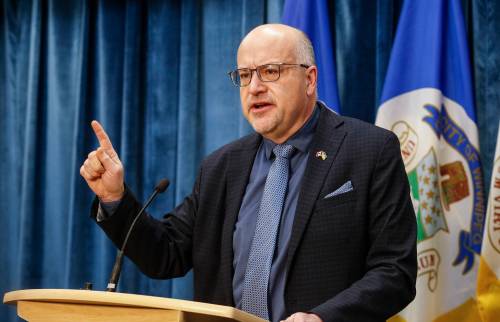
Lean, mean, fighting machine As premier, Brian Pallister took on just about everyone. One good thing about him, he knew when to call it quits
Read this article for free:
or
Already have an account? Log in here »
To continue reading, please subscribe:

Digital Subscription
One year of digital access for only $205*
- Enjoy unlimited reading on winnipegfreepress.com
- Read the E-Edition, our digital replica newspaper
- Access News Break, our award-winning app
- Play interactive puzzles
*First annual payment billed as $205.00 + GST for one year. This annual subscription will automatically renew at $233.00 + GST every 52 weeks (10% off the regular annual price of $259.35). Offer available to new and qualified returning subscribers only. Cancel any time.
To continue reading, please subscribe:
Add Free Press access to your Brandon Sun subscription for only an additional
$1 for the first 4 weeks*
- Enjoy unlimited reading on winnipegfreepress.com
- Read the E-Edition, our digital replica newspaper
- Access News Break, our award-winning app
- Play interactive puzzles
*Your next Brandon Sun subscription payment will increase by $1.00 and you will be charged $17.95 plus GST for four weeks. After four weeks, your payment will increase to $24.95 plus GST every four weeks.
Read unlimited articles for free today:
or
Already have an account? Log in here »
Hey there, time traveller!
This article was published 30/12/2021 (1728 days ago), so information in it may no longer be current.
If there was a turning point for Brian Pallister during his time as Manitoba premier, it was probably around the third week of June.
His Progressive Conservative government was in the throes of a political firestorm after ignoring pleas from doctors and infectious disease experts to impose strict public health measures to slow the spread of the fast-moving Delta variant.
The failure to act proved deadly: Manitoba hospitals were overwhelmed with hundreds of COVID-19 patients, forcing health officials to send 57 to other provinces for treatment. The pandemic death toll swelled by 172 in May and June.
Combined with a growing number of unpopular political decisions (including the proposed elimination of elected school boards), Pallister’s popularity hit rock bottom. A Winnipeg Free Press/Probe Research poll released June 18 showed the Progressive Conservative party had the support of only 29 per cent of Manitobans — its weakest showing since the party won government with 53 per cent of the vote in 2016.
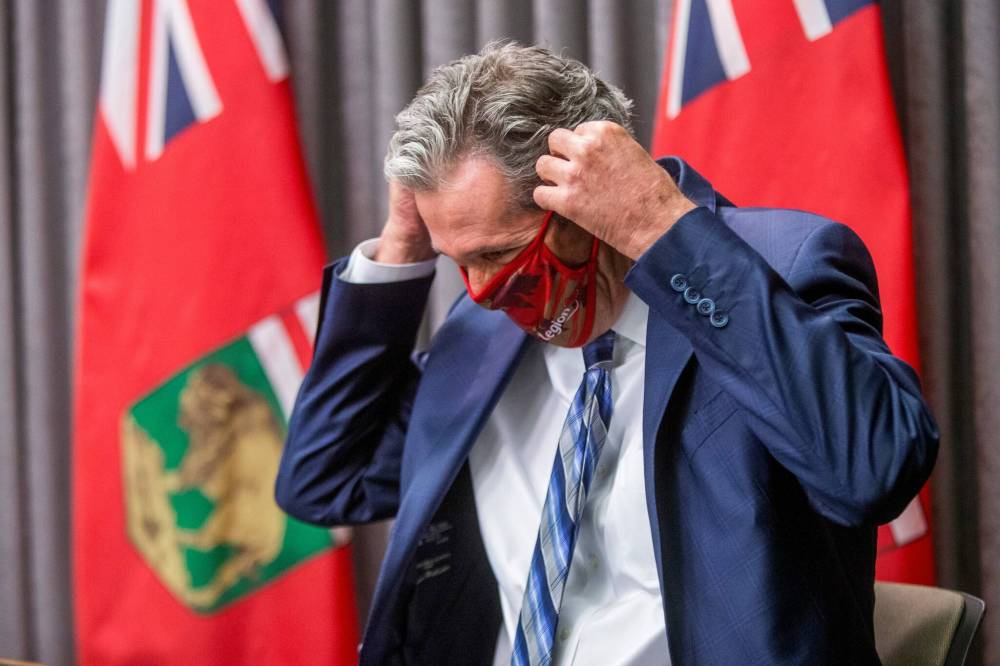
“I think Brian Pallister realized that he had lost the support of Manitobans, including the loss of support within the PC party in Manitoba, and most importantly of all, the loss of support within the party caucus,” said Eric Stefanson, a former Tory finance minister in the 1990s who was part of Pallister’s transition team in 2016. “This is all the result of his leadership style and the type of government he was running, combined with several wrong decisions that he’d made over the last period of time.”
Less than two months after the release of the June poll, Pallister announced his resignation.
Stefanson, who also served as the chair of Premier Heather Stefanson’s transition team and worked on her leadership campaign, said Pallister’s autocratic leadership style caught up with him. The former premier often made decisions unilaterally without consulting caucus and cabinet, said Stefanson.
“When that starts to happen, it becomes easier to make poor decisions,” he said.
Longtime PC party strategist Barbara Biggar said as the pandemic worsened, Pallister’s mood swings and erratic behaviour intensified, causing his approval rating to plummet.
“He was often too strident, he was too emotional, he was too bombastic, he was too ideological,” said Biggar. “At a time when Manitobans desperately needed a steady hand at the wheel, we had a premier who was often overcharged with emotions — positive and negative.”
Gord Mackintosh, a former NDP cabinet minister who teaches political science at the University of Winnipeg, said it wasn’t just the pandemic that did Pallister in. He said the former premier instituted a “ruinous health care reorganization” and alienated Indigenous groups, organized labour and educators, long before the pandemic.
“He fought almost every sectoral interest in the province until every Manitoban felt fought,” said Mackintosh. “He was at least wise enough to know that a comeback wasn’t unattainable before the next election in 2023.”
Heather Stefanson was the first to enter the race to replace Pallister. Many were shocked when, on the day of her announcement, more than three-quarters of the Tory caucus supported her leadership bid — a sign the Tuxedo MLA was likely drumming up support behind the scenes well before Pallister resigned.
“I’m convinced there was a very strong, quiet organizational effort ongoing,” said Mackintosh.
Biggar, who was a member of Stefanson’s senior campaign team, said caucus members rallied around the former deputy premier because they saw leadership qualities in her that Pallister lacked, including her willingness to listen and consult.
Biggar said Tory MLAs saw evidence of that during caucus and cabinet meetings, adding Stefanson didn’t shy away from confronting Pallister when she disagreed with him.
“Most people didn’t have the guts to stand up and make their voices heard. She did,” said Biggar. “I’m told by any number of people that when issues came up that she disagreed with, she very quietly around cabinet tables (and) caucus tables made her views clearly known.”
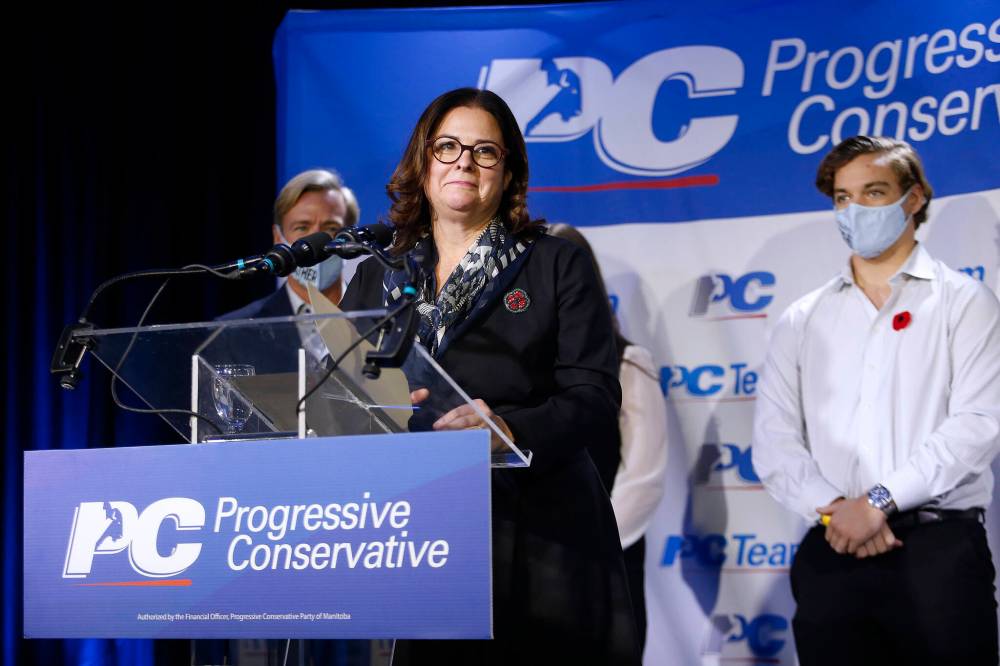
A week after Stefanson announced her leadership bid, former Conservative MP Shelly Glover entered the race. It was the start of a lengthy and dramatic showdown that wound up in the courts.
Glover ran largely on an anti-Pallister platform, criticizing the former premier for his health care reforms and accusing him of ignoring the priorities of Manitobans. She also attacked the PC party, claiming party officials tried to discourage candidates from entering the race. But it was her opposition to COVID-19 vaccine mandates and suggestions there were alternatives to immunization that caused the greatest stir in the party. Critics accused her of courting the anti-vaccine vote and signing up thousands of Manitobans who would otherwise have no connection to the party.
Biggar said the PC party and government were nearly hijacked by anti-vaxxers.
“I’ll get hate calls for saying this but she had ballot boxes all through the Bible Belt in southern Manitoba,” said Biggar. “She knew how to play to that audience, and she did, and they flocked to her.”
Mackintosh said it was more nuanced than that. Glover also appealed to grassroots Tories and anti-establishment party members, he said. Unlike Stefanson, the former Winnipeg Police Service officer had no ties to Pallister and was free to openly criticize him. Still, the anti-vaccine factor played a significant role, he said.
“She made key statements at times that, although somewhat cryptic, were code words to the anti-vaxxers that she could be a champion for their cause,” said Mackintosh.
Glover’s campaign was effective: she won 49 per cent of the vote to Stefanson’s 51 per cent. But she refused to concede, alleging — without evidence — that ballots had been tampered with. Glover claimed she had more votes than her opponent and challenged the results in court. However, Court of Queen’s Bench Justice James Edmond found there was no evidence to support Glover’s claim. Whatever “irregularities” may have existed in how ballots were counted did not alter the outcome of the vote, he ruled.
Meanwhile, it was a historic year in politics for Manitoba. On Nov. 2, Heather Stefanson was sworn in as Manitoba’s 24th premier, the first female premier in the province’s history.
tom.brodbeck@freepress.mb.ca

Tom Brodbeck is an award-winning author and columnist with over 30 years experience in print media. He joined the Free Press in 2019. Born and raised in Montreal, Tom graduated from the University of Manitoba in 1993 with a Bachelor of Arts degree in economics and commerce. Read more about Tom.
Tom provides commentary and analysis on political and related issues at the municipal, provincial and federal level. His columns are built on research and coverage of local events. The Free Press’s editing team reviews Tom’s columns before they are posted online or published in print – part of the Free Press’s tradition, since 1872, of producing reliable independent journalism. Read more about Free Press’s history and mandate, and learn how our newsroom operates.
Our newsroom depends on a growing audience of readers to power our journalism. If you are not a paid reader, please consider becoming a subscriber.
Our newsroom depends on its audience of readers to power our journalism. Thank you for your support.
History
Updated on Thursday, December 30, 2021 7:29 AM CST: Adds photo