

Manitobans are hitting the pandemic ‘wall’
Advertisement
Read this article for free:
or
Already have an account? Log in here »
To continue reading, please subscribe:
Monthly Digital Subscription
$1 per week for 24 weeks*
- Enjoy unlimited reading on winnipegfreepress.com
- Read the E-Edition, our digital replica newspaper
- Access News Break, our award-winning app
- Play interactive puzzles
*Billed as $4.00 plus GST every four weeks. After 24 weeks, price increases to the regular rate of $19.95 plus GST every four weeks. Offer available to new and qualified returning subscribers only. Cancel any time.
Monthly Digital Subscription
$4.99/week*
- Enjoy unlimited reading on winnipegfreepress.com
- Read the E-Edition, our digital replica newspaper
- Access News Break, our award-winning app
- Play interactive puzzles
*Billed as $19.95 plus GST every four weeks. Cancel any time.
To continue reading, please subscribe:
Add Free Press access to your Brandon Sun subscription for only an additional
$1 for the first 4 weeks*
*Your next subscription payment will increase by $1.00 and you will be charged $16.99 plus GST for four weeks. After four weeks, your payment will increase to $23.99 plus GST every four weeks.
Read unlimited articles for free today:
or
Already have an account? Log in here »
Hey there, time traveller!
This article was published 11/05/2020 (2131 days ago), so information in it may no longer be current.
The toughest stretch of a marathon does not come in the final kilometres.
Instead, runners hit “the wall” around the 30-km mark of the 42.2-km race. Fatigue overtakes effort. Negative thoughts overwhelm you. Continuing takes all you’ve got.
A lot of Manitobans are hitting the wall. We’re grumpy, fed up with our physically distanced, socially isolated lives. We’re tempted to do something crazy, such as gathering in a group of more than 10 people.
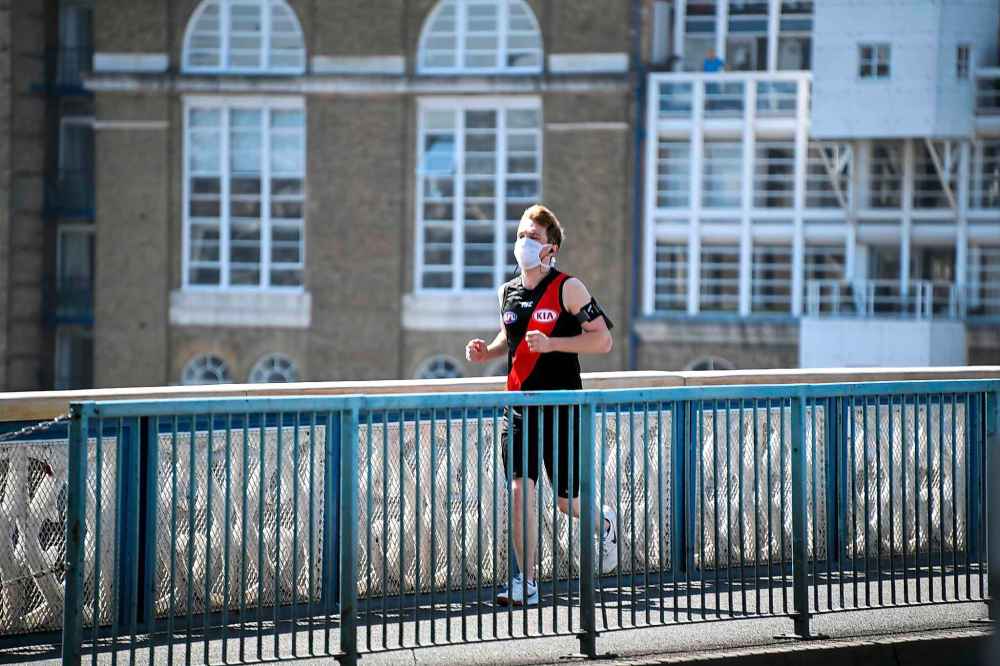
A lot of Manitobans are hitting the wall. We’re grumpy, fed up with our physically distanced, socially isolated lives.
Some stores are reopening, we can get a haircut and maybe even shiver on a patio in the unseasonably cold May air. But socializing in person is still discouraged, and there’s a lineup at the grocery store. We’re restless.
We can take comfort in the knowledge that this is exactly how we’re supposed to feel. People going through isolating ordeals typically find it hardest to cope sometime after the mid-point of their experiences.
This is known as the “third-quarter phenomenon,” a term first used about 30 years ago by researchers studying the effects of prolonged missions in space.
They observed that mood and morale bottomed out some time after the halfway point of missions. There were marked changes in the mental states and interpersonal behaviour of participants. These became as big a problem as overcoming stresses like weightlessness.
Some have described this as the third stage of dealing with prolonged isolation — first you’re anxious and excited, second you’re bored and depressed, third you’re emotional, maybe even aggressive.
Some have described this as the third stage of dealing with prolonged isolation– first you’re anxious and excited, second you’re bored and depressed, third you’re emotional, maybe even aggressive.
Interestingly, researchers found the same phenomenon regardless of the duration of a mission, so it might occur four months into a six-month assignment, or eight months into a one-year stint.
Runners experience the same thing. Hitting the wall is usually attributed to glycogen depletion — running out of fuel. However, it is as much mental as physical. Early in the race, you don’t think about the finish line. Later on, it is all you can think about. Yet negative thoughts are your worst enemy as you ponder the pain you feel and the kilometres that you still must run.
We don’t know exactly where we are in the COVID-19 mission. However, in Manitoba the general perception is that we are past the peak of infections — in other words, past the halfway point. The end of this seems much more possible. It may be all we’re thinking about. Yet there is still a difficult road ahead as restrictions on our lives remain in place.
Space researchers describe a combination of emotions among astronauts at this stage as they anticipate a return to normal life — anticipation combined with fear that it may not happen. It’s a recipe for tension.
So, how should you deal with it? Space programs have adapted training and mission modules to counter this effect. Runners do specific training to become used to taking in liquids and nutrients to counter the effect of the wall.
Another tip is to maintain a sense of humour. “Being in touch with the ludicrousness of one’s predicament is vital, and even revitalizing,” writes John Putman, a researcher on the negative effects of space flight who in 2002 participated in a simulation of living on Mars.
Being in touch with the ludicrousness of one’s predicament is vital, and even revitalizing.

Putman also suggests finding scapegoats to reduce tension — blame somebody or something else for the predicament that you are in. It helps maintain stability by allowing people to vent their frustration onto an external target.
We’re already doing this. Blame health officials for locking down our lives. Blame governments for not having enough personal protective equipment or not properly supervising long-term care homes. Blame the irresponsible youths at the skate park for violating physical distancing rules. Blame China for the outbreak in the first place.
This may sound like complaining, but it’s actually healthy venting.
So, keep grumbling. Keep laughing. It will keep negative thoughts out of our heads and help us make it to the finish line.
Bob Cox is publisher of the Winnipeg Free Press and chair of News Media Canada.