

‘Perfect example of flattening curve’
No new cases; don't expect a return to normal even after province eases restrictions

Advertisement
Read this article for free:
or
Already have an account? Log in here »
To continue reading, please subscribe:
Monthly Digital Subscription
$1 per week for 24 weeks*
- Enjoy unlimited reading on winnipegfreepress.com
- Read the E-Edition, our digital replica newspaper
- Access News Break, our award-winning app
- Play interactive puzzles
*Billed as $4.00 plus GST every four weeks. After 24 weeks, price increases to the regular rate of $19.95 plus GST every four weeks. Offer available to new and qualified returning subscribers only. Cancel any time.
Monthly Digital Subscription
$4.99/week*
- Enjoy unlimited reading on winnipegfreepress.com
- Read the E-Edition, our digital replica newspaper
- Access News Break, our award-winning app
- Play interactive puzzles
*Billed as $19.95 plus GST every four weeks. Cancel any time.
To continue reading, please subscribe:
Add Free Press access to your Brandon Sun subscription for only an additional
$1 for the first 4 weeks*
*Your next subscription payment will increase by $1.00 and you will be charged $16.99 plus GST for four weeks. After four weeks, your payment will increase to $23.99 plus GST every four weeks.
Read unlimited articles for free today:
or
Already have an account? Log in here »
Hey there, time traveller!
This article was published 19/04/2020 (2197 days ago), so information in it may no longer be current.
The daily count of new novel coronavirus cases hasn’t surpassed double digits in more than a week — a pattern one public health expert predicts could soon prompt a roller-coaster of social distancing policies.
No new COVID-19 cases in Manitoba were announced Sunday, marking the third time in seven days that the province had no new numbers to report. The daily average of cases announced last week was just under 2.
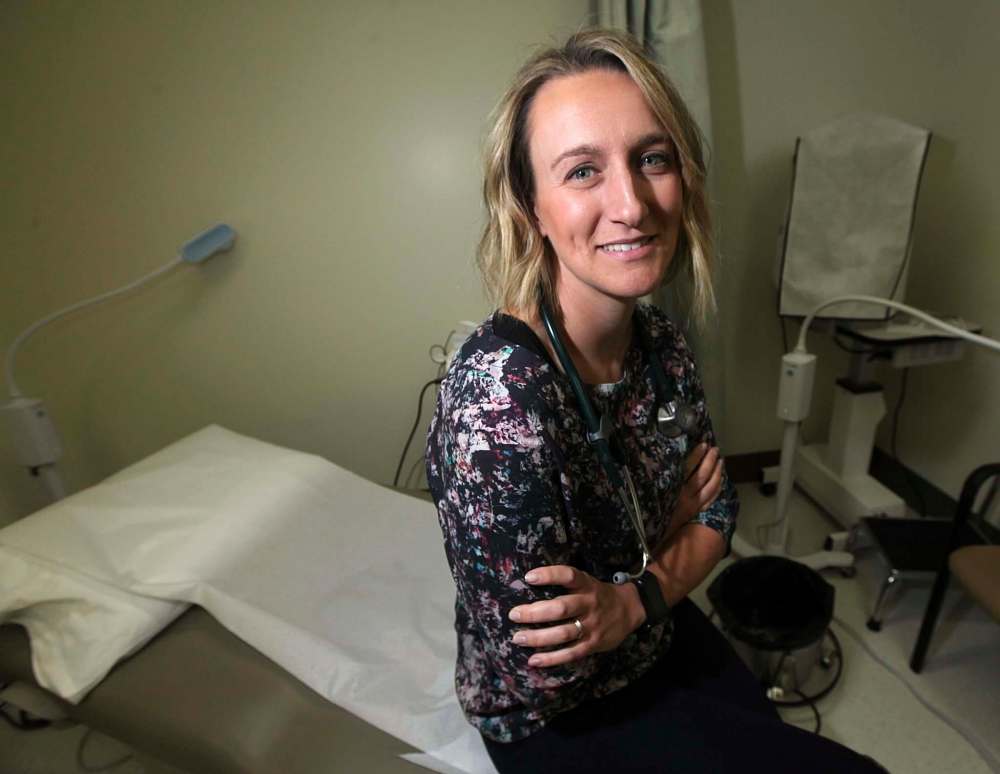
“Manitoba is the perfect example of what flattening the curve looks like,” said Dr. Joss Reimer, a public health physician at the University of Manitoba.
“We got a little bit more warning than many parts of Canada about what was coming. We had the opportunity to change our approach sooner than other places did.”
Eight people are currently in hospital, including five in intensive care. There are 105 active cases and 143 people have recovered from the virus. Five people have died.
Chief public health officer Dr. Brent Roussin has said Manitobans should remain “cautiously optimistic” about the low figures since the province is six weeks behind other hard-hit provinces. He has yet to hint at a timeline for when policies might be eased, saying only that the virus’s basic reproductive number — which is currently esimated at around 2.5 or 2.6 — needs to decrease below one before changes are made.
The province said 570 tests had been performed at Cadham Provincial Lab on Saturday, raising the number of tests conducted since early February to 19,752. In neighbouring provinces, Saskatchewan (315 current cases) has done nearly 24,000 tests while Ontario (10,578 current cases) has recorded upwards of 150,000.
Reimer noted Manitoba’s testing numbers aren’t as high as what would be ideal, but preliminary figures show Manitoba’s tally fares well, per capita, in comparison to other jurisdictions.
Early warnings aside, she said the province has benefitted from tight travel restrictions and citizens abiding by social distancing measures — and it’ll be key for those precautions to remain in place while the province ensures the health-care system is ready to handle a slow rollback of measures with personal protective equipment, space and a healthy workforce.
“If we do start to lessen things, it’s not that the risk is over; we’re trying to balance all of those risks and benefits. Not everything’s going to return to normal; we’re still going to be asking people to be really conscious of physical distancing, of handwashing and considering wearing masks.”– Dr. Joss Reimer
While unable to predict the future, she said Manitobans should expect some “back and forth” of tightened and loosened distancing policies as officials navigate life without a vaccine while they balance the public’s physical and mental health, and the economy.
“If we do start to lessen things, it’s not that the risk is over; we’re trying to balance all of those risks and benefits,” Reimer said, adding that, “not everything’s going to return to normal; we’re still going to be asking people to be really conscious of physical distancing, of handwashing and considering wearing masks.”
Roussin has made clear many times, most recently as Saturday’s briefing — no briefing was held Sunday — a mask protects others, not the wearer, and shouldn’t be seen as a tool for lessening compliance with stay-at-home orders.
Meantime, doctors are urging patients to continue to seek care for non-virus-related issues. They say they’re concerned about a drop in the number of patients who seek help for other ailments, and fear people are putting their health on hold during the pandemic.
“A lot of people think because of COVID-19, doctors are too busy to help with other medical concerns,” said Dr. Fourie Smith, a Winnipeg family physician and president of Doctors Manitoba. “That’s not the case. Doctors are not only available, they’re ready to help, in new ways.”
Doctors Manitoba recently surveyed more than 700 physicians and almost all of them reported a “concerning drop” in the number of people visiting their doctors to discuss their medical problems.
The group says it’s important for doctors to monitor chronic diseases and address new health concerns.
Many physicians are using phone or video appointments. If an in-person visit is needed, clinics are screening patients, regularly disinfecting common spaces and adhering to physical distancing measures.
“Your doctor can help you decide if you should seek care now, or wait,” Smith said.
maggie.macintosh@freepress.mb.ca
Twitter: @macintoshmaggie
Maggie Macintosh
Education reporter
Maggie Macintosh reports on education for the Free Press. Originally from Hamilton, Ont., she first reported for the Free Press in 2017. Read more about Maggie.
Funding for the Free Press education reporter comes from the Government of Canada through the Local Journalism Initiative.
Every piece of reporting Maggie produces is reviewed by an editing team before it is posted online or published in print — part of the Free Press‘s tradition, since 1872, of producing reliable independent journalism. Read more about Free Press’s history and mandate, and learn how our newsroom operates.
Our newsroom depends on a growing audience of readers to power our journalism. If you are not a paid reader, please consider becoming a subscriber.
Our newsroom depends on its audience of readers to power our journalism. Thank you for your support.
Maggie Macintosh
Education reporter
Maggie Macintosh reports on education for the Free Press. Originally from Hamilton, Ont., she first reported for the Free Press in 2017. Read more about Maggie.
Funding for the Free Press education reporter comes from the Government of Canada through the Local Journalism Initiative.
Every piece of reporting Maggie produces is reviewed by an editing team before it is posted online or published in print — part of the Free Press‘s tradition, since 1872, of producing reliable independent journalism. Read more about Free Press’s history and mandate, and learn how our newsroom operates.
Our newsroom depends on a growing audience of readers to power our journalism. If you are not a paid reader, please consider becoming a subscriber.
Our newsroom depends on its audience of readers to power our journalism. Thank you for your support.
Advertisement Advertise With Us
Advertisement Advertise With Us
History
Updated on Monday, April 20, 2020 9:28 AM CDT: Minor changes