

Teacher sick days spike in Seven Oaks

Advertisement
Read this article for free:
or
Already have an account? Log in here »
To continue reading, please subscribe:
Monthly Digital Subscription
$1 per week for 24 weeks*
- Enjoy unlimited reading on winnipegfreepress.com
- Read the E-Edition, our digital replica newspaper
- Access News Break, our award-winning app
- Play interactive puzzles
*Billed as $4.00 plus GST every four weeks. After 24 weeks, price increases to the regular rate of $19.95 plus GST every four weeks. Offer available to new and qualified returning subscribers only. Cancel any time.
Monthly Digital Subscription
$4.99/week*
- Enjoy unlimited reading on winnipegfreepress.com
- Read the E-Edition, our digital replica newspaper
- Access News Break, our award-winning app
- Play interactive puzzles
*Billed as $19.95 plus GST every four weeks. Cancel any time.
To continue reading, please subscribe:
Add Free Press access to your Brandon Sun subscription for only an additional
$1 for the first 4 weeks*
*Your next subscription payment will increase by $1.00 and you will be charged $16.99 plus GST for four weeks. After four weeks, your payment will increase to $23.99 plus GST every four weeks.
Read unlimited articles for free today:
or
Already have an account? Log in here »
Hey there, time traveller!
This article was published 01/03/2021 (1877 days ago), so information in it may no longer be current.
Teacher sick days are up in Winnipeg, with one school division reporting absences spiking 81 per cent over last year’s figures. Meanwhile, school administrators in several parts of the city have been taking less time off amid the COVID-19 pandemic.
Through a series of freedom of information requests, the Free Press obtained the total number of sick days or hours recorded, from autumn during the 2019-20 and 2020-21 school years, in the Winnipeg, Seven Oaks, Louis Riel and St. James Assiniboia school divisions.
The data include total illness-related absences, broken down by teachers, educational assistants and school administrators, between the start of September until the last day of December before the winter break.
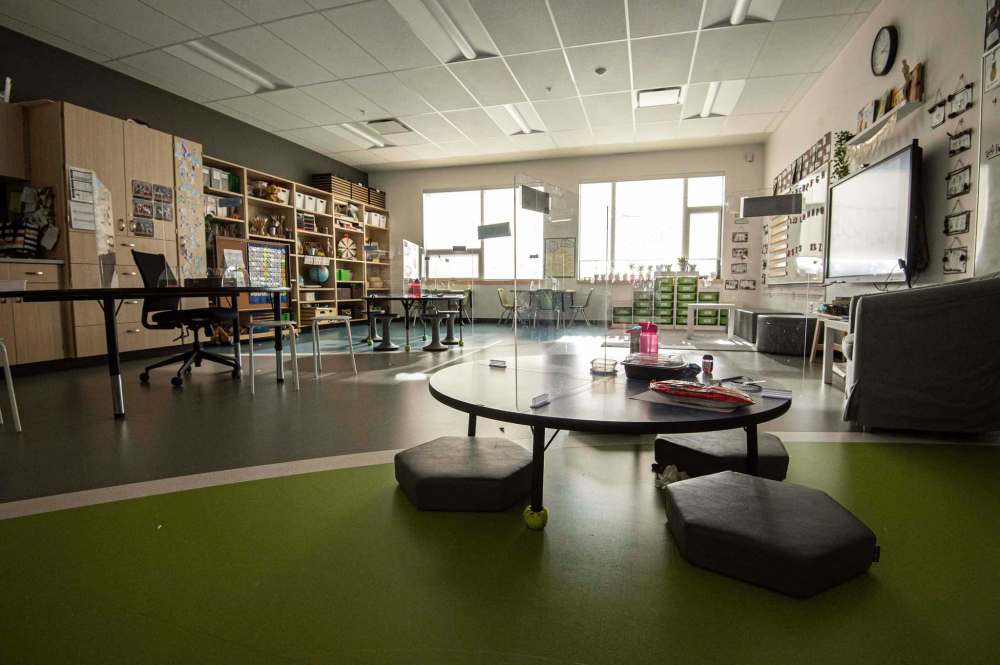
Seven Oaks recorded the highest increases in both teacher and educational assistant absences this year, up 81 per cent and 95 per cent, respectively.
On the other side of the spectrum, St. James Assiniboia had a 24 per cent increase in teacher sick days, while support staff in Louis Riel took 15 per cent more sick time off this school year than last.
Superintendent Brian O’Leary said Seven Oaks added five extra days to each of its employee sick leave banks for 2020-21 before the school year got underway.
“We wanted that really as a message to staff that we really did want people to stay home if they were symptomatic and to not hesitate,” O’Leary said, adding the spike in absences could also be attributed to the area having recorded a significant number of COVID-19 cases compared to elsewhere in the city.
Aside from typical sick days, school staff have taken time off this year to get tested for COVID-19, stay home with symptoms, and self-isolate when deemed a close contact of a positive case.
While all divisions reported increases in teacher and educational assistant time off, only Louis Riel has seen an increase in administrator absences.
In St. James Assiniboia, Winnipeg and Seven Oaks, school leaders’ sick days have dropped — by 51 per cent, 19 per cent, and seven per cent, respectively.
Cameron Hauseman, an assistant professor of education at the University of Manitoba who researches the emotional aspect of school leadership, said the figures are unsurprising, given existing research on how school leaders cope during crises.
“Principals, typically in times of crisis, will try to shield their staff from concerns and take on more work and potentially, put themselves at ill-being. A lot of that comes back to traditional notions of leadership,” Hauseman said. “It’s not exactly the most healthy strategy.”
Crises such as school shootings and suicides have huge emotional tolls on principals, who put in extra hours to manage situations, he said, noting the pandemic has resulted in time-consuming duties including contact tracing and designing public health protocols in schools, on top of existing administrative duties.
“The rate of change has been the biggest problem for principals — not knowing from week to week what’s going to happen,” said Rob Fisher, chairman of the Council of School Leaders.
Principal Ben Carr has experienced the hefty workload firsthand, but said he and other administrators are pushing through the stress and fatigue to make sure every school is safe and teacher absences are covered.

“Being away from your school for a day (during a pandemic) is really difficult,” said Carr, who works at Maples Met School.
To date, he has yet to take a full sick day for either physical or mental health reasons; in part, he said, because he’s been lucky not to have experienced any COVID-19 symptoms.
Carr added the absence trends likely reflect administrators typically spend less prolonged contact with students than other staff.

Meantime, Hauseman said he worries what the pandemic’s impact will be on principals’ mental health in the coming months.
People for Education, a public education advocacy organization in Ontario, surveyed 1,173 principals in that province in early 2021 to assess their well-being and recommendations to improve stress during the pandemic.
The findings show about half of the in-person and hybrid learning principal respondents felt their stress levels were not manageable, while 57 per cent of those at virtual schools said the same.
maggie.macintosh@freepress.mb.ca
Twitter: @macintoshmaggie
Maggie Macintosh
Education reporter
Maggie Macintosh reports on education for the Free Press. Originally from Hamilton, Ont., she first reported for the Free Press in 2017. Read more about Maggie.
Funding for the Free Press education reporter comes from the Government of Canada through the Local Journalism Initiative.
Every piece of reporting Maggie produces is reviewed by an editing team before it is posted online or published in print — part of the Free Press‘s tradition, since 1872, of producing reliable independent journalism. Read more about Free Press’s history and mandate, and learn how our newsroom operates.
Our newsroom depends on a growing audience of readers to power our journalism. If you are not a paid reader, please consider becoming a subscriber.
Our newsroom depends on its audience of readers to power our journalism. Thank you for your support.
Illness-related absences reported by teachers in fall 2019, 2020
Winnipeg School Division
2019: 7,373.43 days
2020: 10,462.09
Seven Oaks School Division
2019: 2,339 days
2020: 4,241
St. James Assiniboia School Division
2019: 1,798 days
2020: 2,232
Louis Riel School Division
2019: 4,329 days
2020: 5,534.5
Maggie Macintosh
Education reporter
Maggie Macintosh reports on education for the Free Press. Originally from Hamilton, Ont., she first reported for the Free Press in 2017. Read more about Maggie.
Funding for the Free Press education reporter comes from the Government of Canada through the Local Journalism Initiative.
Every piece of reporting Maggie produces is reviewed by an editing team before it is posted online or published in print — part of the Free Press‘s tradition, since 1872, of producing reliable independent journalism. Read more about Free Press’s history and mandate, and learn how our newsroom operates.
Our newsroom depends on a growing audience of readers to power our journalism. If you are not a paid reader, please consider becoming a subscriber.
Our newsroom depends on its audience of readers to power our journalism. Thank you for your support.
Advertisement Advertise With Us
Advertisement Advertise With Us
History
Updated on Monday, March 1, 2021 6:53 PM CST: Adds graphic