Italy

Italians altered city’s fabric

Stanislao Carbone 5 minute read Saturday, Aug. 25, 2012

Since their arrival in Winnipeg in the late 1800s, Italians have crafted and honed skills essential to meeting the challenges and demands of social and environmental pressures. They have demonstrated adroitness and creativity in negotiating their identities (adapting their value systems to the dictates of Canadian industrial life and cultural mores) in order to satisfy their moral, intellectual and economic needs.

This has not been an easy feat when one considers that at times they were defined as undesirables by a dominant Anglo-Protestant political and economic elite and corresponding world view that favoured immigrants from Great Britain and northern Europe. Rather than bystanders or passive actors in the sweep of history, Italians have been major protagonists in changing Winnipeg's social and cultural landscape.

The historian Roberto Perin noted that the history of Italians in Canada has been one of arrangiarsi, which means to fashion values and skills reflective of individual and collective needs and pivotal to addressing the vagaries, nuances and contradictions of the different phases in the emigration-immigration adaptation process. For those who decided to settle permanently in Canada, arrangiarsi was manifested in various areas such as the world of work. The workplace constituted an important arena of interaction with Canadian society; here they were to learn about the rules, values and norms of their new land and to meet immigrants from all over the world.

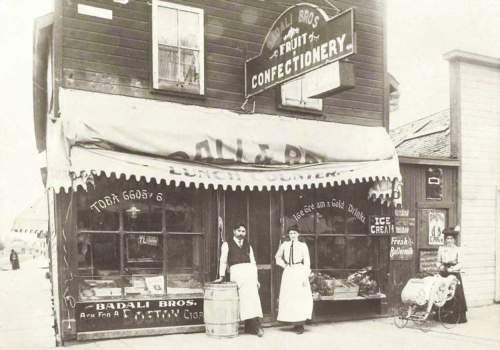
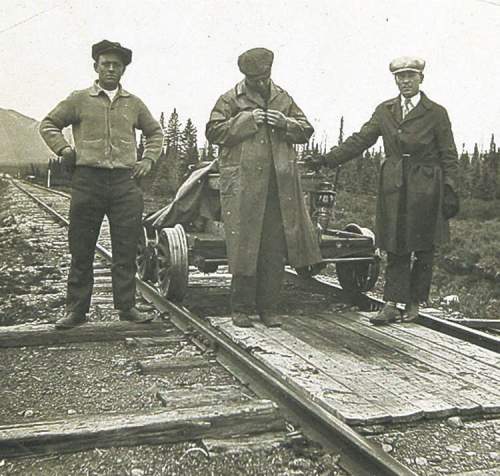
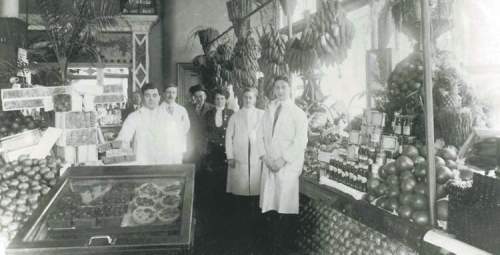
In the early 1900s, Winnipeg Italians, especially those from Sicily and Molise, operated numerous fruit and confectionery stores that dotted Winnipeg's economic landscape. Others plied various trades such as shoemaking, tailoring and tile making. Both the Canadian National and Canadian Pacific railways hired Italians to carry out a range of tasks such as laying tracks, carpentry, painting, welding, to name a few. The railway contractors, Giovanni and Vincenzo Veltri, played important roles in recruiting Italian labour for the Canadian Pacific Railway. Their work was continued by their son, Raffaele, who created the R.F. Welch Company out of Port Arthur, Ont., and was able to procure a lucrative contract from the Canadian government that resulted in the importation of hundreds of labourers mostly from the region of Calabria.

Advertisement

Advertise With Us

Weather

Apr. 4, 12 PM: 1°c Cloudy with wind Apr. 4, 6 PM: 1°c Cloudy with wind

Winnipeg MB

0°C, Cloudy

Full Forecast

‘A very dear place in the hearts of Italians’

By Cheryl Girard 5 minute read Preview

‘A very dear place in the hearts of Italians’

By Cheryl Girard 5 minute read Saturday, Aug. 25, 2012

A tidal wave of emigrants left Italy between 1880 and 1920 to escape starvation, malaria and never-ending poverty.

Hundreds of thousands streamed across the ocean. Sailing for several weeks on ships carrying hundreds of passengers herded together like cattle, many became ill from the stormy waters of the Atlantic.

A few were headed for Canada. Smaller numbers still were bound for Winnipeg. But by 1901, 147 people of Italian origin lived in Winnipeg, according to Stanislao Carbone, author of Italians in Winnipeg, and by 1921, 1,311 Italians lived here.

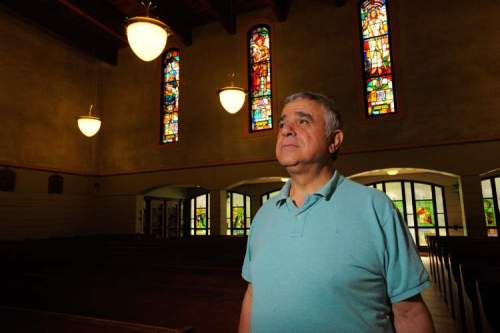
Before 1923, Winnipeg Italians worshipped at St. Mary's Cathedral and other parishes until eventually they found a place they could call their own.

Read
Saturday, Aug. 25, 2012

COLE BREILAND / WINNIPEG FREE PRESS
Holy Rosary pastor Sam Argenziano: 'We celebrate here the most important part of our lives.'

COLE BREILAND / WINNIPEG FREE PRESS
Holy Rosary pastor Sam Argenziano: 'We celebrate here the most important part of our lives.'

Solid as a Rocco

By Carol Sanders 4 minute read Preview

Solid as a Rocco

By Carol Sanders 4 minute read Saturday, Aug. 25, 2012

The iconic image of the Italian barber has been around since 1911 when Mary Pickford co-starred in the silent comedy, The Italian Barber.

More than a century later, audiences are still drawn to Italian barbers. YouTube has close to 1,000 clips of Italian men around the world, grooming guys and dispensing wisdom.

In Winnipeg these days, the Italian barber shop is alive and well -- but its days may be numbered.

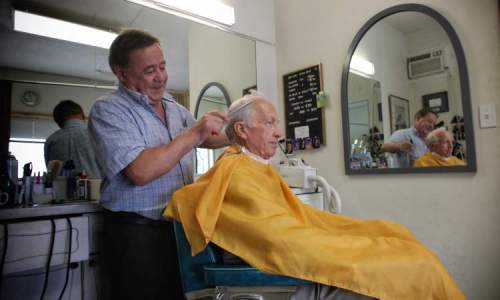
"The number of barbers is falling off," said barber Rocco Curatolo, owner of Rocky's Men's Hair Styling & Royal Crown Replacements.

Read
Saturday, Aug. 25, 2012

Mike Deal / Winnipeg Free Press
Rocco 'Rocky' Curatola, is one of a dwindling number of men keeping the Italian barbershop tradition alive and well in Winnipeg.

Mike Deal / Winnipeg Free Press
Rocco 'Rocky' Curatola, is one of a dwindling number of men keeping the Italian barbershop tradition alive and well in Winnipeg.

Garden of eatin’

By Carol Sanders 4 minute read Preview

Garden of eatin’

By Carol Sanders 4 minute read Saturday, Aug. 25, 2012

When the Garofalos bought a home in Crestview in the late '70s, their yard wasn't a feast for the eyes.

"When I came here there was a big lot," said Raffaele Garofalo.

More than 30 years later, every spare inch of the Italian-Canadian Winnipegger's backyard is growing something good to eat.

"It's heaven," said the retired chef who immigrated from Italy nearly 60 years ago.

Read
Saturday, Aug. 25, 2012

KEN GIGLIOTTI / WINNIPEG FREE PRESS
Every square inch of the Garofalos’ backyard grows something good to eat. Back in Italy, ‘we didn’t have a store close by. Walking, it would take half a day to get to town.’

KEN GIGLIOTTI / WINNIPEG FREE PRESS
Every square inch of the Garofalos’ backyard grows something good to eat. Back in Italy, ‘we didn’t have a store close by. Walking, it would take half a day to get to town.’

Cultural centre united city’s Italians

2 minute read Saturday, Aug. 25, 2012

In the early years, the Holy Rosary Church, which opened its doors in 1923, was undoubtedly the principal organizing force in the Winnipeg Italian community.

After the war, however, secular-based Italian organizations began to form, and by the late 1960s they were predominant.

But given the amalgam of working class and business owners and the various regional affiliations -- especially the division between those from Italy's north and south -- the community had become, bringing them together was no easy feat.

The Italian Canadian League of Manitoba took on the challenge in 1964.

Little-known facts about our Italian community

3 minute read Saturday, Aug. 25, 2012

Four enterprising immigrants from Sicily left their mark on Winnipeg by building the 1914 Olympia Hotel, now known as the Ramada Marlborough. The duo of Leonardo Emma and Giuseppe Panaro and the Badali brothers, Agostino and Giuseppe, started out operating fruit and confectionery stores. They joined forces to erect the opulent Gothic-style hotel on Smith Street, just north of Portage Avenue.

Industrious Italians rose from peasant roots and adapted to Canadian society

Carolin Vesely 19 minute read Preview

Industrious Italians rose from peasant roots and adapted to Canadian society

Carolin Vesely 19 minute read Saturday, Aug. 25, 2012

"The Italian, like the Irishman, is a bundle of contradictions. He is hot-headed and quick-tempered; yet he is good-natured, kind, obliging; he is gay, fun-loving, light-hearted: yet he takes the every-day duties of life as seriously as he takes religion; he is generous and yet will deny himself the necessities of life to save money. Hot-blooded, volatile, when compared with the Anglo-Saxon, artistic in temperament, industrious, easily influenced for good or bad, the Italian immigrant is an interesting addition to our population."

-- The Manitoba Free Press, Jan. 18, 1913


The first ones sent word back home the streets were paved with gold. That wasn't necessarily the case, but their indomitable spirit, strong work ethic and family devotion would raise Winnipeg's Italian immigrants above their peasant roots. They toiled in rail yards and factories, but they also opened grocery stores, tailor shops, restaurants and other businesses. From agrarian worker to proletariat to entrepreneur, they also introduced their new home to an Old World tableau of language, cuisine and customs.

Read
Saturday, Aug. 25, 2012

Courtesy Sena Badali
Joe Badai in front of his store on Portage and Smith 1901

Courtesy Sena Badali
Joe Badai in front of his store on Portage and Smith 1901

Amore intenso

By Ed Tait 5 minute read Preview

Amore intenso

By Ed Tait 5 minute read Saturday, Aug. 25, 2012

North Americans often call it "soccer" while most of the rest of the world refers to it as "football" or "futbol."

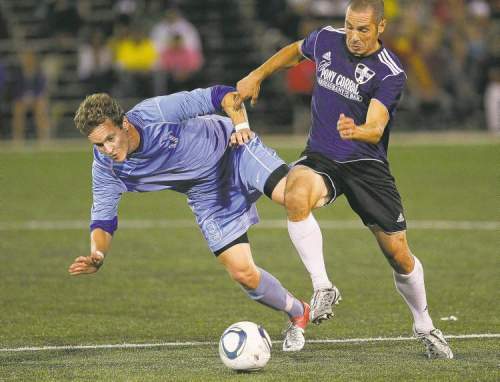
But Italians call it "calcio" and, quite frankly, it's more than just a game or a sport. It's more than just a passing fancy or something they'll stop and watch for a few minutes while channel surfing.

To an Italian, soccer -- calcio -- well, it means everything.

And so when you ask a Winnipegger of Italian descent to try to answer this very basic question: "Why are Italians so passionate about this game?" the answer can't possibly come in one sentence or even in a few hundred words. It's bigger than that. Much, much bigger.

Read
Saturday, Aug. 25, 2012

John Woods / Winnipeg Free Press

John Woods / Winnipeg Free Press

Tough life for an outsider

By Sam Loschiavo 4 minute read Preview

Tough life for an outsider

By Sam Loschiavo 4 minute read Saturday, Aug. 25, 2012

Early immigrants to Canada from Italy (1895 to 1930) constituted a cheap workforce, which contributed greatly to the Canadian economy. But the Italians, particularly southern Italians, were exposed to scorn, ridicule, ostracism and racial slurs by Canadian nativists, who considered immigration from eastern and southern Europe a social evil. Political leaders in Winnipeg wrote that "Italians were worthless as settlers," and anticipated trouble with this class of immigrant.

A minister in the Laurier government expressed his opinion on Italian immigration: "I don't want anything done to facilitate Italian immigration."

Differences in religious beliefs were probably as important as ethnicity in determining how immigrants were viewed.

Immigrants of Anglo-Saxon and northern European origin were warmly received and accepted by the dominant British element already established in Canada. Immigrants from countries in eastern and southern Europe who did not share the same traditions were not warmly accepted and did not as easily adjust to their new environment. They were pejoratively referred to as wops, dagos, greasers, spaghetti-eaters.

Read
Saturday, Aug. 25, 2012

SUPPLIED PHOTO
Italian railway workers in the 1920s in Canada.

SUPPLIED PHOTO
Italian railway workers in the 1920s in Canada.

From panino and olive oil to white bread, peanut butter

By Caterina (Bueti) Sotiriadis 6 minute read Preview

From panino and olive oil to white bread, peanut butter

By Caterina (Bueti) Sotiriadis 6 minute read Saturday, Aug. 25, 2012

You would be surprised how much Italian you know. You can thank the Italian language for cameo, replica, volcano, scenario, vista, malaria, casino and much more. If we enter the world of song, opera and operetta, orchestra, cello, soprano, piano, forte, adagio, allegro and fortissimo have all struck a tune. Then when we enter the culinary world of spaghetti Bolognese, macaroni, lasagne, pizza marinara, salami calabrese, pasta e faggioli, cappuccino, espresso, zucchini, risotto in a lovely ristorante, you know you are speaking Italian.

Not many realize that when most Italians arrived in Canada after the Second World War, they had the culinary awakening I had -- no sun-dried tomatoes, mozzarella or prosciutto, nor eggplant in olive oil on multi-grain bread. After 11 days of crossing the Atlantic by ship, the five-day journey by train from Pier 21 to the CN Rail station in Winnipeg, my mother, brother and I were introduced to the Canadian culinary extravaganza of white, stick-to-your-palate, spongy bread covered with an even stickier concoction called peanut butter. My mother saved our tastebuds from extinction by breaking out the capocollo and biscotto bread she had lovingly brought over upon her husband's request for savoury food.

When you make your delectable gastronomic purchases at De Luca's, Di Nardi's or the Calabrese Market, as you chomp into a panino stuffed with roasted red peppers and Italian sausage, do you think back to the Winnipeg of the late 1950s and '60s where little to none of this existed for you and me?

I lived in two culinary worlds as a young girl in Manitoba. We ate Italian at home and I ate "Canadian" outside. This dichotomy existed for many of us not only in our selection of foods as newly arrived immigrants. We spoke Italian and/or a Calabrese dialect in our home and English outside. We frequented an Italian church to hear our language and meet other immigrants like ourselves. We needed the reassurance a language and its culture can bring. Linguistic transition is not pleasant when you do not know what a person is mumbling or shouting or simply saying to you when it is not in your language. It at times sounds like gibberish with a tone or attitude. Turn the radio on to a foreign station, try listening to another language and tell me what they are saying the first time you hear it.

Read
Saturday, Aug. 25, 2012

SUPPLIED PHOTO
Winnipeg�s Olympia Cafe as it looked around 1913. It was owned by the Badali family, who were among the earliest Italian immigrants to Winnipeg.

SUPPLIED PHOTO
Winnipeg�s Olympia Cafe as it looked around 1913. It was owned by the Badali family, who were among the earliest Italian immigrants to Winnipeg.

Internment of Italians reflects broad cultural intolerance

By Stephanie Zirino 5 minute read Preview

Internment of Italians reflects broad cultural intolerance

By Stephanie Zirino 5 minute read Saturday, Aug. 25, 2012

The internment of Italian-Canadians is a dark stain on Canada's multicultural history. Though many are familiar with the injustices of the Second World War, few recognize the magnitude of the cultural intolerance that existed during those years. This is the story of one of those injustices.

After the First World War, fascism was on the rise in Europe. As the alliance between Mussolini and Adolf Hitler grew, so did the fear of their British adversaries. Consequently, Canadians felt the same suspicions and fears as their British partners. As suspicions grew, so did the intolerance of immigrants in Canada. Italians in Winnipeg became targets for suspicion and surveillance. In the years leading up to the Second World War, many Italian businesses were boycotted, Casa D'Italias were closed, meetings of groups such as the Sons of Italy were prohibited and church festivals outlawed. Italians became guilty by virtue of culture rather than crime.

On June 10, 1940, Canada declared war on Italy. Prime Minister Mackenzie King ordered the arrest and internment of any Italian who was suspected of sabotage or questionable activities. The prime minister used the War Measures Act of 1914 to suspend the civil liberties of Italian citizens.

As a result, between 600 and 700 Italians were arrested and detained in camps in Alberta, Ontario and New Brunswick. Upon arrival, Italians were given a navy-blue uniform with a red stripe along the side and a red circle on the back. The purpose of this target was to give the guards a place to shoot should an individual try to escape. While in the camps, many internees had their bank accounts looted, businesses closed and families abandoned. They were given inadequate living conditions and forced to work for 25 cents a day.

Read
Saturday, Aug. 25, 2012

DAVID LIPNOWSKI / WINNIPEG FREE PRESS archives
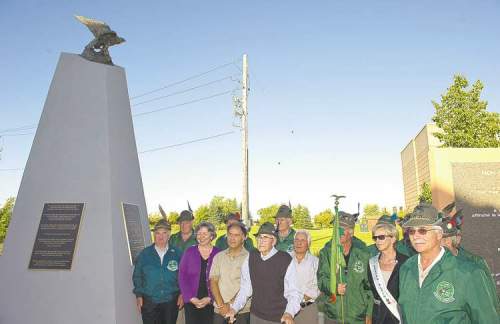
Members of Winnipeg's Italian community unveil a monument at the Caboto Centre dedicated to the unjust treatment of Italians during the Second World War.

DAVID LIPNOWSKI / WINNIPEG FREE PRESS archives
Members of Winnipeg's Italian community unveil a monument at the Caboto Centre dedicated to the unjust treatment of Italians during the Second World War.

A stitch in time

By Kevin Prokosh 6 minute read Preview

A stitch in time

By Kevin Prokosh 6 minute read Saturday, Aug. 25, 2012

It seems like a fitting refuge for an aging practitioner of a lost art.

Giovanni Lagioia's custom tailoring shop is located at 726 Osborne St., kind of. To find Gio, locate a narrow gap between buildings that leads to the rear, and cross the parking lot to a small, converted garage, the modest home for the last 20 years of one of Riverview's hidden treasures.


The ranks of the master tailors who can cut and hand-stitch a made-to-measure suit are thinning fast. And there are few apprentices willing to take up the needle in their place.

Read
Saturday, Aug. 25, 2012

KEN GIGLIOTTI / WINNIPEG FREE PRESS
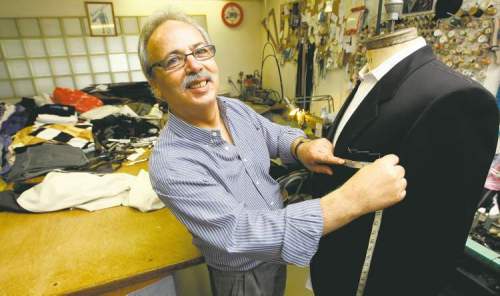
Giovanni Lagioia at his Osborne Street tailor shop: 'I want my customers to feel like a million bucks. You shouldn't feel like you have a suit on.'

KEN GIGLIOTTI  / WINNIPEG FREE PRESS 
Giovanni Lagioia at his Osborne Street tailor shop: 'I want my customers to feel like a million bucks. You shouldn't feel like you have a suit on.'

The Godfather of Bocce

By Jeff Hamilton 4 minute read Preview

The Godfather of Bocce

By Jeff Hamilton 4 minute read Saturday, Aug. 25, 2012

A family man. A restaurant owner.

These are the two titles Joe Grande, owner of the local Italian eatery Mona Lisa, likes to go by.

However, when talking with him at his Corydon Avenue restaurant he opened 30 years ago, another name seems fitting.

The Godfather of Bocce.

Read
Saturday, Aug. 25, 2012

KEN GIGLIOTTI / WINNIPEG FREE PRESS
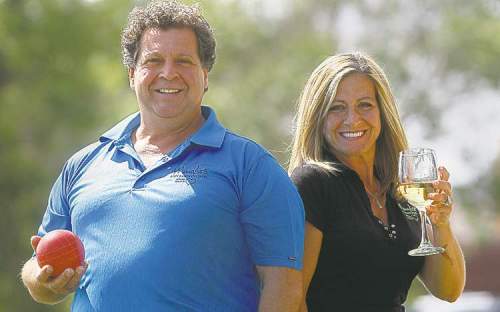
Joe Grande and his sister, Marilena Moccia: 'When we eat, we eat with passion. When we play bocce, we play with passion.'

KEN GIGLIOTTI  / WINNIPEG FREE PRESS
Joe Grande and his sister, Marilena Moccia: 'When we eat, we eat with passion. When we play bocce, we play with passion.'

Our gift to you — a joy for life

By Joe Bova 5 minute read Saturday, Aug. 25, 2012

Italians have trickled into this part of the world since Manitoba became a province. But it was not until the 1950s and early 1960s when that trickle became a flood as the tired and the poor of Italy came here to build our railroads, our cities and work in the garment industry.

These were not men and women looking for freedom, for they had plenty of that in their home country. They came for a better life for themselves and their families. For the most part they were uneducated, but they were a proud lot who knew well who their forefathers were and the contribution they had made to the world. And because they loved and missed what they had left behind, they went on to create "Little Italy" districts in every corner of the world they migrated to.

It was as if they willed to transplant to this world all they had left behind, just as they had been uprooted and transplanted here. First came the grocery store, for how could you live without pasta? Second came the church, for how could you live without faith? Then came the pizzeria, gelati shops, travel agencies and all the other professional and commercial services that render a community whole.

In Winnipeg, our Little Italy found its genesis around Mr. Nucci's grocery store. It was there in the early 1960s that Italians convened every Sunday morning to listen to a short-wave radio report on the final scores of the Serie A Soccer League in Italy. We had come to a strange land with a strange language, strange foods and even stranger customs. Here in our Little Italy on Corydon Avenue, we felt a little more at home. A little more connected to our own reality. A little better rooted to the ground.
Food, folks, fun… and philanthropy

By Kevin Rollason 3 minute read Preview

Food, folks, fun… and philanthropy

By Kevin Rollason 3 minute read Saturday, Aug. 25, 2012

Italians love good food and fellowship, and a group of local Italians has been putting those loves together to serve up philanthropic efforts for several years.

The Order Sons of Italy's Garibaldi Lodge, the first lodge of the international order to be organized in Manitoba when it was created in 1984, has donated hundreds of thousands of dollars through the years, thanks to the hard work of their 100 members.

President Justin Bova said most funds are raised through its annual gala dinner.

"Our main goal is philanthropic, which not only benefits the Italian community, but others," Bova said.

Read
Saturday, Aug. 25, 2012

WAYNE GLOWACKI/WINNIPEG FREE PRESS
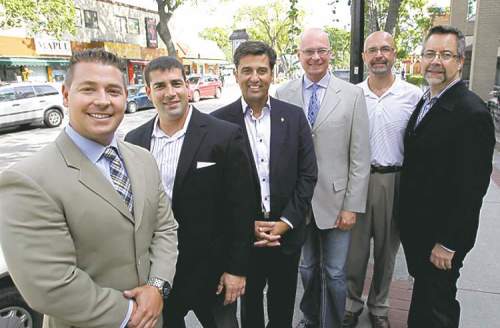
From left: Lodge president Justin Bova with members David Bueti, Lou Caci, Tom De Nardi, Cosmo Racano and John Giavedoni. 'When you look at your last name, you should know what it means.'

WAYNE GLOWACKI/WINNIPEG FREE PRESS 
From left: Lodge president Justin Bova with members David Bueti, Lou Caci, Tom De Nardi, Cosmo Racano and John Giavedoni. 'When  you look at your last name, you should know what it means.'

One small Italian town, one huge building boom

By Murray McNeill 4 minute read Saturday, Aug. 25, 2012

One little town in Italy has put its mark on the lives of thousands of Winnipeg families who bought a new home over the last half century.

That's because four of the city's home-building companies -- A & S Homes, Gino's Homes, Artista Homes and KDR Design Builders Inc. -- trace their roots back to the southern Italian town of San Roberto.

A & S, Gino's and Artista were all founded by men who grew up in San Roberto and immigrated to Winnipeg in the 1960s.

And KDR was founded by the daughter and son-in-law of Gino's founder Gino Cotroneo.

LOAD MORE