German resort rich with sports history
Garmisch-Partenkirchen mostly known for winter activities, but it's also a summer playground
Advertisement
Read this article for free:
or
Already have an account? Log in here »
To continue reading, please subscribe:

Digital Subscription
One year of digital access for only $205*
- Enjoy unlimited reading on winnipegfreepress.com
- Read the E-Edition, our digital replica newspaper
- Access News Break, our award-winning app
- Play interactive puzzles
*First annual payment billed as $205.00 + GST for one year. This annual subscription will automatically renew at $233.00 + GST every 52 weeks (10% off the regular annual price of $259.35). Offer available to new and qualified returning subscribers only. Cancel any time.
To continue reading, please subscribe:
Add Free Press access to your Brandon Sun subscription for only an additional
$1 for the first 4 weeks*
- Enjoy unlimited reading on winnipegfreepress.com
- Read the E-Edition, our digital replica newspaper
- Access News Break, our award-winning app
- Play interactive puzzles
*Your next Brandon Sun subscription payment will increase by $1.00 and you will be charged $17.95 plus GST for four weeks. After four weeks, your payment will increase to $24.95 plus GST every four weeks.
Read unlimited articles for free today:
or
Already have an account? Log in here »
Hey there, time traveller!
This article was published 28/07/2018 (2958 days ago), so information in it may no longer be current.
GARMISCH-PARTENKIRCHEN, Germany — Whenever I would hear its name, I immediately think about sports events that have been held there. Working in sports for over three decades, I’d learned how to say it and how to spell it. Now that I’ve had the pleasue to visit it, I’ve also learned it’s place of many tales — some sports stories and some not. For example:
It’s often described as ‘one of the most famous curses in curling history.’ Frankly, I’d never heard of any curses in curling. In baseball, I’d heard of the Curse of the Bambino and the Curse of the Billy Goat — both broken now by the way. In hockey, there’s the curse of Bill Barilko that lives on — although Leafs fans hope John Tavares may finally help the NHL team break that one.
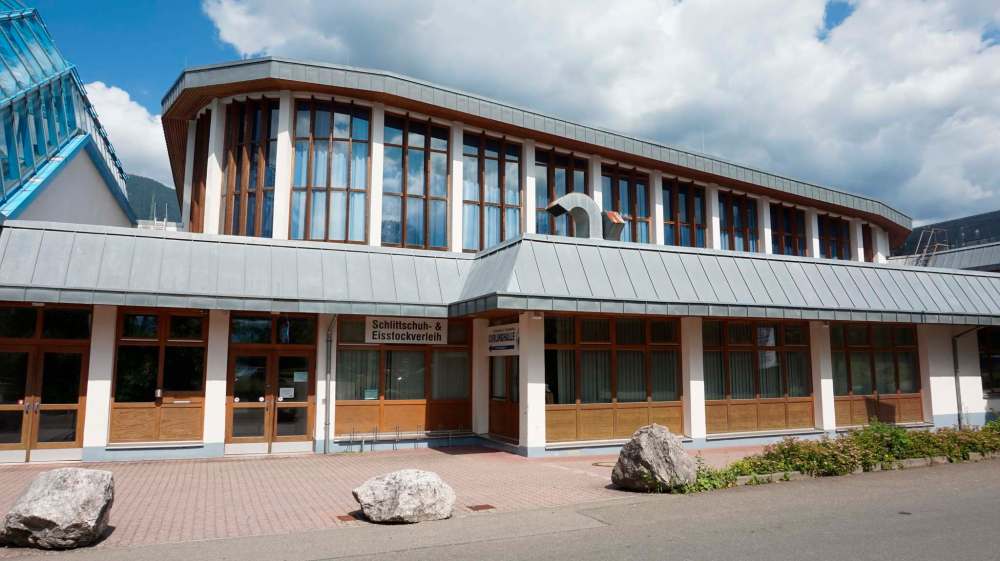
Anyways, I’m not sure what the other famous curling curses are — no luck finding those — but here I am standing in front of a curling rink in the Bavarian Alps and this is where it all happened; the Curse of LaBonte. Had no intention of tracking down this tidbit of information, but my stellar news judgement (haha) tells me the folks back home will enjoy this little story to introduce a travel yarn on the area.
So here it is:
It’s the 1972 Air Canada Silver Broom (I know: remember when they used to call it that?!) and Winnipeg’s Orest Meleschuk is playing the American rink skipped by Robert LaBonte in the final. Undefeated to this point in the event, Meleschuk is down two — with the hammer — playing the 10th end. With his final stone, the Big O made a hit on the US shot rock and rolled to the eight-foot for what looked like two points and a tie game. The Americans thought otherwise — believing they still had second shot — and started to celebrate a victory. While Team Canada third Dave Romano was still investigating which rock was second shot, LaBonte jumped in the air to celebrate and then slipped and accidentally kicked the Canadian stone. Since LaBonte had moved the rock closer than the American rock, Canada was awarded two points in the end. Meleschuck then stole another point in the extra end to win the championship after LaBonte was heavy with a final stone draw for the win.
It was later said LaBonte put a curse on Canada, because we didn’t win another world title until 1980.
I’m not sure seven years without a title constitutes a curse — ask the Red Sox; the Cubs and the Leafs — however, the GP curling rink did not provide a lot of good fortune for Winnipeg curlers after Meleschuk’s victory, so perhaps there was some lingering bad karma.
In 1992, Brier champion Vic Peters finished atop the round-robin standings with a 7-2 record only to be ousted in the semis when Scotland’s Hammy McMillan made an ‘around the horn’ takeout to score three in the eighth end en route to a 4-3 victory. On the women’s side, Scotties champ Connie Laliberte struggled in the round-robin to a 5-4 record and was eliminated in the semis by eventual champion Sweden.
Northern Ontario’s Al Hackner had better luck for Canada at the 1982 men’s world in Garmisch-Partenkirchen, winning gold as Meleschuck had done in ’72.
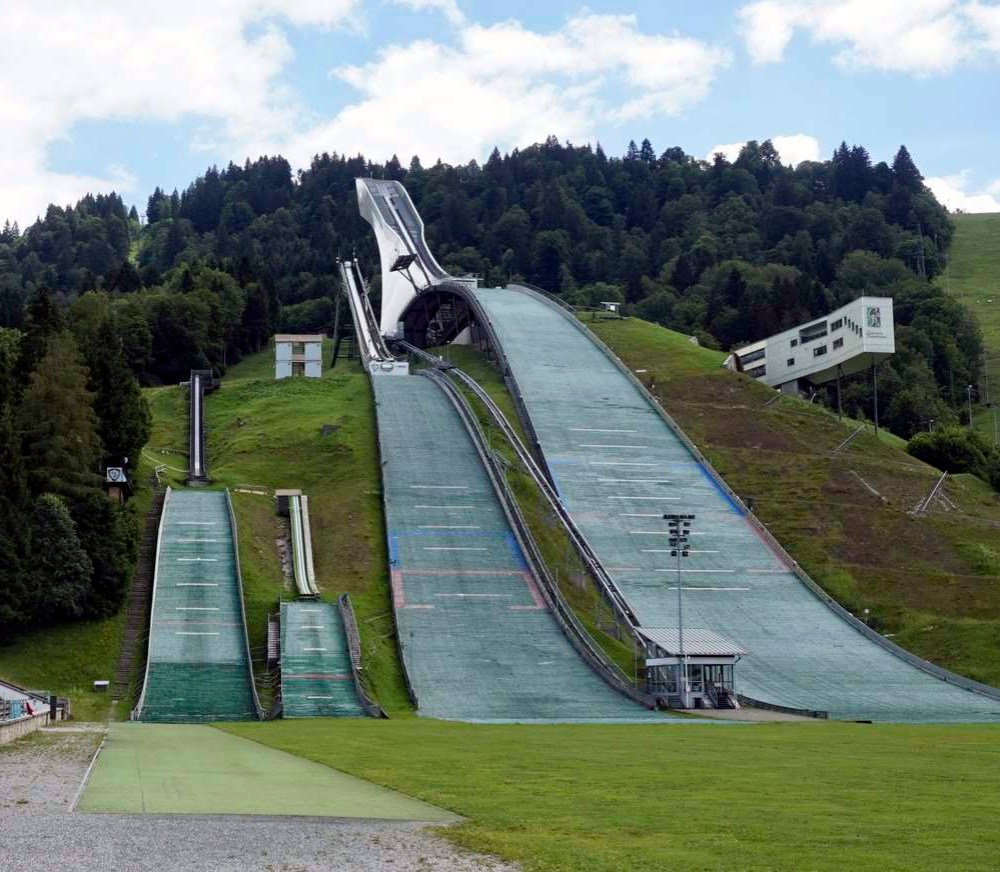
Of course, Garmisch-Partenkirchen is not just notable in the sports world for its curling events. World Cup ski jumping is held here regularly — the legendary Kandahar downhill is always considered one of the World Cup’s toughest tests; and the area hosted the 1936 Winter Olympics — a notable year in Olys history and the first time Canada did not win gold in men’s ice hockey.
After Berlin was awarded the 1936 Olympic Games, Germany exercised its right to also host the Winter Games, choosing the Bavarian resort of Garmisch-Partenkirchen — two towns on either side of the of the River Partnach united by an Adolph Hitler decree. The International Olympic Committee was going to pass over Germany as the host, because there were not enough hotel rooms in the host town, so Hitler forced the unification of Garmisch and Partenkirchen to create a larger town, which would be more appealing to the IOC.
The Games were officially opened by Adolph Hitler — whose Nationalist German Worker’s Party was headquartered in Bavaria — from the deck of a restaurant that still stands today at the base of the ski jumping site.
They would be the last Winter Games for 12 years. The 1940 Games were scheduled to be contested in Japan, but were revoked from that nation after it invaded China. The IOC then decided to take the ’40 Games back to GP, but that idea was also scrapped after Germany invaded Poland in 1939.
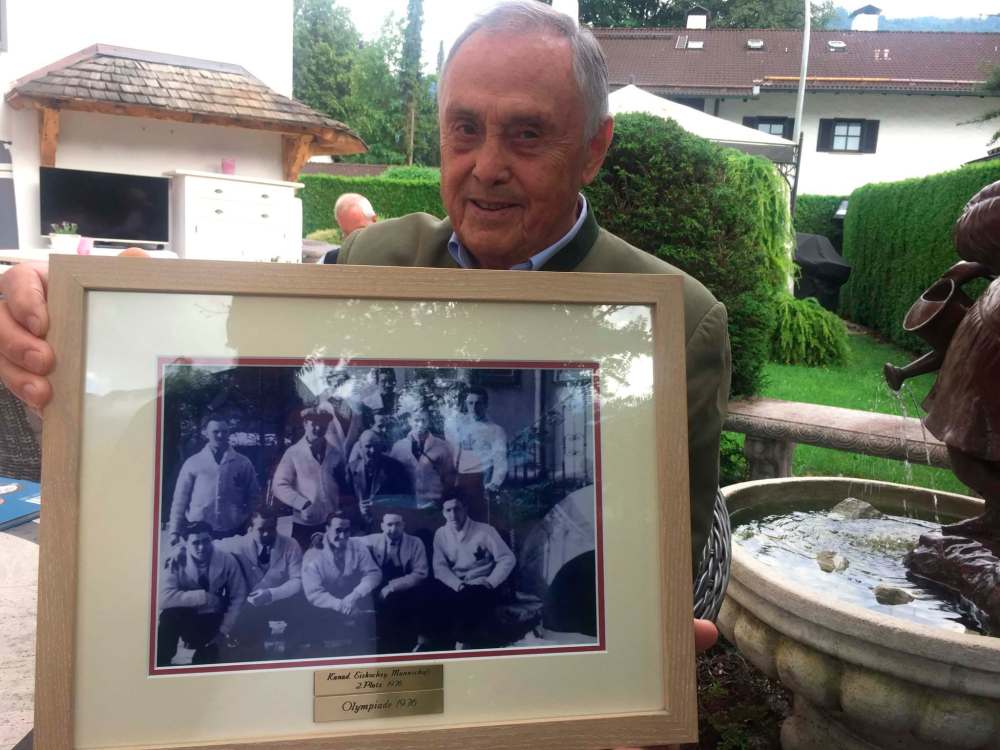
Peter Staudacher was a young lad of seven when the 1936 Olys were held in his hometown. His family owned and operated a local hotel where the Canadian hockey team was making its headquarters. Sitting over an iced tea on the sunny patio at the Staudacherof on a warm day in late June, Peter lights up when he recalls interacting with the Canadian lads.
“They were heavy favourites,” he recalls. “It was very exciting to have them staying with us,” he says.
But in a monumental upset, the Port Arthur Bearcats were defeated 2-1 by Great Britain in the semifinals. The loss carried over to the final round, giving the team from Great Britain a lead in the standings they held on to with a 0-0 tie against the USA.
Canada unsuccessfully protested the composition of the British team because nine of the 10 British-born players had moved to Canada as children where they learned to play hockey. The team also included Winnipeg-born Gordon Dailey, who played in England. There was some questioning whether the dual citizens had properly transferred to Great Britain. The issue was even raised in Canada’s House of Commons.
The silver was Canada’s only medal of the Games.
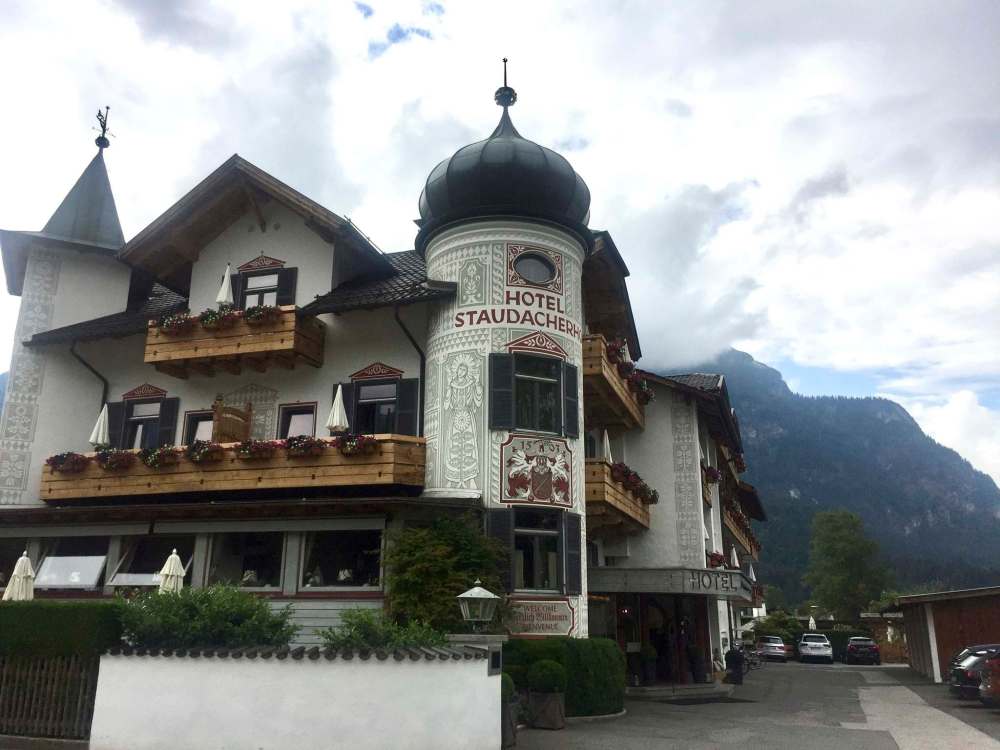
The Staudacherof is steeped in a family history of innkeepers, dating back around 300 years with its roots in Tyrol, Austria.
As early as the 18th century, Johann B. Staudacher ran the Romisch Deutscher Kaiser Inn in Staras/Tyrol and his son, Johann Josef, had Emperor Franz-Josef of Austria as his guest in 1884. Johann’s son — Franz-Josef Staudacher — married an innkeeper’s daughter from Garmisch and bought an ornate villa as a family residence in 1907. Later, as city folk started to visit the area for vacations, the estate became a guesthouse and the Staudacherhof was born.
During the Second World War, the house was used as a nursery — children from the cities were sent to it and numerous refugees sought refuge at it. In the 1960s, it was expanded into the 4-star Staudacherhof Superior Wellness Residence.
In 2008, it was turned over to Peter Jr. and his wife Dagmar, who added a whirlpool; swimming pool; and five saunas (including one in the garden that has a panoramic view of the mountains). Set in a quaint Garmish neighborhood, the Staudacherhof is an old-world place to stay with many modern luxuries. The complimentary afternoon snacks are delightful.
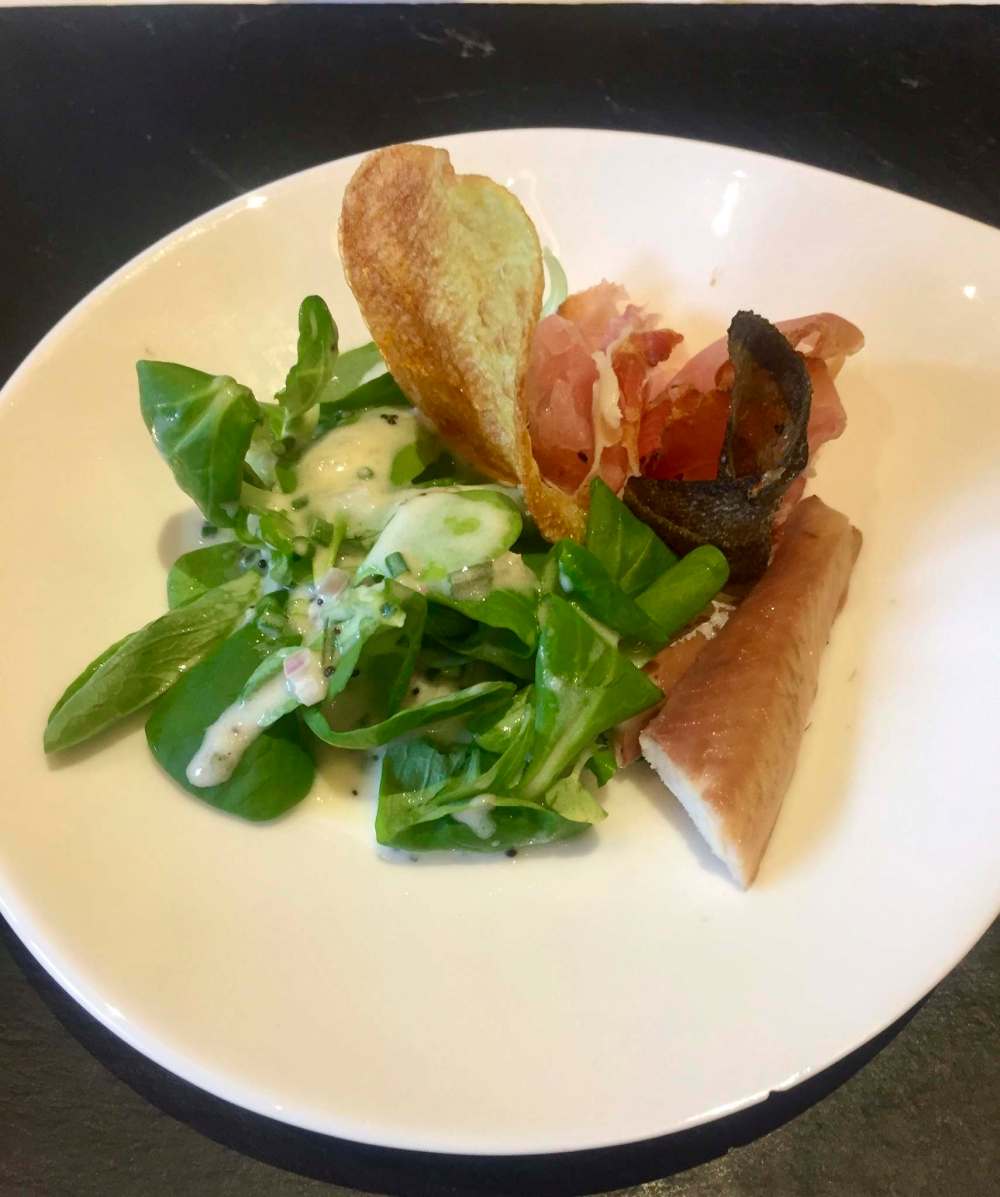
Recently, they’ve incorporated Ayurveda — a system of health and wellness that is estimated to be 5,000 years old with roots in India — into their daily program. Peter Jr. has also patented the term ‘Bayurvedic’ to describe a dining experience that combines Bavarian specialties with an Ayurvedi touch that’s designed to promote harmony of mind, body and soul.
My evening of ‘Bayurvedic’ cuisine included a corn salad with potato dressing and a smoked fillet of char; cream of cauliflower soup with vanilla (perhaps I’ve mentioned this before, but vanilla goes with everything, right?); roasted fillet of trout with fennel vegetables, juniper foam and spiced rice; and a dessert of coconut wanna cotta with orange compote.
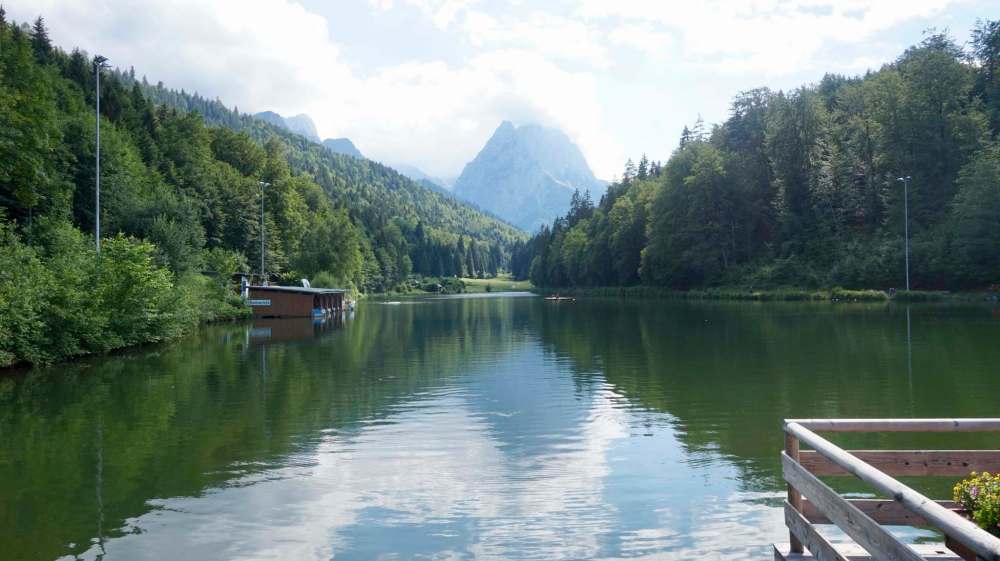
There are a number of 1936 Olys sites to see in GP. The rink where the hockey finals were played no longer stands, but you can take an amazing stroll around the lake where round-robin games were contested. That’s correct — the games were played outdoors. The figure skating events were also held on the frozen outdoor lake and it was there that Sonje Henie won her third straight gold medal. Controversy also surrounded Henie at the GP Games — over her relationship with Hitler and other high-ranking Nazi officials. The Norwegian skater greeted Hitler with a Nazi salute at the Games and later accepted an invitation to lunch with him at his resort home in nearby Berchtesgaden.
Garmisch-Partenkirchen does not shy away or hide from the darker side of its history. There is even a museum at the current ski jumping facility called Die Kehrseite der Medaille (the dark side of the medal) that shows how the Nazi regime exploited the Olympic spirit for its own interests — attempting to depict a peaceful image of Germany to the world. One display shows how anti-Semitic signage around Garmisch-Partenkirchen was removed leading up to the Games and how the town council delayed an order to expel all Jews from the area.
The folks in GP — like many places in Germany you will visit — want to look honestly at what happened prior to and during the Second World War to ensure it never happens again.
Winter sports are of course an attraction in Garmish-Partenkirchen, but it is very much a summer playground as well.
It has 300 kilometers of signposted hiking paths; 21 mountaineering and climbing routes; 453 kms of cycling and mountain biking trails; wild water for paddling, rafting and canoeing; and mountain lakes for swimming and boating.
It has quaint medieval-type streets and approximately 600 shops that range from local bakeries to original Bavarian costumes, arts and handicrafts to designer boutiques.
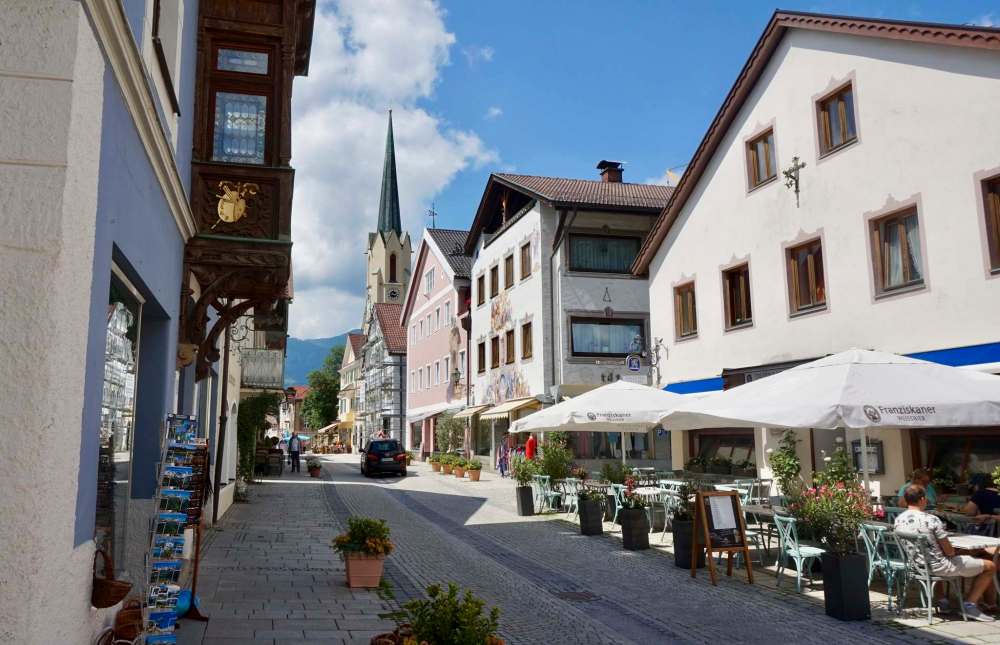
Be sure to take a stroll down historic Ludwigstrasse in Partenkirchen where you can admire the magnificent Luftlmalerei mural paintings on the facades of the buildings; pop into one of the country’s top chocolate shops — Chocolaterie Amelie; or enjoy delactable homemade gigantes (giant beans) and dolmadakia (rice wrapped in vine leaves) for dinner at Taverna Hellas — one of the best Greek restaurants I’ve come across.
Garmisch-Partenkirchen also has one of the coolest things I’ve ever done that I really didn’t want to do.
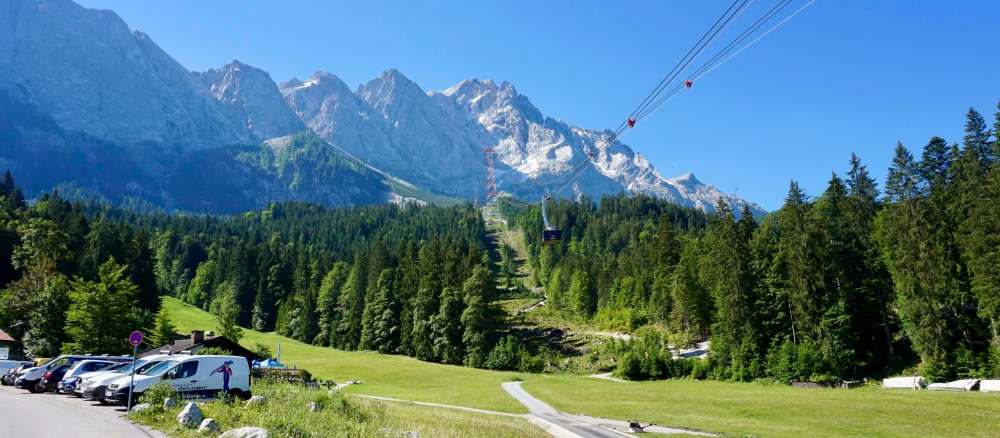
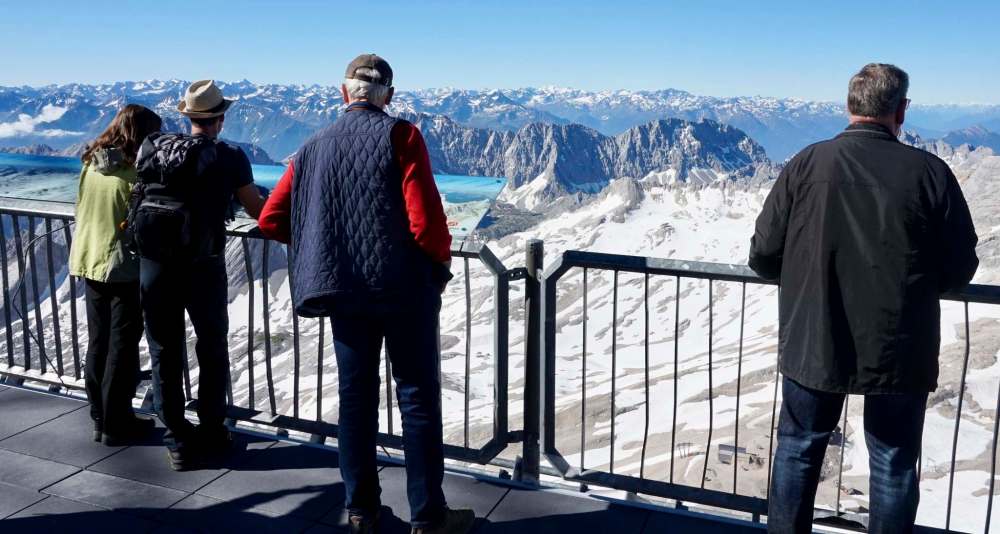
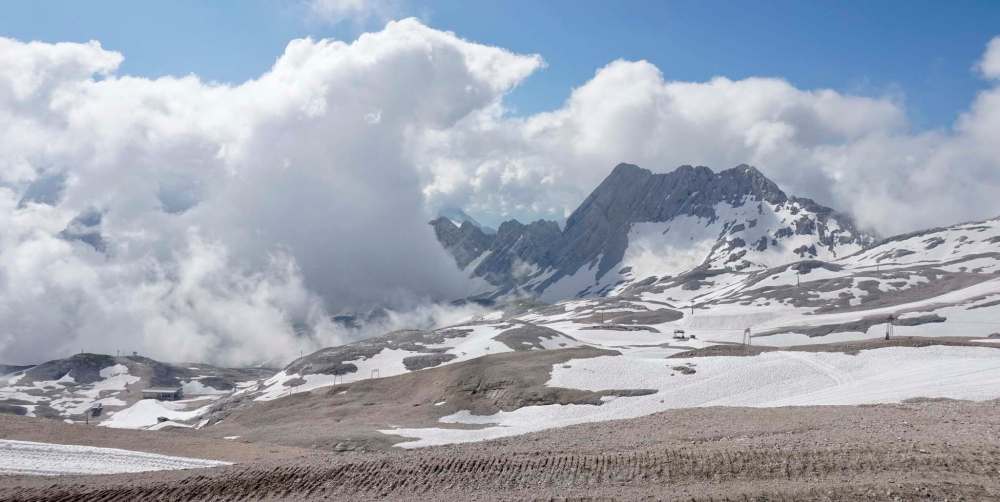
Known as the Top of Germany, the Zugspitze is a nearly 3,000-metre high mountain that is the nation’s highest elevation. It has a trio of glaciers and a summit station that offers a unique 360-degree panoramic view of more than 400 alpine peaks in four different countries — Germany; Austria; Switzerland; and Italy.
Full disclosure: I’m not always crazy about heights. I love the idea of them, but I sometimes get this weird vertigo sensation that makes me feel like I wanna jump. I must have watched a dozen YouTube videos of the cable car ride before my trip and several again the day before the visit. Pft — piece of cake. So smooth and comfortable, I took the cable car both up and down from the top of the mountain — twice.
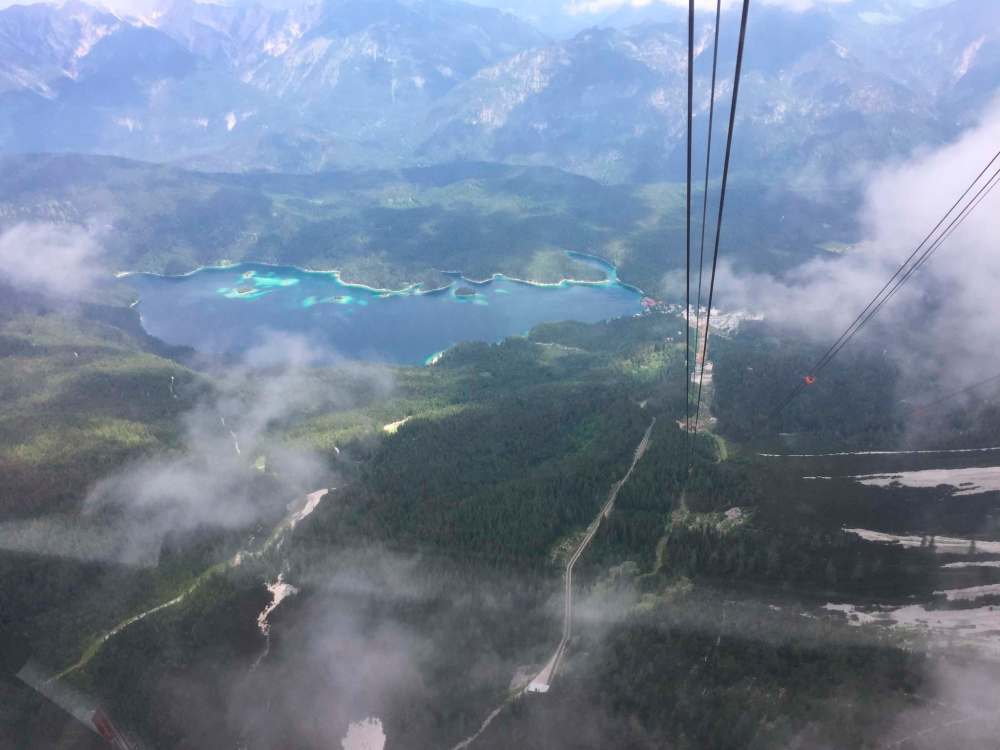
The new Zugspitze cable cars — opened in December, 2017 — have floor to ceiling windows and can hold up to 120 passengers. Don’t worry, they don’t cram you in. The journey passes a 127-metre-high tower, currently the world’s highest for an aerial tramway, covering the world’s biggest total height difference in one section of 1,954 meters and the world’s longest unsupported span of 3,213 metres. The view of the Alps foothills and idyllic Eibsee Lake at the base of the Zugspitze are spectacular and the view of the mountain side as you get closer and closer to the top is breathtaking.
The viewing platform at the top — a little unnerving if you have any issue with heights (stand a few steps back from the rail) — was extraordinary on the perfectly clear day I visited. Some days the view can be not as great due to overcast skies — there is live webcam from the top that will give you a preview of what you will see at the top prior to shelling out 56 Euros for the return trip in the cable car.
During my visit in late June, last-minute work was being done on the spectacular new restaurant — Panorama 2962 — that opened earlier this month. Seating 450 diners inside and approximately 850 outside, the restaurant will offer typical specialities from the Alpine region, garnished with rich panoramic views.
I’m sorry to have missed the a chance to sit and gaze at the Alps from the new dining area; one of many reasons to hopefully visit the area again some day.
Steve’s trip to Garmisch-Partenkirchen was supported by the German National Tourist Office in Toronto.
How to get there
I picked up a BMW in Munich (more on that in a story planned for the Autos section later this summer) and drove the amazing 125 kilometres to Garmisch-Partinkirchen. You can rent a Bimmer, by the way, from the Welt in Munich or find another car if you like. There is also train service to the area from Munich, but to get around as see the sites in the area you’re best to have a car. And folks, driving German roads and the Autobahn is an experience in itself!
Flights to Munich from Winnipeg generally only involve one stop; Toronto seems the easiest to me using Air Canada/Lufthansa, but there are also connections though Chicago and Minneapolis.
Day trips
There are many half-day and day trips to take from Garmisch-Partenkirchen. Here are a few:
Munich (one hour): A trip to the Bavarian capital could include visits to Marienplatz — the city’s most famous square and home to the thrice-daily performance of the Glockenspiel; Englischer Garten, one of the world’s largest urban parks; the BMW Welt and Museum; or the Viktualienmarkt, a large outdoor market with generations of history and a popular place for foodies;
Innsbruck (one hour): in the Austrian Alps, a great drive from GP where you can visit other Olys sites; stroll around Old Town; or ride the new Nordkettenbahnen — a funicular that begins in the heart of the city and carries you up to Hungerburg, where cable cars take you farther up to Seegrube and on to 2,300-metre-high Hafelekar;
Neuschwanstein Castle (one hour): Built in the 19th century by King Ludwig II of Bavaria, also known as the Fairytale King, it is believed to be what inspired Walt Disney to create the Magic Kingdom;
Oberammergau (20 minutes): a quaint and picturesque alpine village that is known for staging the passion play every 10 years since 1634 as a result of a vow village inhabitants made to asking they be spared from the effects of the bubonic plague sweeping the region. A man traveling back to the town for Christmas had accidentally brought the plague with him and it began spreading throughout Oberammergau. After the vow was made, not another inhabitant of the town died from the plague and the town members that were still suffering from the plague recovered. The next staging will be in 2020 — the play is now performed in years ending with a zero. There is an abundance of gelaterias in the village — I was advised the best one to visit was Paradiso-Giordano Eiscafe; like the village, it was paradise.