

Old school tough: Fred Nels Van’t Hull played for Packers, went to war and then battled NFL and polio
Advertisement
Read this article for free:
or
Already have an account? Log in here »
To continue reading, please subscribe:
Monthly Digital Subscription
$1 per week for 24 weeks*
- Enjoy unlimited reading on winnipegfreepress.com
- Read the E-Edition, our digital replica newspaper
- Access News Break, our award-winning app
- Play interactive puzzles
*Billed as $4.00 plus GST every four weeks. After 24 weeks, price increases to the regular rate of $19.95 plus GST every four weeks. Offer available to new and qualified returning subscribers only. Cancel any time.
Monthly Digital Subscription
$4.99/week*
- Enjoy unlimited reading on winnipegfreepress.com
- Read the E-Edition, our digital replica newspaper
- Access News Break, our award-winning app
- Play interactive puzzles
*Billed as $19.95 plus GST every four weeks. Cancel any time.
To continue reading, please subscribe:
Add Free Press access to your Brandon Sun subscription for only an additional
$1 for the first 4 weeks*
*Your next subscription payment will increase by $1.00 and you will be charged $16.99 plus GST for four weeks. After four weeks, your payment will increase to $23.99 plus GST every four weeks.
Read unlimited articles for free today:
or
Already have an account? Log in here »
Hey there, time traveller!
This article was published 30/06/2017 (3205 days ago), so information in it may no longer be current.
It was a simpler time, when football players donned leather helmets, wore woefully inadequate padding and suffered injuries medical science had few effective remedies for.
They were old school tough and Fred Nels Van’t Hull was one of them.
Born in Winnipeg on Aug. 21, 1920, Van’t Hull, a descendent of Dutch and Swedish ancestors, was also a pioneer on the gridiron during the early years of professional football in the 1940s.
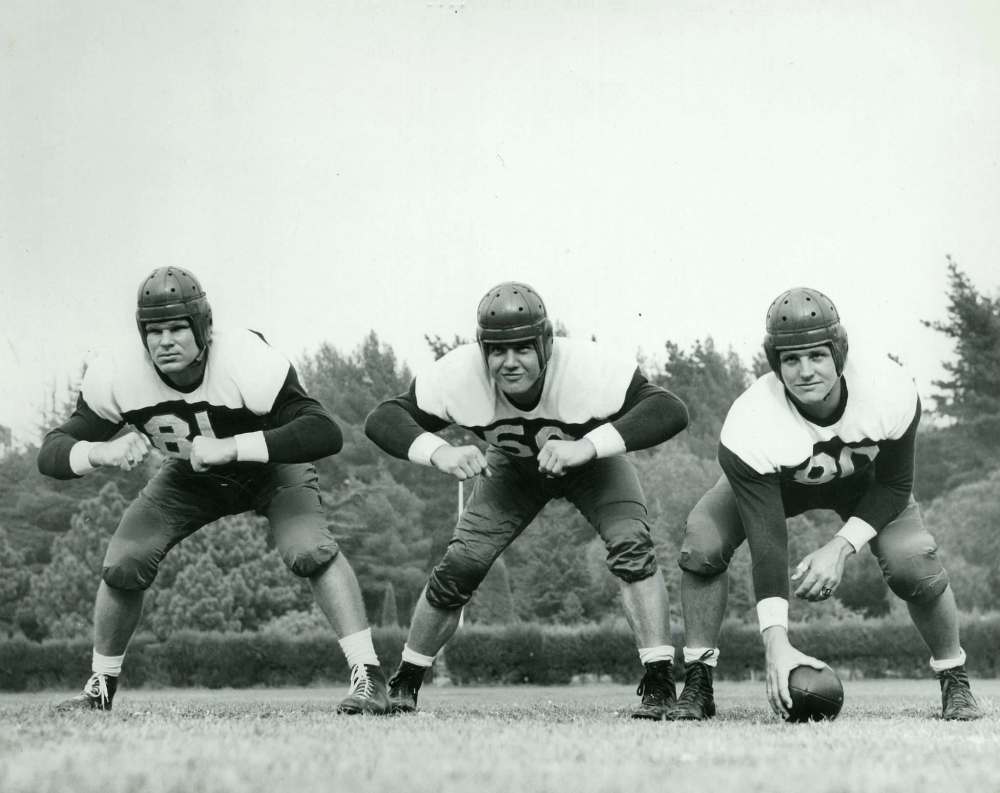
Although he moved with his family from a farm in Springfield to Minneapolis during his childhood, Van’t Hull was likely the first Manitoba-born player to suit up in the NFL and almost certainly the first to play for the Green Bay Packers, predating current Packers prospect Geoff Gray by more than 70 years.
Van’t Hull, a 6-foot, 214-pound offensive lineman with head coach Curly Lambeau’s squad, played eight games during the 1942 season and was one of the men protecting Cecil Isbell on his way to becoming the first NFL quarterback to pass for more than 2,000 yards in a season.
(imagetag)
Van’t Hull’s NFL career was interrupted by a stint in the U.S. Navy during the Second World War, beginning in 1943 and continuing until the end of the war in 1945.
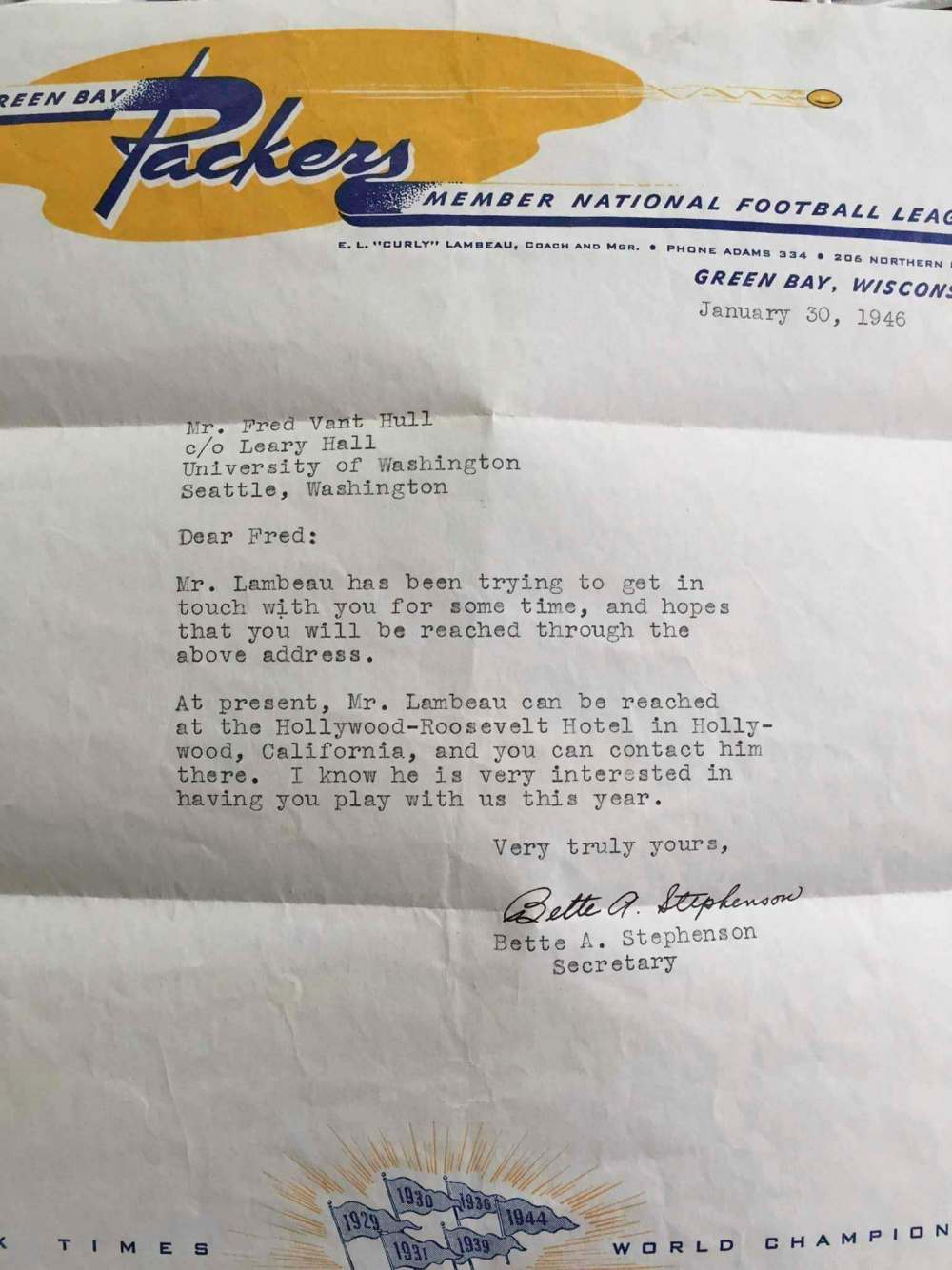
He returned to pro football in 1946, playing for the Los Angeles Dons of the upstart All-American Football Conference. In their free time, the new professional league put Fred and his wife Muriel in the company of Hollywood elite, where they rubbed shoulders with stars like Danny Thomas and Buddy Ebsen.
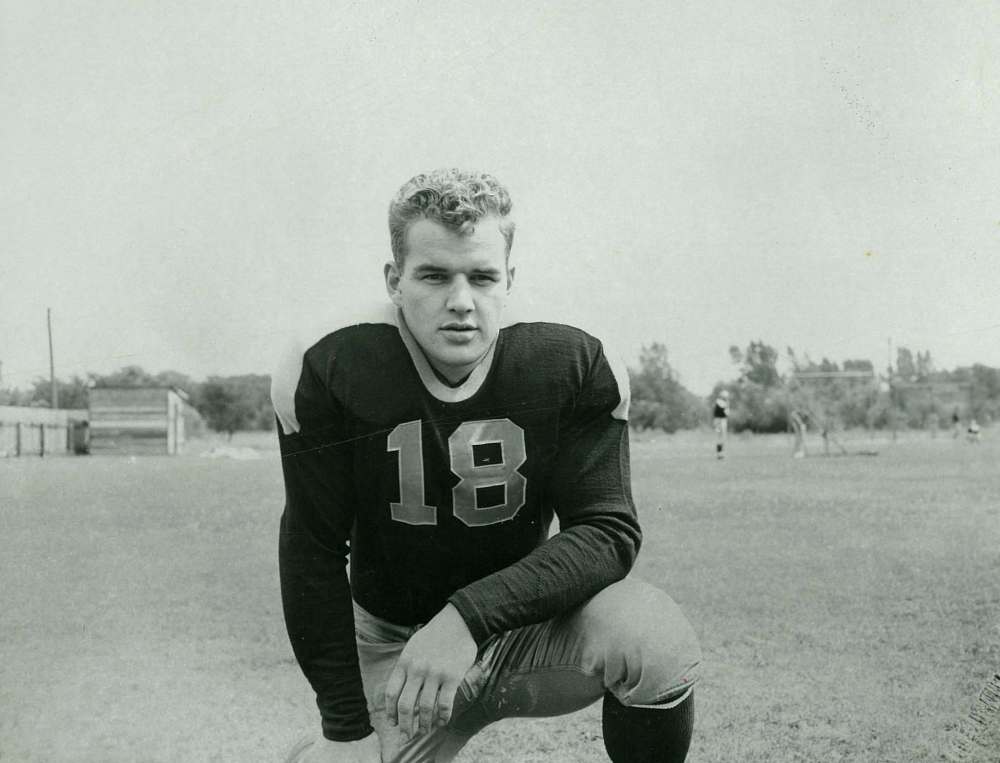
“He talked about it sort of from a wistful, regretful — ‘I wish it could’ve been more, I think I could’ve been a great player’ — that kind of a thing,” says Gretchen Tiberghien, Fred’s oldest daughter, now living in St. Cloud, Minn. “He didn’t talk about it a lot but when he talked about it, it was like, ‘Gee, I wish I’d had a better shot. Or I wish I could’ve had different breaks.’ He loved football.”
Van’t Hull, who became a naturalized U.S. citizen, may have loved the game but poor health factored heavily in his life.
Earlier in his football career, after a stellar career at West High School in Minneapolis and three seasons at the University of Minnesota, including the Gophers’ Big 10 and national championship team in 1940, he transferred to the Naval Academy and promptly broke his back with the Midshipmen.
Later, in 1947, while attempting a comeback with the Packers, Van’t Hull was banned by commissioner Bert Bell from the NFL for five years. It was his punishment for being a “league jumper” during his season with the Dons.
But the cruelest blow was yet to come. In 1949, Van’t Hull contracted polio and spent five months in an iron lung, five more months in hospital care and many more months rehabilitating at home. The effects of the disease in the days before an effective vaccine, was devastating.
(imagetag)“He was in an iron lung, which the March of Dimes had to have specially built for him because he was a big guy,” says Tiberghien. “He wasn’t a big guy by today’s standards, he only weighed 230, but that was a big guy at the time.”
The disease had no known cure and left Van’t Hull, once stabilized, wheelchair bound and unable to walk unaided or complete many routine daily functions.
“(My mother) was carrying me and had me at that period of time and she said if people had not been charitable, they could not have made it,” says Chris Van’t Hull Park, Fred and Muriel’s third child and youngest daughter. “She said, literally, they had to live off charity that whole time because she could not work, she had children and dad to take care of.
“His disabilitiy was one leg didn’t work at all, one arm didn’t work and the other arm only worked lifting from the elbow… he could feed himself, couldn’t dress, couldn’t shower, couldn’t get out of a chair or bed or anything else. My mother basically cared for him and all of us and ran a business, etc etera.”
Tiberghien recalls her father’s recuperation as particularly painful.
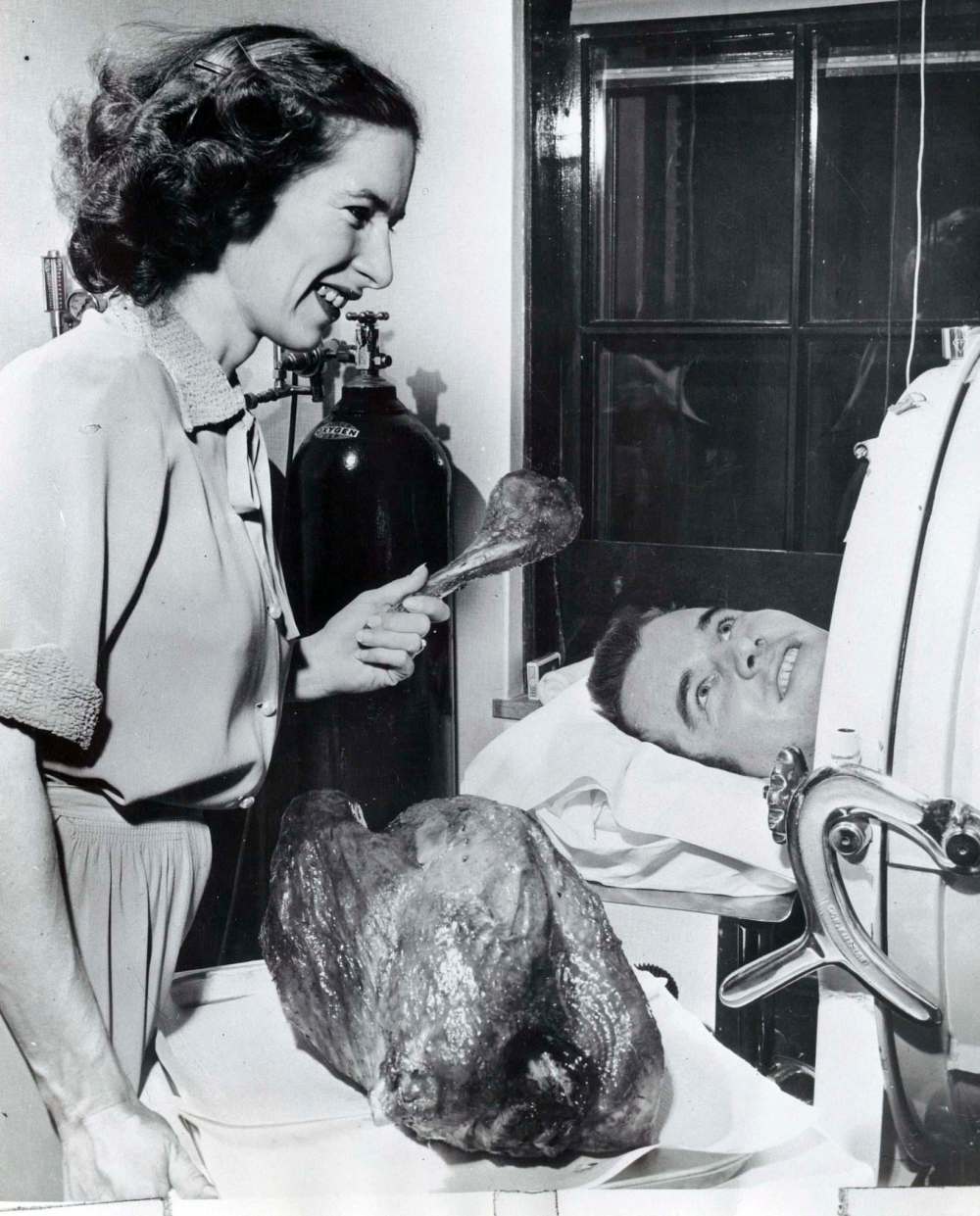
(imagetag)“He’s in this iron lung at the University (of Minnesota) and of course they had the windows open at the hospital and he could hear the football team playing at the stadium, virtually next door,” says Tiberghien. “And he would get so excited listening to that game through the window, that his blood pressure would go up and trigger all the bells and whistles on the iron lung and the nurses would come running, saying ‘Settle down, settle down.’ I do know his love of football was ingrained in him whether it was a high school game or a college game… or Navy out at Annapolis (Md.) or professional, he loved football. He watched football a lot.”
Van’t Hull’s football career was over, but he worked valiantly to overcome his disability.

“He could not stand up on his own,” says Tiberghien. “Somebody had to kind of lift him, you literally laced your fingers behind his and gave him a boost and he could stand up and he could walk. And he did do that until after he had a heart attack (a massive coronary in 1959). He became more sedentary and it became harder for him to walk.”
Van’t Hull worked for a time for the March of Dimes, a charitable foundation created to serve the thousands afflicted with polio, and had a short career as a sports reporter for Minneapolis radio and TV stations before his physical limitations made it too difficult to travel. He operated a country store with his wife in the Twin Cities area.
(imagetag)“He was a wonderful public speaker,” says Van’t Hull Park, who sensed her father’s reluctance to talk about his football career. “He didn’t talk a lot about it — in part I think because of his disability. The fact that he could no longer walk or move or throw a ball or play with his kids or any of that. I suspect that was part of why he didn’t talk about it because I’m sure those were his glory days in terms of how he saw himself as a vibrant person.”
Worn out by the complications of his illness, Van’t Hull died of congestive heart failure in 1975. He was only 54.
mike.sawatzky@freepress.mb.caTwitter: @sawa14
History
Updated on Friday, June 30, 2017 8:47 AM CDT: Adds photos