

Playoff bubble about to burst, leaving NHL with bleak reality

Advertisement
Read this article for free:
or
Already have an account? Log in here »
To continue reading, please subscribe:

Digital Subscription
One year of digital access for only $205*
- Enjoy unlimited reading on winnipegfreepress.com
- Read the E-Edition, our digital replica newspaper
- Access News Break, our award-winning app
- Play interactive puzzles
*First annual payment billed as $205.00 + GST for one year. This annual subscription will automatically renew at $233.00 + GST every 52 weeks (10% off the regular annual price of $259.35). Offer available to new and qualified returning subscribers only. Cancel any time.
To continue reading, please subscribe:
Add Free Press access to your Brandon Sun subscription for only an additional
$1 for the first 4 weeks*
- Enjoy unlimited reading on winnipegfreepress.com
- Read the E-Edition, our digital replica newspaper
- Access News Break, our award-winning app
- Play interactive puzzles
*Your next Brandon Sun subscription payment will increase by $1.00 and you will be charged $17.95 plus GST for four weeks. After four weeks, your payment will increase to $24.95 plus GST every four weeks.
Read unlimited articles for free today:
or
Already have an account? Log in here »
Hey there, time traveller!
This article was published 22/09/2020 (2167 days ago), so information in it may no longer be current.
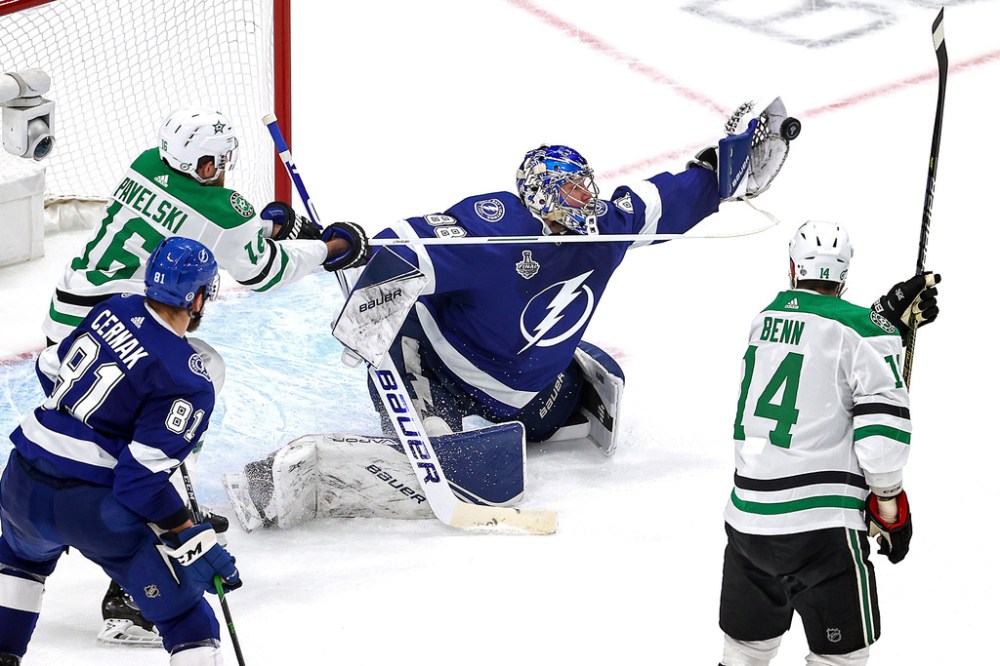
EDMONTON — These Stanley Cup playoffs have seemingly had it all: intensity, upsets, big comebacks, great goals and spectacular saves.
And now, two fitting finalists duking it out for championship glory. You really couldn’t ask for much more.
Well, except for one thing: fans.
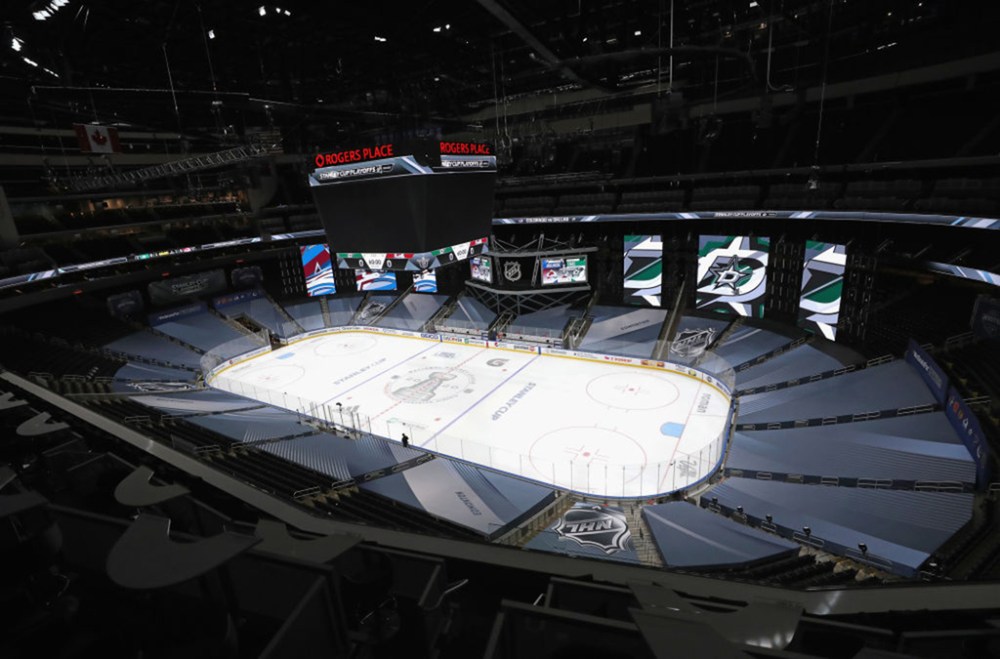
I thought by now — well into my fourth week of covering games inside downtown Edmonton’s cavernous Rogers Place — I’d grown accustomed to the empty rink setting.
I was wrong.
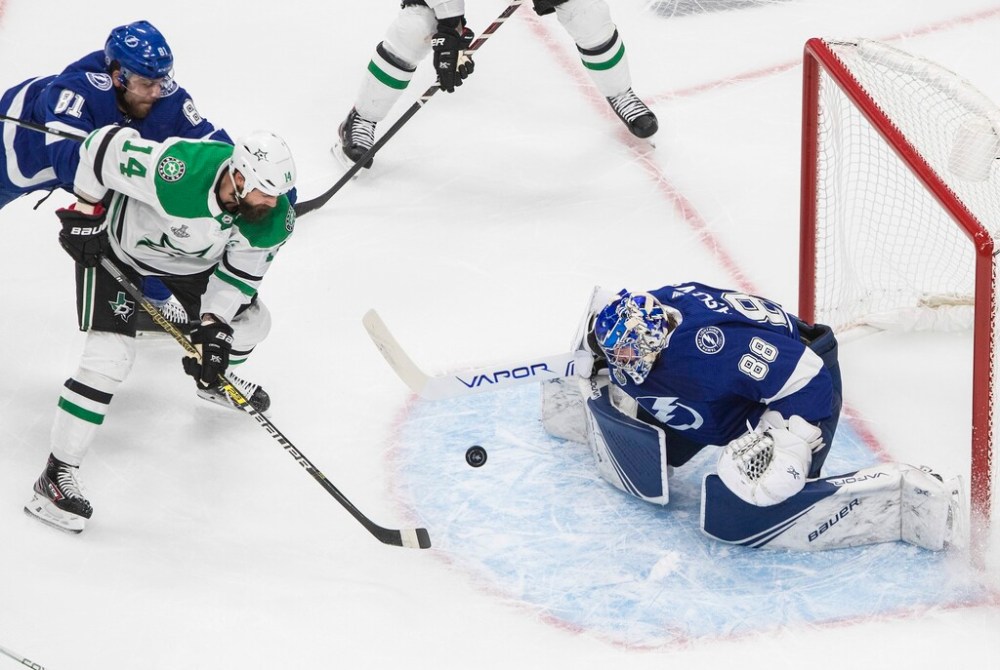
It really hit home Monday night, early in what was an entertaining Game 2 between the Tampa Bay Lightning and Dallas Stars. Bad blood was brewing quickly, bodies were flying around the ice, and it was the type of game you just know a sold-out crowd would have been eating up.
As a deflected puck was sent high into the air out of play — landing on one of those huge tarps they’ve set up to cover the thousands of empty seats — I couldn’t help but think how much catching a Stanley Cup souvenir would have meant to some lucky kid taking in the game with a parent.
Forgive me for getting a bit sappy here, but it actually made me quite sad that a spectacle like this, on what should be among the biggest stages in sports, was being contested under such circumstances.
Damn you, COVID-19.
Perhaps more than that fleeting melancholy moment was an even bigger feeling of dread that things aren’t about to change anytime soon. And that a return to normal, with crowds filling in to venues such as Bell MTS Place, remains a distant pipe dream.
Oh sure, I heard what NHL commissioner Gary Bettman and deputy Bill Daly had to say during last weekend’s state-of-the-union address via Zoom. They tried to put on a brave face, insisting that getting fans back in buildings as quickly and safely as possible is the goal. They’d even push the start of the 2020-21 season back further, if necessary.
Thing is, I just don’t see how it happens by Dec. 1, which was the original targeted start date to kick off the new campaign that would already be delayed by two months at that point. Or even later in December or early January, which Bettman now admits is a very real possibility.
I’m starting to wonder if it happens at all, and that the 2020-21 season we talk about is, in reality, the 2021-22 season.
Until we get a vaccine, it just seems like wishful, if not downright foolish, thinking. And considering Bettman’s claim that 50 per cent of league revenues come from butts in the seats, that should have everyone associated with this game in full-blown panic mode.
COVID-19 numbers are still surging in many markets, including Winnipeg. We’ve yet to hit the dreaded second wave many experts are predicting. The Canada-U.S. border remains closed for non-essential travel, with the federal government previously balking at MLB’s hopes of having the Toronto Blue Jays play home games in Ontario and host visiting clubs from across America. Good luck to the NHL if anybody thinks they can succeed where baseball failed.
Frigid weather, which drives us all indoors and could lead to a spike in cases, has yet to make an appearance, along with the its accompanying cold-and-flu season. Add it all up and things look pretty bleak for the foreseeable future when it comes to the NHL.
Without fans, the sport is facing an unprecedented financial crisis, one that hasn’t really registered, considering players had already received all but one of their 2019-20 paycheques at the time things were paused in mid-March, owners lost only a handful of remaining dates on the calendar and existing broadcast agreements were satisfied, mostly.
None of that will be the case if 2020-21 can’t proceed as planned. The entire financial framework would have to be reworked. And it would be uglier than a mangy playoff beard in late September.
Some will suggest the league just go right back into a bubble, since it worked so well over these past two months. That simply isn’t an option. There’s no chance the majority of NHL players and staff would sign up for a six-month (or longer) exodus from family. They were all willing to do it for a limited time in these unique circumstances, to finish what they’d already started. Another playoffs, perhaps. But a full-season buy-in is a non-starter.
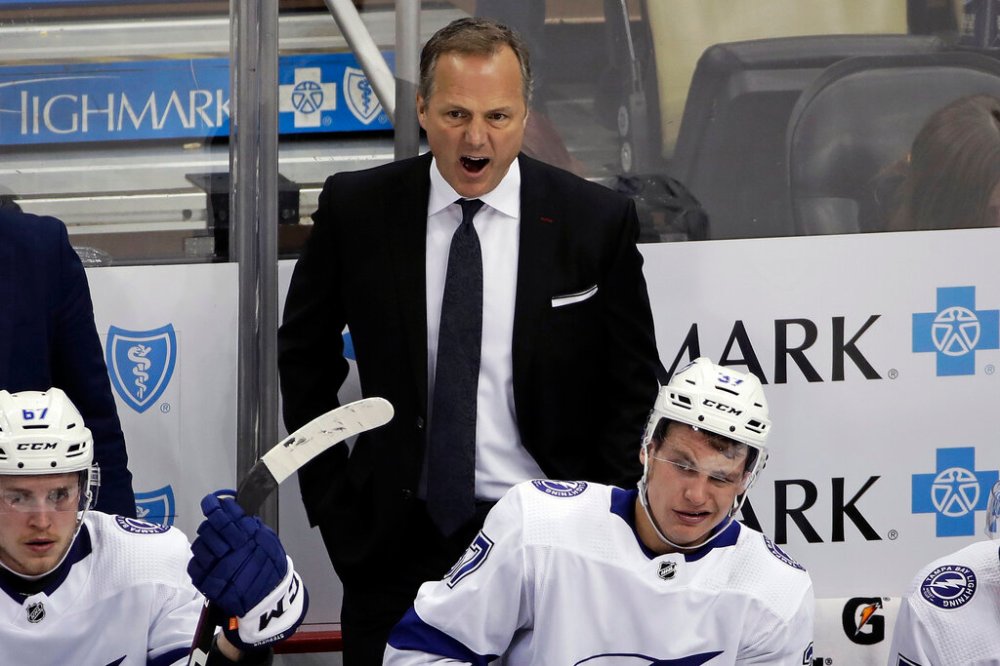
Just look at what Tampa Bay bench boss Jon Cooper had to say Tuesday about what he’s missed so far while under lockdown in the Toronto and Edmonton hubs since late July.
“Missed an anniversary. A birthday. Another one coming up. The first day of school. Hockey tournaments. My daughter making the swim team. My other daughter going to her first dance class. Where do you want the list to go? You don’t get to see some of the milestones in your kids’ lives, in your wife’s life,” said Cooper.
Or Dallas coach Rick Bowness, when faced with a similar question about isolation.
“The things that you normally do to relax between games, whether it’s going out for dinner with your wife, going for a drive, going to the driving range and hitting golf balls, is not there. So everyone’s a little edgy, We’ve been here for over eight weeks now. It’s groundhog day,” he said.
They weren’t complaining, but rather just being honest about the reality of a situation they have little control over. But it’s why this fascinating little experiment won’t work long-term.
I asked Bettman specifically Saturday if he was prepared to play well into next summer once again — especially after he doubled down on the claim they want to play a full 82-game schedule.
“Our preference would be to stay out of summer as much as possible. Our fans typically like watching us through the fall, winter and spring, and it’s always been a goal to be done by the end of June. Playing July, August, September is something that was important to do now, and if we can avoid it we will,” he said.

How the heck do they avoid it if things don’t get going until early in the new year?
Money will always drive the bus when it comes to decision-making, both from a league and player perspective. So I suppose anything and everything remains on the table, which is why everyone will likely wait until the last possible moment to make any firm decisions.
But the cold, hard reality is the game as we know it and love it, likely isn’t coming back anytime soon. Savour what’s left of this Stanley Cup Final. I’d love to be wrong, but it might be the last NHL action we see for a long time.
mike.mcintyre@freepress.mb.ca
Twitter: @mikemcintyrewpg
Mike McIntyre is a sports reporter whose primary role is covering the Winnipeg Jets. After graduating from the Creative Communications program at Red River College in 1995, he spent two years gaining experience at the Winnipeg Sun before joining the Free Press in 1997, where he served on the crime and justice beat until 2016. Read more about Mike.
Every piece of reporting Mike produces is reviewed by an editing team before it is posted online or published in print — part of the Free Press‘s tradition, since 1872, of producing reliable independent journalism. Read more about Free Press’s history and mandate, and learn how our newsroom operates.
Our newsroom depends on a growing audience of readers to power our journalism. If you are not a paid reader, please consider becoming a subscriber.
Our newsroom depends on its audience of readers to power our journalism. Thank you for your support.
Mike McIntyre is a sports reporter whose primary role is covering the Winnipeg Jets. After graduating from the Creative Communications program at Red River College in 1995, he spent two years gaining experience at the Winnipeg Sun before joining the Free Press in 1997, where he served on the crime and justice beat until 2016. Read more about Mike.
Every piece of reporting Mike produces is reviewed by an editing team before it is posted online or published in print — part of the Free Press‘s tradition, since 1872, of producing reliable independent journalism. Read more about Free Press’s history and mandate, and learn how our newsroom operates.
Our newsroom depends on a growing audience of readers to power our journalism. If you are not a paid reader, please consider becoming a subscriber.
Our newsroom depends on its audience of readers to power our journalism. Thank you for your support.
Advertisement Advertise With Us
Advertisement Advertise With Us