

Beijing behind the scenes: Meet the Calgary icemaker who keeps long-track speedskating smooth without a Zamboni
Advertisement
Read this article for free:
or
Already have an account? Log in here »
To continue reading, please subscribe:

Digital Subscription
One year of digital access for only $205*
- Enjoy unlimited reading on winnipegfreepress.com
- Read the E-Edition, our digital replica newspaper
- Access News Break, our award-winning app
- Play interactive puzzles
*First annual payment billed as $205.00 + GST for one year. This annual subscription will automatically renew at $233.00 + GST every 52 weeks (10% off the regular annual price of $259.35). Offer available to new and qualified returning subscribers only. Cancel any time.
To continue reading, please subscribe:
Add Free Press access to your Brandon Sun subscription for only an additional
$1 for the first 4 weeks*
- Enjoy unlimited reading on winnipegfreepress.com
- Read the E-Edition, our digital replica newspaper
- Access News Break, our award-winning app
- Play interactive puzzles
*Your next Brandon Sun subscription payment will increase by $1.00 and you will be charged $17.95 plus GST for four weeks. After four weeks, your payment will increase to $24.95 plus GST every four weeks.
Read unlimited articles for free today:
or
Already have an account? Log in here »
Hey there, time traveller!
This article was published 05/02/2022 (1689 days ago), so information in it may no longer be current.
Canadians are making an impact at the Beijing Olympics, and not just the athletes. Behind the scenes are Canadians vital to the smooth running of the Games. First in a series:
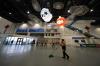
Mark Messer is in charge of making the ice for long-track speedskating, a sport that depends on a fast, consistent surface. He’s the operations manager at the Calgary Olympic Oval and has been to Beijing a dozen times in the last two years, getting the Games venue ready for the spotlight. This interview has been edited for length and clarity.
This is your sixth time as Olympic icemaker. What makes this one different?
COVID. I did 15 weeks of quarantining. In one hotel room, it was eight steps if you walked wall to wall, window to door.
What’s it like for you and your team to be at the Olympics?
It’s interesting because we want to be behind the scenes. People say we’ll watch for you at the Games, and I say: I hope you don’t see me, because if you do it means there’s a problem. We know that we have an important role in there, to keep the field of play even for everybody and give them the best ice we can. We don’t want to influence the results; it’s all about the athletes. We don’t want to be a part of the story.
Your first Olympic ice-making gig was Calgary 1988. What keeps you coming back?
It’s the challenge. Every venue is so different. We know the end product we want, but for me it’s like: How do I get to the end? Because the water everywhere is different, the air movement is different, the refrigeration systems are different. For the last couple Games, everybody on my team here in Calgary has gone at one time or another — if not for the Games, then a test event or something else. These guys are like me. I grew up in Calgary as a heavy-duty mechanic. I never expected to see the world. And to be able to get in on the ground floor in the design of (Beijing’s National Speed Skating Oval) is a whole other adventure.
What was the challenge this time?
The building ended up about a year behind, and we never really had the chance to do the test events we should have done.
Why?
The plan was to have a refrigeration system based on an old refrigerant. There’s a lot of chemical refrigerants that are bad for the ozone and part of the mandate of the Olympics is to be environmentally friendly, so it didn’t make sense to do that. We had at least a nine-month battle just trying to get them to move ahead with the CO2 refrigeration system, which is state of the art.
Is there a Canadian flair you bring to the job?
In Torino 2006, we buried a little gold maple leaf in the ice. The Canadian skaters knew about that, and they sort of knew where it was. They didn’t go looking — except for Jeremy Wotherspoon, who gets down on his hands and knees looking for this thing that’s supposed to be a secret. But the thing I find kind of funny is every (Olympic venue) I’ve gone to, (the skaters) say it feels like the ice in Calgary. Part of that is our method, the way we mixed the waters and such. But I think it’s also a perception when they come there that they recognize me from Calgary. That’s a good thing. They know when they come to Calgary they get good ice.
In Pyeongchang 2018, you had Zambonis made in Brantford, Ont. What about this time?
That’s a bit of a sore spot. The hockey venues have Zambonis; we ended up with a product out of northern Italy. It’s an Engo. It’s a fully electric ice resurfacer, which scares me a little bit — too many points of failure, too many things that can go wrong.
If you could, what Olympic sport would you want to watch in Beijing other than speedskating?
Hockey, absolutely. I’ve gotten lucky (in the past) and been able to go to a couple of games. Salt Lake (2002), I was at the women’s gold-medal game, and in Italy. But this time there won’t be any opportunity to watch. This time, with the bubble, we’ll just see our hotel, the bus and the venue.
Kerry Gillespie is a Toronto-based sports reporter for the Star. Reach her via email: kgillespie@thestar.ca
Related Articles
Finally time for US-Canada in women's hockey




Advertisement Advertise With Us
Advertisement Advertise With Us